
“Do you want to live forever?” asked Motke Chabad, a well-known Jewish jester, addressing a wealthy man. “Move to Butrimonys!”
“Is death not in control there?” the man asked in surprise.
“I don’t know,” Motke replied. “All I know is that in Butrimonys, not a single rich man has ever died.”
I didn’t find this well-known Jewish joke in a book. I noticed it on a board inside the Butrimonys eldership building during a visit a few years ago. I was preparing for the Shalom Butrimantz hike, organised by my friends from Olita Orany, who invited me to guide the Jewish part of the tour.
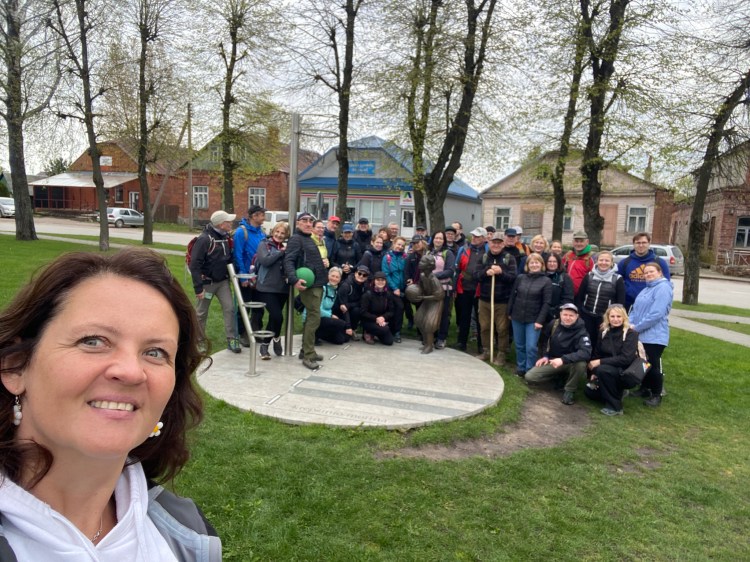
That April, 2024, together with a fairly large group, we visited the local museum and the remains of mikveh, danced Tzadik Katamar, and tasted matzah left over from Passover.
Credit: Erika Draugelienė
Today, I am returning to Butrimonys as part of my “Shtetl of the Week” series. The timing feels fitting, as on March 19 we marked the birthday of a famous Litvak from Butrimonys, Senda Berenson Abbott, the “Mother of Women’s Basketball.”
Butrimonys is a small town in southern Lithuania, about 20 km from Alytus. It developed at the crossroads of important trade routes, and its triangular market square, still visible today, was the center of the town. The square’s shape is even reflected in the town’s coat of arms.
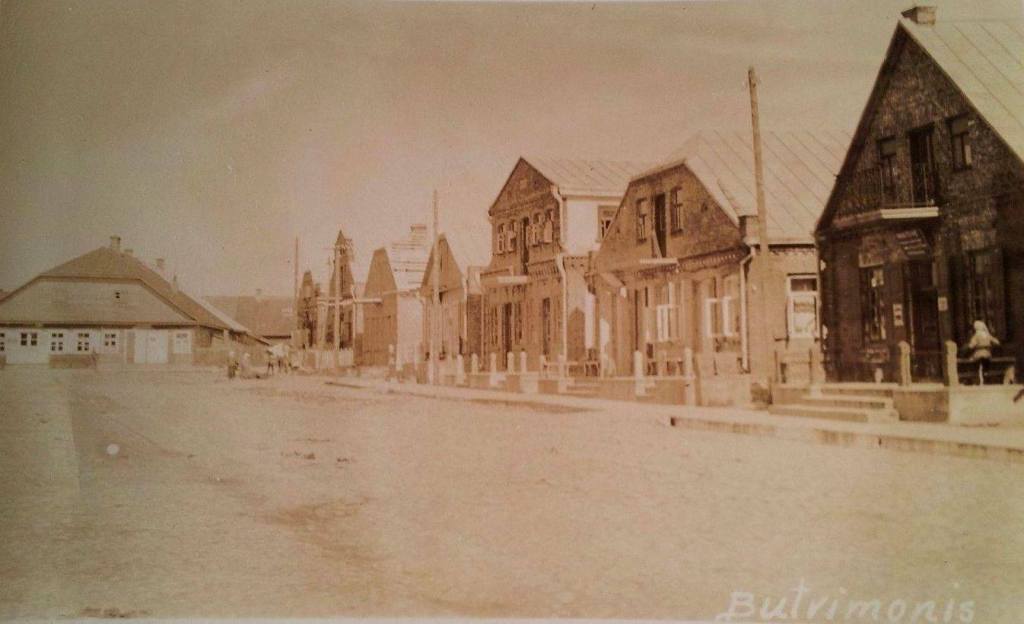
Credit: Lithuanian National Museum
The town had a large Jewish community for much of its history. At the end of the 19th century, Butrimonys had 2,394 residents, 1,919 of whom were Jewish – around 80%. By the eve of the Second World War, about 800 Jews remained.
Before the war, Butrimonys had two (or even three) synagogues, a ritual bath, a school where Hebrew was taught, a Jewish bank with 230 members, and dozens of Jewish-owned shops, taverns, and bakeries. There was also a library and a cinema. The Jewish cemetery was located just beyond the Catholic church. Different communities lived side by side until the Holocaust destroyed the Jewish population. After the war, only 15 Jews remained in the town.
Today, only a few traces remain, but the history of the people and the buildings can still be seen.
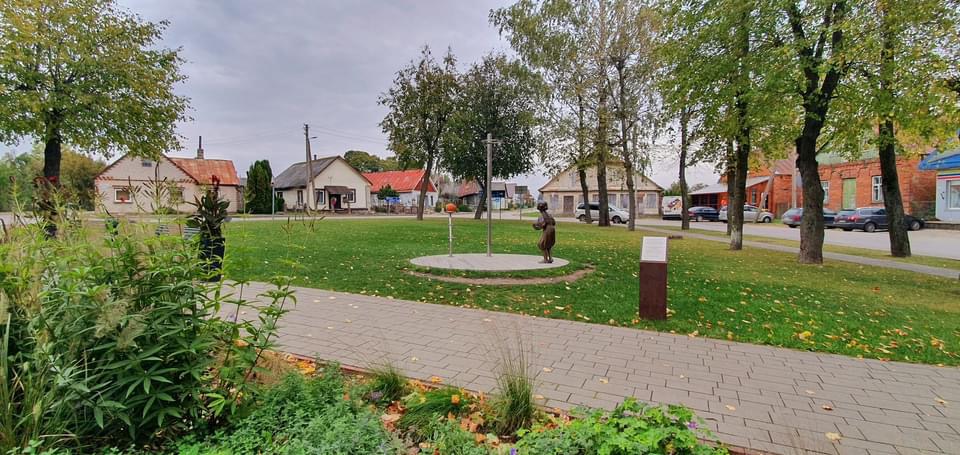
You can read more and explore the Shtetl of the Week: Butrimonys here.
 Litvak Shtetls