
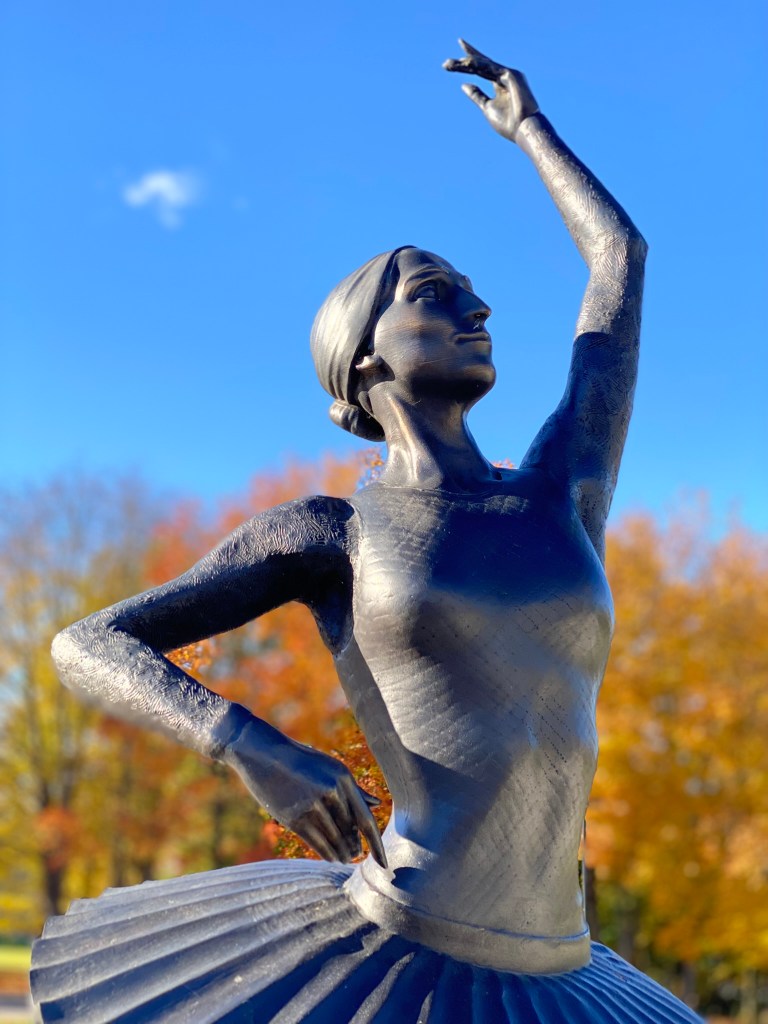
The famous Dutch ballet dancer Sonia Gaskell directed the Dutch National Ballet Company, and Audrey Hepburn was among her students.
Dance and movement were her life. To stop meant death to her. More than that: she only moved ahead. Once, when a policeman stopped her for driving in the wrong lane and told her to turn back, she replied: “Going backward is against my nature. I always move forward.”
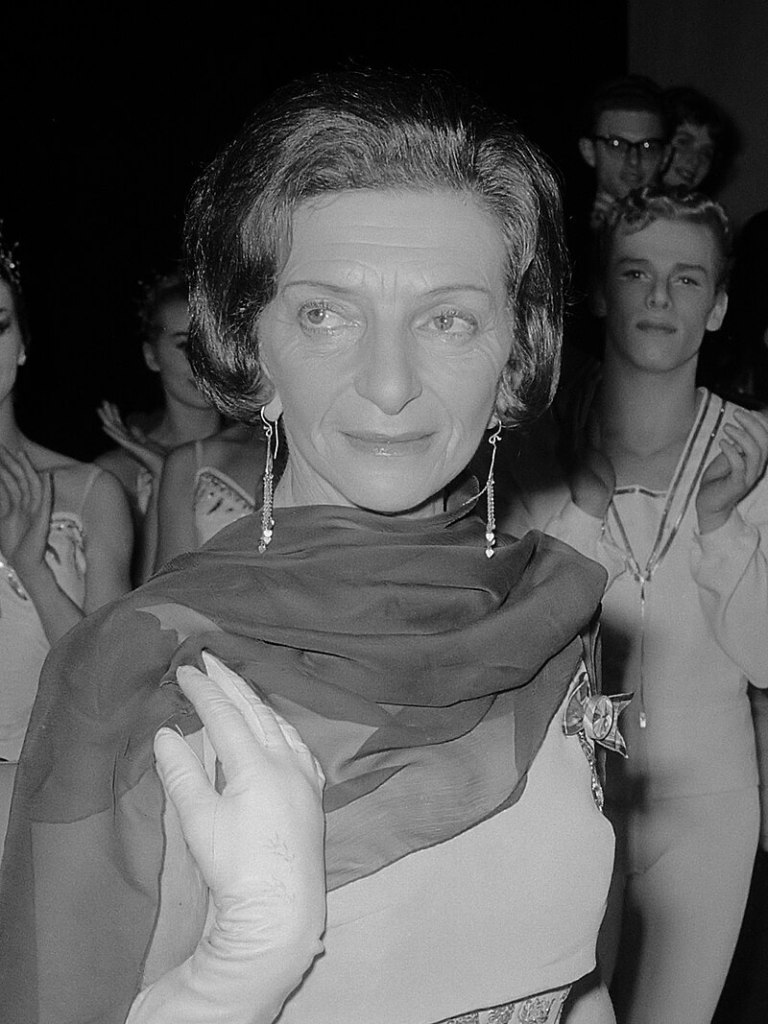
Sonia Gaskell (Sara Gaskelytė) was born in 1904 in Vilkaviškis (then Vilkovishk, Russia) to a Jewish family, Solomon Gaskell and Anna Karnovska. She studied ballet in Kharkiv, left for Palestine in 1921. Later she lived, studied dance, and worked in Paris, performing in cabarets and touring with a ballet troupe.
She arrived in Amsterdam in 1939 after marrying her second husband, a Dutch architect. There she became known as Sonia Gaskell.
Upon arriving in the Netherlands, Sonia experienced a “cultural shock.” She had acquired a strong foundation in classical ballet in France. But, in the Netherlands, she found a parody of German expressionism. There was no technique, just lots of falling on the floor and random arm-waving. There were no teachers of classical ballet—nothing.
“What am I doing among these amateurs?” she would exclaim. But she soon noticed that young Dutch dancers were full of enthusiasm. Despite lacking any formal training, they were easy to work with. Thus, she became a ballet teacher in the Netherlands.
Sonia Gaskell continued to teach dance even during the war—secretly. After the war, she founded the Dutch National Ballet in Amsterdam and the Dutch Ballet Academy in The Hague. Her students remember her as a highly charismatic yet complex personality. After her second husband’s death in 1948, she devoted her entire life to work and dance.
Sonia Gaskell died on July 9, 1974, in Paris.

 Litvak Shtetls