
Tytuvėnai: A Town’s History

The area of Tytuvėnai was first mentioned in written sources in the 16th century. By 1555, a manor had been established, and by 1594, a small town with several homesteads had developed around the market square near the manor.
Frequent changes in ownership of the manor and town hindered stable growth and prosperity. In 1609, Tytuvėnai came into the possession of nobleman Andrius Valavičius. In 1613, seeking to commemorate himself and his first wife, Valavičius invited Bernardine monks to settle in Tytuvėnai. He promised them land and funds and undertook to build a church and monastery.
The monastery was built first, and in 1635, the church dedicated to the Holy Virgin Mary, Queen of Angels, was consecrated. With the arrival of the Bernardines, the town began to grow slowly.
Tytuvėnai suffered heavily during the wars with Sweden and the Northern War (from the 17th to early 18th centuries). By 1711, no residents remained in the town. A privilege granted in 1724, allowing regular markets to be held, helped the settlement recover. By 1755, 18 families were living there.
In the 19th century, Tytuvėnai remained a small town. In 1833, it had just 35 wooden houses, two schools, a tavern, and a population of 137. It became an active center during the uprisings of 1831 and 1863. Following their suppression, and under suspicion that the monks had participated, the monastery was closed in 1864, although the church remained open.
By 1868, Tytuvėnai was home to 753 residents, including 399 Catholics, 291 Jews, 55 Lutherans, and 8 Orthodox Christians. There were 138 residential buildings, and a public school was operating.
In 1882, the Tytuvėnai estate was inherited by Eugenijus Romeris, who later married Sofija Dembovskytė, an accomplished portrait painter known for her exhibitions in Riga and Šiauliai.
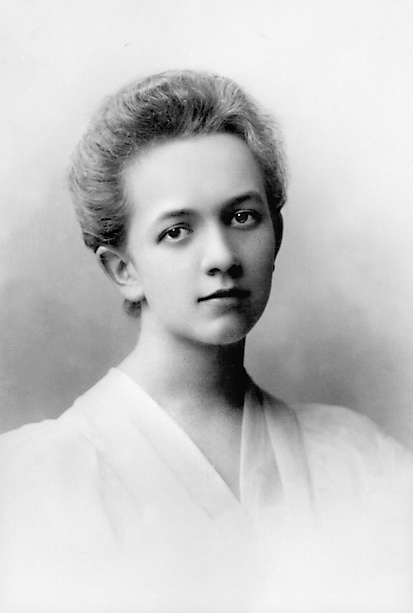
From: https://www.vle.lt/straipsnis/sofija-romeriene/

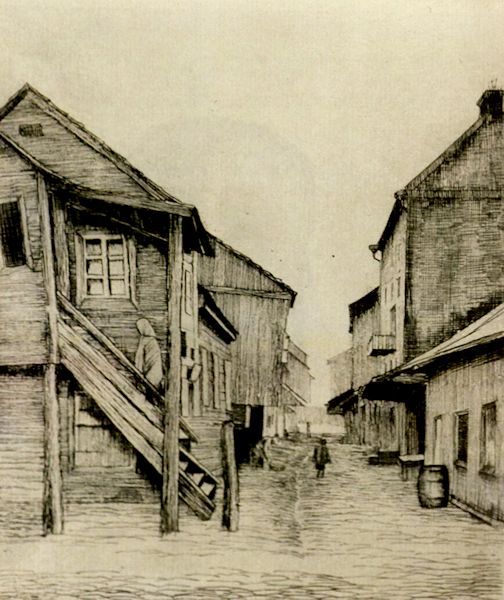
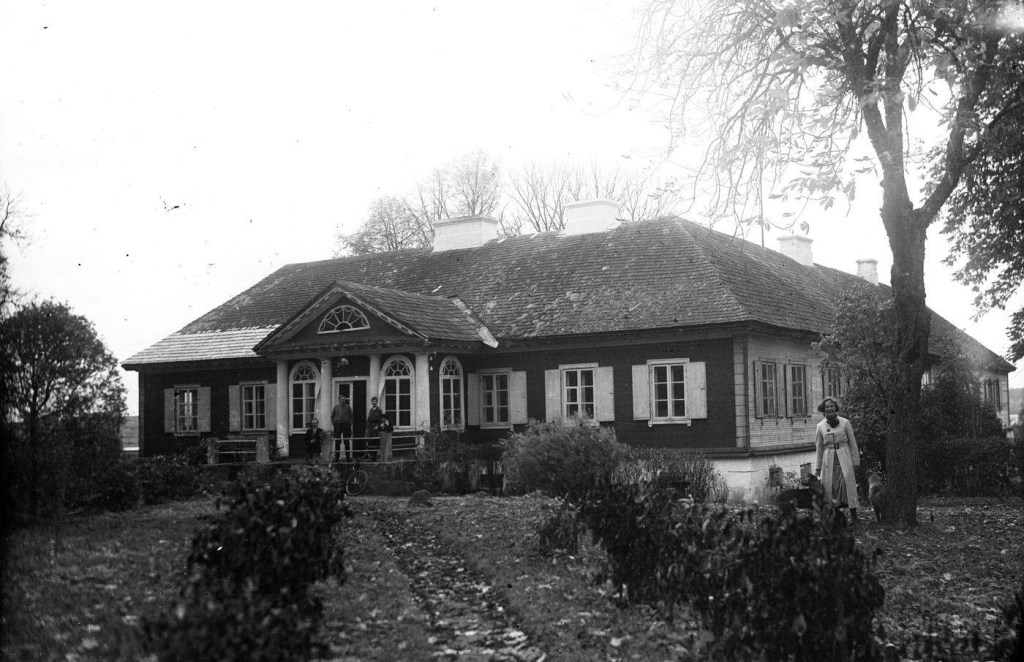
From: Lietuva senose fotografijose on Facebook
At the beginning of the 20th century, Tytuvėnai had a population of around 700. In 1915, during World War I, the front line passed through the area, and the Bernardine church and monastery complex suffered severe shelling damage. Between 1915 and 1917, the Germans constructed a railway line near Tytuvėnai, which was used to transport timber, grain, livestock, and other goods.
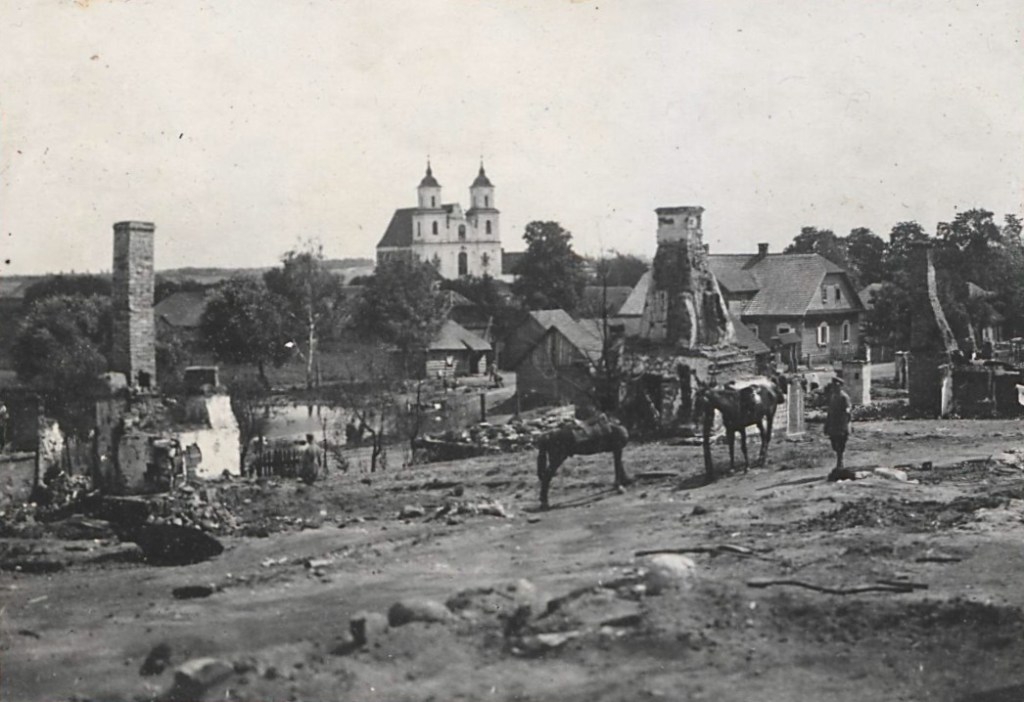
From: From: Lietuva senose fotografijose on Facebook
In the 1930s and 1940s, the town expanded, and the population grew to around 1,300. Tytuvėnai gained recognition as a summer resort — about 500 vacationers would arrive each year. In preparation for their visits, locals beautified the town: the market square in front of the church was transformed into a park, the market moved to the outskirts, streets were paved, sidewalks were constructed, and trees were planted along the roads.
This development was disrupted by the Soviet occupation. Property was nationalized, and political repression began. At the beginning of World War II, the Jewish residents of Tytuvėnai were murdered. In the post-war years, partisan resistance took place in the surrounding areas, and many members of the local intelligentsia were deported to Siberia.
After the end of Stalinist repressions, the town began to recover. A secondary school, agricultural technical school, hospital, and peat processing enterprise were established. Tytuvėnai experienced a notable revival following the restoration of Lithuanian independence. Private shops and cafés opened, and most state-owned enterprises were privatized.
In 1992, the Tytuvėnai Regional Park was established, encompassing six lakes, wetlands, several nature reserves, and the Tytuvėnai Heath — a remnant of ancient forest.
Jewish Life in Tytuvėnai
While Tytuvėnai is known among Lithuanian cultural and religious tourists, its Jewish history is less well known. Jews called the town TSYTAVIAN.
By 1849, 30 Lithuanian and 40 Jewish families lived in the town. In 1897, Jews made up 20% of the population — 329 people out of 1,300. By 1923, out of 1,134 residents, 221 were Jews (about 19%).
Before World War II, around 200 Jews lived in the center of town, particularly along Kelmės, Šiluvos, and J. Basanavičius Streets. Most Jewish homes were wooden, though a few were brick. Many housed shops or small workshops, especially food stores.
Meat was stored in ice houses using ice collected from the lake in winter. Leibas Senzulis, a local butcher, was well-known for delivering meat on a sled in winter and offering it on credit, saying, “When you have it, then you will give it back.” His generosity made him beloved in the community. His wife ran a fabric store with neatly displayed rolls of fabric, known for great service and willingness to sell on credit.
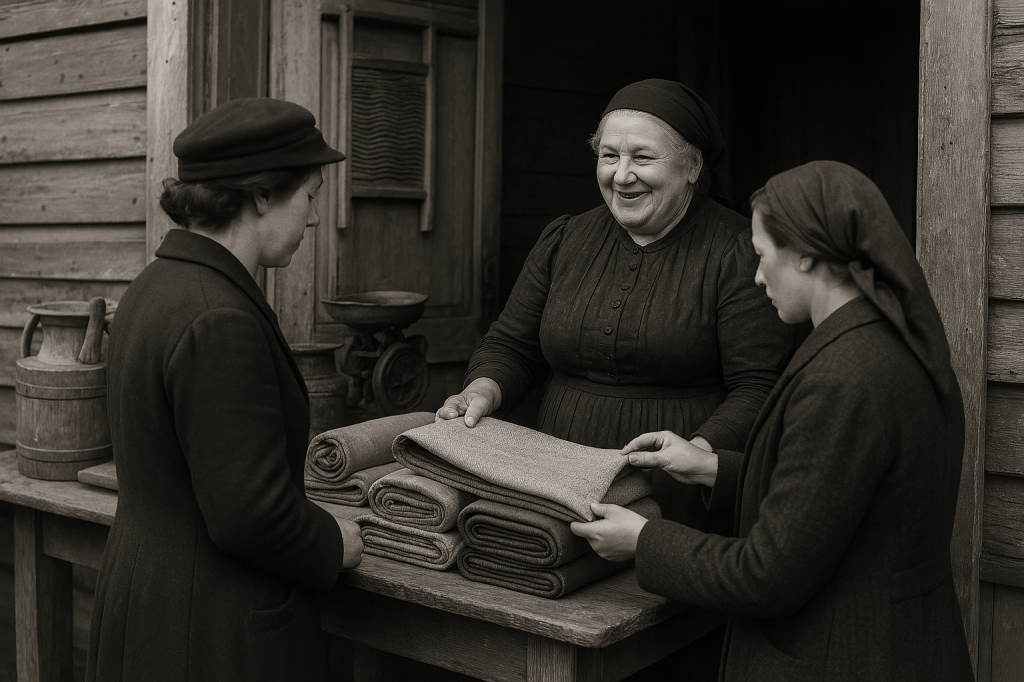
Created by AI

Created by AI
Other Jewish businesses included the Feinstein family’s fabric shop and Hak’s shoe store, known for high-quality shoes. There was also a fur workshop and pottery shops. A young Jew named Ilgablauzdis opened an ironmonger store. Kučkelis, a local potter, was famed for his ceramic pots. Peretz’s daughters were seamstresses, and the carpenter Senzulis was known for glazing windows.
The Goldberg family baked crispy bagels, or bublicki, often warm and sprinkled with poppy seeds. Ruvelis ran a roofing business. These small but lively enterprises formed the backbone of daily Jewish life in Tytuvėnai.
The weekly market took place on Wednesdays. While there are no surviving photos of the market day in Tytuvėnai (or I don’t know about them), let’s imagine a bustling event with several hundred carriages. Jewish craftsmen were major buyers — bakers bought flour and eggs, butchers purchased livestock, and tailors looked for fabrics and thread. Townspeople also stocked up for household needs, while wholesalers bought grain and firewood to sell in larger cities.
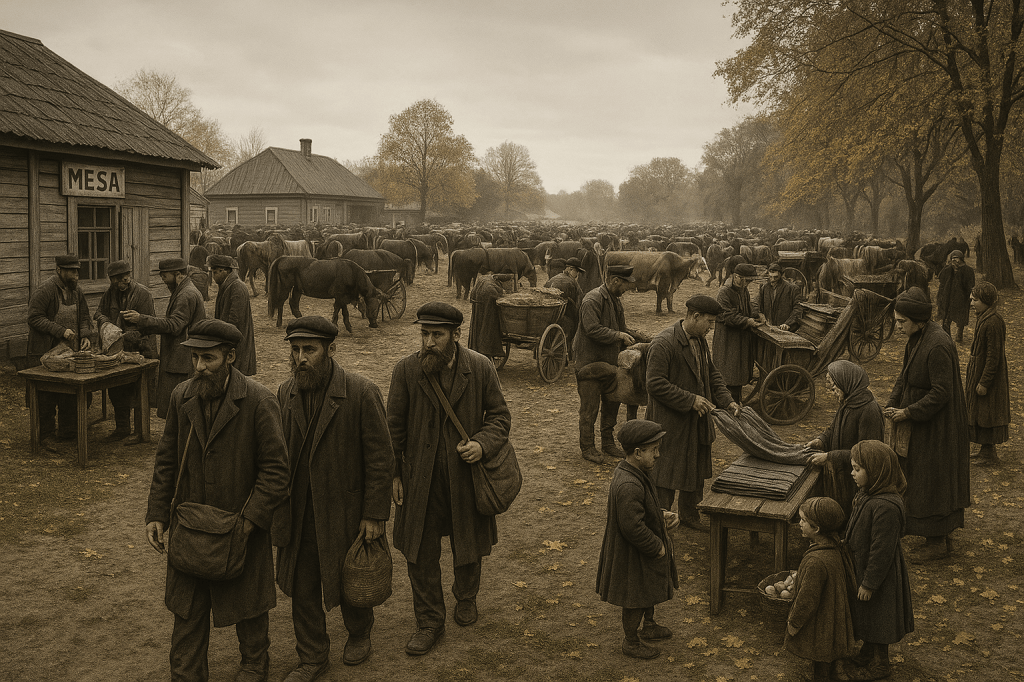
Created by AI
There was no Jewish school in Interwar Tytuvėnai. Jewish children attended the local Lithuanian school, leaving during Christian religious education lessons and returning afterward. They later studied Hebrew and religion separately. While some teasing occurred, there were no major conflicts, and local Lithuanians remembered Jewish children as polite and bright.
One of the most respected figures was doctor Borokas Chveidenas. He never refused patients, even late at night, and was known for saving many lives. His wife, Rachel, was a dentist. They had a young daughter, Aviva, and employed a Lithuanian woman to help care for her. The Chveidenas family were known for generosity, paying their staff well and giving gifts.

https://collections.yadvashem.org/en/photos/14083370
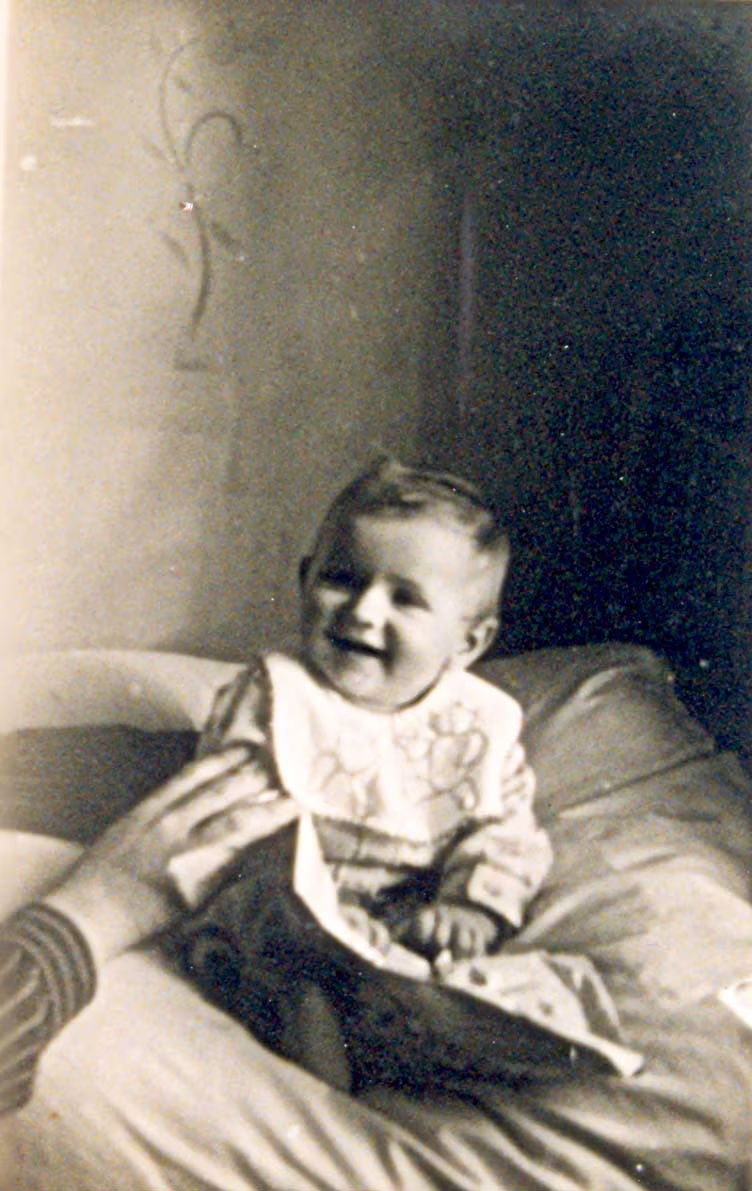
https://collections.yadvashem.org/en/photos/14228652
Tytuvėnai had two synagogues — a winter synagogue, later rebuilt in stone after a fire, and a summer synagogue, which was demolished after the war. A fragment of the stone synagogue still stands today.


From: Lietuva senose fotografijose on Facebook
The Jewish community took pride in Rabbi Leib Tsigler (Leib Hosid), a Gaon and Tzadik respected even by secular Jews. His funeral drew 12 rabbis and 4,000 attendees. Another notable figure, Rabbi Zerach Barnett, was born in Tytuvėnai in 1843 and later became a Zionist pioneer, helping found Mea Shearim and Petah Tikva.
From 1926 to 1937, Rabbi Yaakov Kamenetsky — later a prominent American rabbi — served in Tytuvėnai. The last rabbi, Avraham-Azriel Medin, served from 1938 until he was murdered along with his community in 1941.

From: http://www.geni.com

Wikipedia
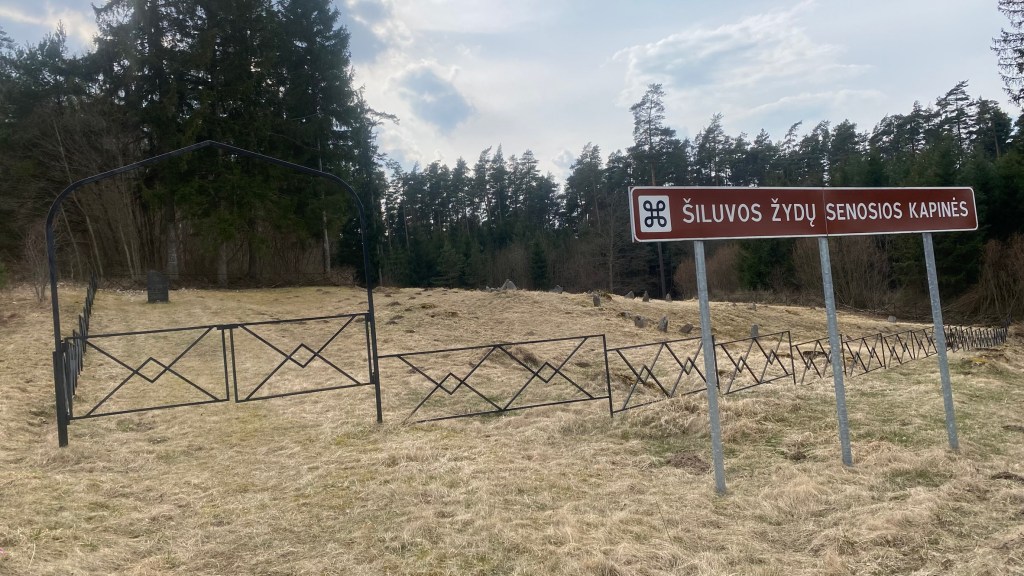
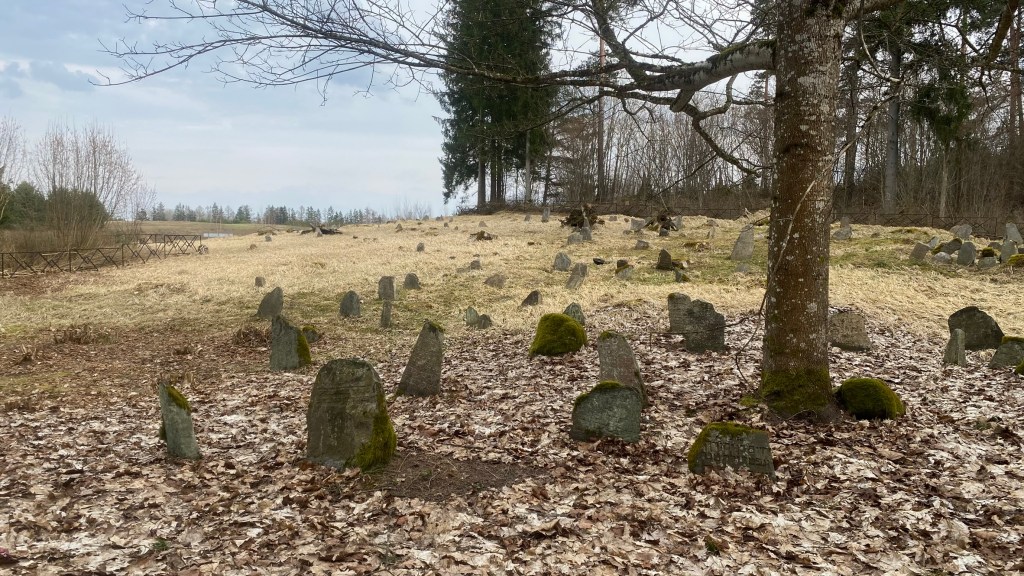
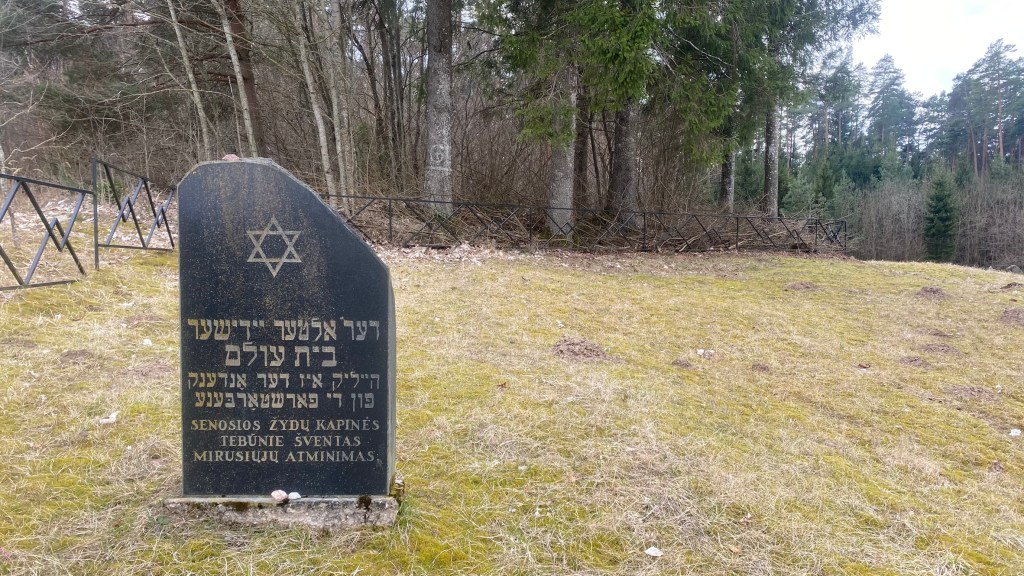
Jews did not have their own cemetery in the town; they buried people in the nearby Šiluva Jewish cemetery.
Summer in Tytuvėnai
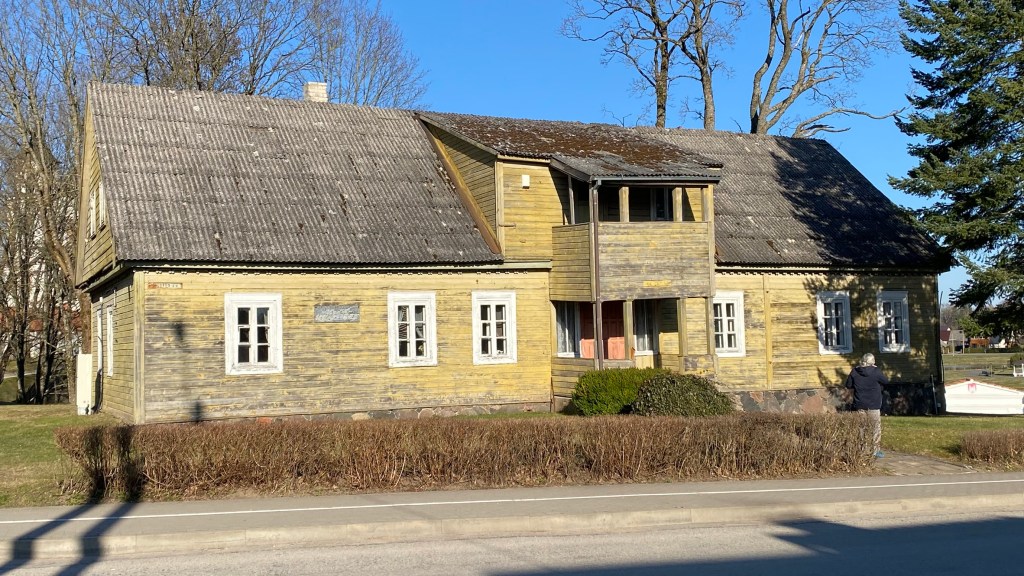
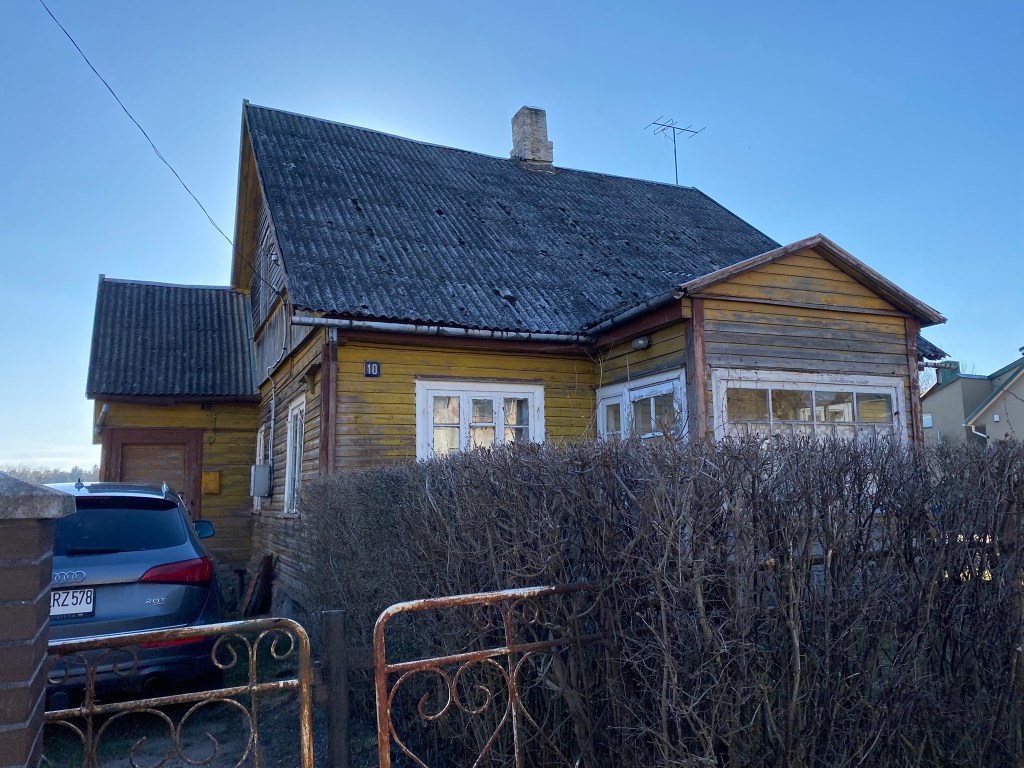
During summers, Tytuvėnai attracted Jewish vacationers from Kelmė, Šiauliai, and Kaunas. Lithuanians rented out homes on Pušyno Street, often moving to attics themselves. One of those houses still survives.

Vacationers, often wealthy and generous, included women, children, and the elderly, who stayed for the entire summer. Men visited on weekends. The street was closed off for peace and quiet. Only Lithuanian vendors were allowed to sell food: milk, cheese, cottage cheese, berries, and small fish (Jews wouldn’t buy fish weighing over a kilogram). Berries had to be picked far from the road.
A summer restaurant served traditional snacks. There was also a chocolate and ice cream shop and a temporary prayer house. Musicians held concerts in the pine forests, attended by both Jews and locals. Vacationers swam in Lake Gilius and walked through the woods — a peaceful place that would later become a site of tragedy.
The Holocaust in Tytuvėnai
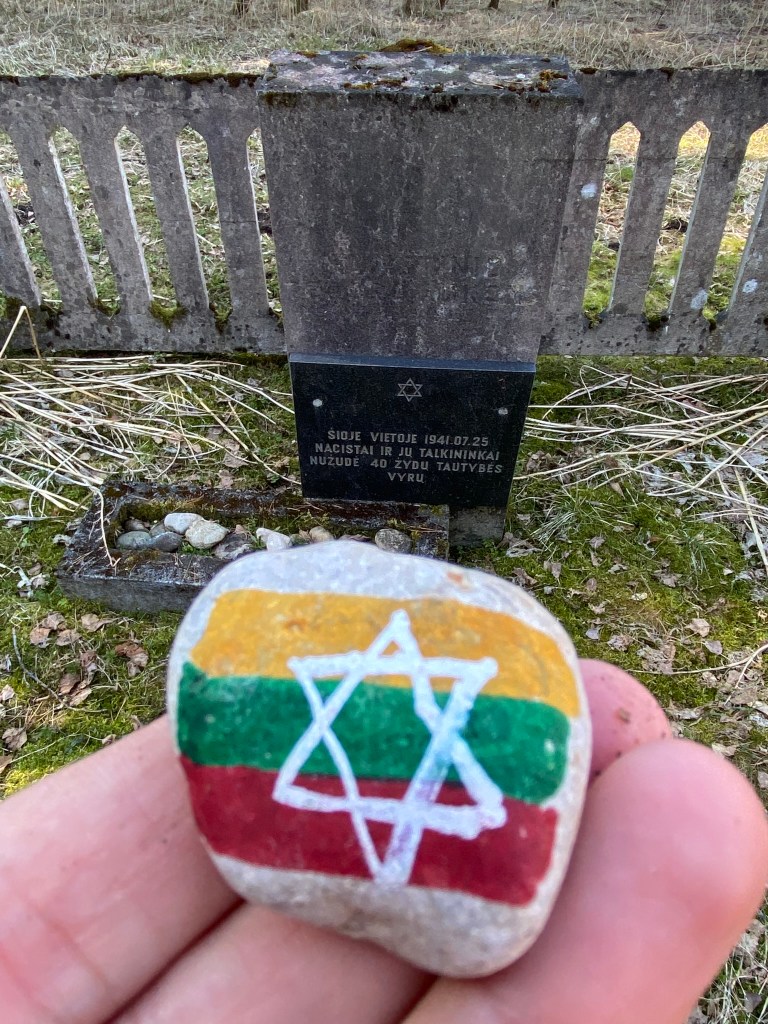
In late July or early August 1941, police chief Antanas Jurgaitis ordered the arrest of Tytuvėnai’s Jewish residents. Around 15 men were taken to a nearby forest and executed in two groups. This site is known as Gečpievė.
About a week later, the commandant of the Raseiniai ghetto arrived with 15 white armbanders. Together with local collaborators, they arrested the remaining Jews and confined them in the synagogue. They were taken to the forest in four groups of about 40, ordered to strip to their underwear, and executed in pre-dug pits. In total, 160 Jews were murdered. Local residents were forced to dig and later cover the mass graves.
Doctor Chveidenas was away treating a patient and survived the initial massacre, only to be killed the next day.


The Senzulis Family

http://rescuedchild.lt/content.php?id=2338
Before the war, Leiba and Frida Senzulis lived at 14 Kelmės Street, raising ten children and running a carpentry business. Leiba died in 1938. The family was known locally as the “Leibukai,” after him.
In July 1941, during the first mass execution, their sons Shmuel and Itzhak were murdered. Their youngest son, Tsali, was executed the next day.
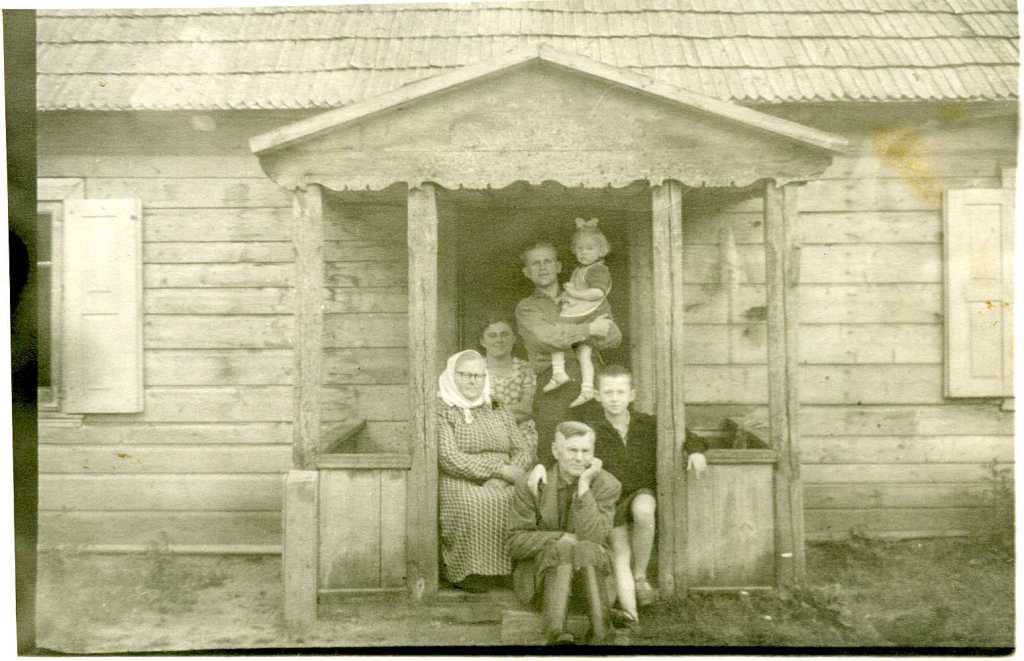
One son, Joseph-Leizer Senzulis, survived by chance — he was working on a nearby farm and wasn’t home when the killers came. Locals who knew his parents risked their lives to hide him. He later emigrated to Israel in 1979, where he lived until his death in 2005.
Some rescuers from Tytuvėnai area (all photos are from: Rescuers of Jews):


Today, Tytuvėnai is a quiet town surrounded by nature — lakes and forests still attract visitors. Though the Jewish community is gone, their memory lives on through stories, names, and fragments of buildings that once defined their presence.
If you know stories about the Jews of Tytuvėnai or have photos of people or places, please contact me at info@litvakshtetls.com.
Short video about Tytuvėnai Jewish traces:
There is also a longer kind of virtual tour if you are interested in more details.
Sources:
1. Žydų gyvenimo spalvos Tytuvėnuose (in Lithuanian), written by students of Tytuvėnai Youth school (teacher Laima Pranckuvienė). From the book “Mūsų senelių ir prosenelių kaimynai žydai” Vilnius, 2007. P. 23-36
2. Žydų gyvenimo pėdsakai Tytuvėnuose
3. Tytuvėnai (Tsitevyan)
4. Holocaust atlas here and here
5. About Leiba Senzulis family and the rescuers of Joseph Senzulis
 Litvak Shtetls