
Dusetos is a small town by Lake Sartai. It was first mentioned in 1519.
Don’t call it a village – it has been officially a town since 1686, and locals will always correct you. Located in Aukštaitija, roughly equidistant from Utena, Zarasai, and Rokiškis, Dusetos never became a major trade or industrial hub, as it has never had a railway. Locals even opposed railway construction to preserve the peaceful life by the lake.

While today Dusetos is known for the Sartai horse races, the Plater estate, and perhaps Vasaknai beer, it also had a Jewish community. Their pre-war daily life is recorded in the book There Was a Shtetl in Lithuania, and many stories are still remembered by local resident Marija. In this text, we will explore Dusetos as it was known to its Jewish inhabitants.
A brief history of Dusetos’ Jews
Jewish settlers, calling the town Dusiat in Yiddish, began arriving around the 18th century. By 1847, nearly 500 Jews lived here. In the late 19th century, the Jewish population reached 1,158 — almost 90% of the town’s residents. After a fire in 1910 and the disruptions of World War I, the number declined to about 100 families. By the eve of World War II, around 80 Jewish families remained.
Economic hardship and growing antisemitism contributed to the decline. Trade with Dvinsk (now Daugavpils), an important partner, became more difficult due to border restrictions. Yet, the community remained active: supporting Zionism, learning Hebrew, and dreaming of a homeland in Israel.

(photo from the book There Was a Shtetl in Lithuania)
Before World War I, Dusetos had five or six cheders and one cheder metukan (modernized school). During the interwar years, a Tarbut (Hebrew culture) elementary school operated with 65 pupils. Ten children studied in the cheder. The community also maintained evening Hebrew classes, a library, and a drama group. The local Hashomer Hatzair branch had 80 members, Maccabi about 50. There were also a Torah study society, and Linat HaTzedek and Gemach charity organizations.
Life by the Lake
The lake, the main attraction of Dusetos, was also very important to the Jews. Those engaged in the timber trade would float logs on it. In winter, when the lake froze, they could haul firewood across to the other shore with horse-drawn sledges.
The main Jewish bathhouse was also located on the lake shore. On Friday evenings, a kind of ritual took place. All Jews were required to bathe in the lake. Sunday, incidentally, was the Lithuanians’ day at the lake. The Jews would watch their boats from the shore and listen to the beautiful songs the Lithuanians sang.

(photo from the book There Was a Shtetl in Lithuania).
The lake was both a place of joy and recreation, and one of sorrow. People traveling across the ice sometimes fell through, and swimmers occasionally drowned. Not far from the lake, in the Jewish cemetery, there are still gravestones that recall the sad stories of Dusetos residents who drowned.
The Holocaust in Dusetos
But the saddest stories lie in the forest 12 kilometers away — it was there, in August 1941, that most of the Jews of Dusetos were shot together with other Jews from the Zarasai region, tragically, with the help of some local neighbors. Thus ended the centuries-long history of the Jewish community of Dusetos, as happened in many other towns and shtetls.
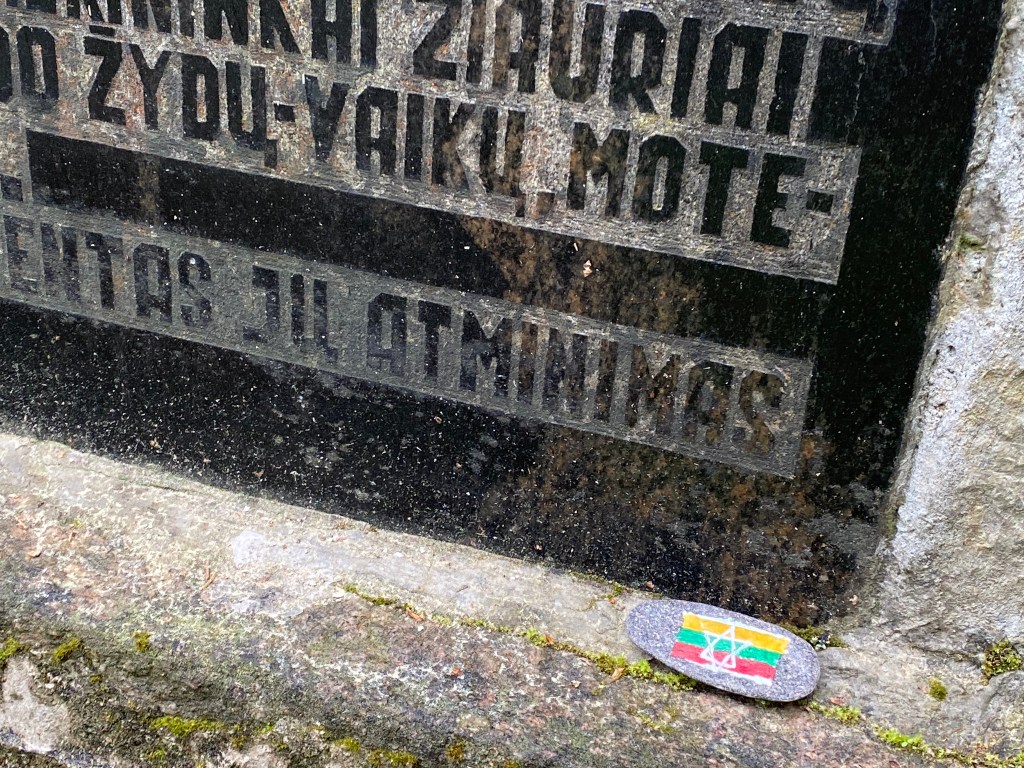
So that this loss may not be entirely meaningless, I invite you to take a walk through the shtetl and remember the Jews who once lived here and the stories about them. Along the route, I will share memories of the Dusetos shtetl as recalled by its residents in the book There Was a Shtetl in Lithuania.
Read more → Jewish Dusetos: walking through the former shtetl
Read more → Zionism in Dusetos: the story of Hebrew teacher Yehuda Slep
Read more → The Jewish bathhouse of Dusetos
Read more → Dusetos Jewish cemetery: stories of Isroel and Elchanan Glukh
 Litvak Shtetls