
In Marijampolė, there were once four photographers serving a population of about twelve thousand. Three of them barely made a living, but the fourth, Moisei Buchalter, was famous. It was to him that young Izis went to learn the craft.

“I loved it very, very much,” he later recalled. “His studio looked like something from a hundred years ago in France — one wall and the ceiling were made of glass. We used daylight, and to adjust the lighting, we moved long poles with white curtains. The props were pure imagination — a painted backdrop of a forest or a magical castle. The Lithuanians were naïve; when photographed in profile, they would say, ‘How come only one ear?’ They were simple, but charming people. And I loved it all.”
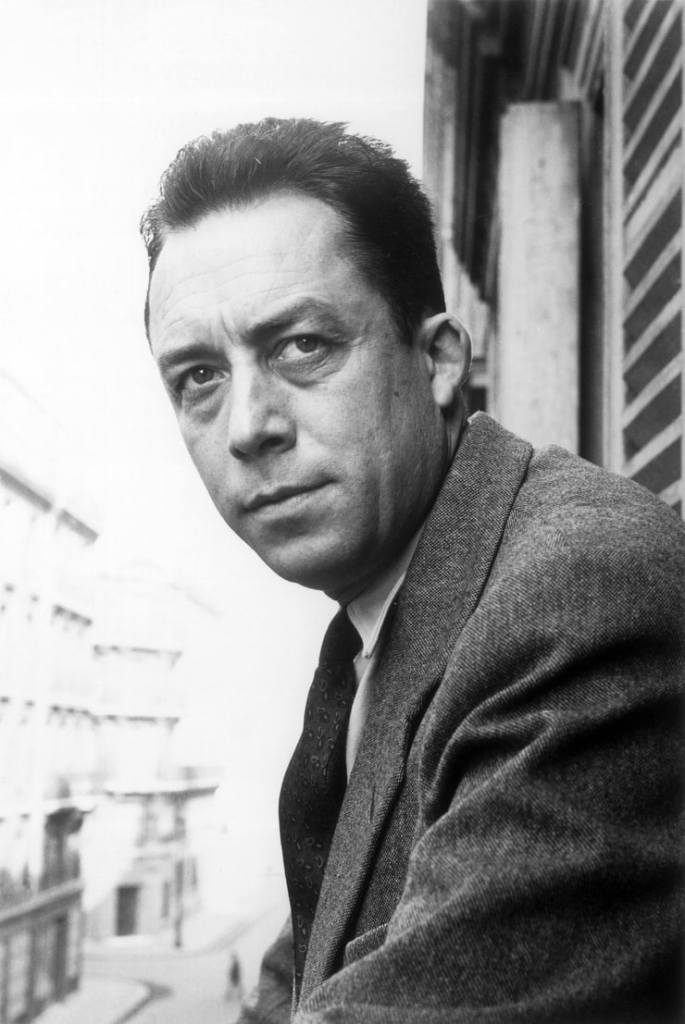
This vivid recollection comes from Izis’s childhood memories, quoted by Vytautas A. Jonynas in the 1984 article “Izis, the Marijampolė Native” published in the American Lithuanian newspaper Draugas.
Israëlis (Izis) Bidermanas – quite an unusual name for a Frenchman, isn’t it? Yet this Litvak from Marijampolė became one of the most distinctive photographers of postwar Paris.
He was born on January 17, 1911, into a poor shopkeeper’s family. The Bidermans were so impoverished they were evicted for not being able to pay rent.
“Let me give you an example of what the worst sign of poverty means to a Jew,” Izis once said. “It’s not having challah on the Sabbath. Our community always helped the elderly poor, but my father had only recently lost his business and was ashamed to ask for charity. I remember Friday nights with no challah, nothing to eat at all, and tears in everyone’s eyes. For a Jew, that was real misery.”
The family dreamed of emigrating to Palestine, hoping their son could become a carpenter, a useful trade in the new land. But Izis was not interested in carpentry; he wanted to become a photographer.
After apprenticing with the well-known photographer M. Buchalter, the nineteen-year-old left his provincial and poverty-stricken hometown in 1930.
“You know that many Jews from Russia or Poland went to America, fleeing poverty,” he recalled. “But not me. I was drawn to France – the land of culture and spirit. Freedom, equality, culture – that’s what we dreamed about. We knew paintings only from black-and-white reproductions in the press. I attended public lectures where they showed Matisse’s works on the screen – they seemed so modern then, almost impossible to understand. Jewish newspapers often wrote about Chagall, the most celebrated Jewish painter in Paris. I didn’t understand his art, but I was fascinated.”
A few years later, Izis would meet and even work with Marc Chagall. But success didn’t come easily. His first years in Paris were full of hardship: he lived in near starvation, working long hours in other people’s studios and sleeping in darkrooms.
Only after the war did his talent receive the recognition it deserved. His poetic, deeply human photographs of Parisian life, circus performers, and ordinary people (far from the tourist clichés) brought him international fame.
Izis held exhibitions in France, England, and the United States, worked in Israel, published several books, and his works entered the collections of major museums, including New York’s MoMA and London’s Tate Gallery.
Many of his photographs carry a subtle melancholy, a sense of longing – emotions that deepened after he learned the fate of his family in Lithuania. Izis grew angry with Lithuania and never forgave it; he even stopped calling it his homeland. He never changed his name to sound French – “Israëlis Bidermanas,” with all its Lithuanian endings, remained in his passport until his death on May 16, 1980.
Years later, his son Manuel brought a selection of his father’s works to Marijampolė, dedicating the exhibition to the memory of their lost family.
Because of copyright issues, I’m not sharing Izis’s photos here, but you can follow these links to explore his extraordinary work.
- The famous “Five French Photographers” exhibition (1951–52), which brought him significant international recognition
- A virtual exhibition at the Vilnius Picture Gallery
- Litvakas iš Marijampolės – Izis Bidermanas
Sources:
 Litvak Shtetls