
Meet Marijampolė, known in Yiddish as Mariampol. First mentioned in 1667, this historic town is now home to 36,076 people (2025).


Marijampolė Jewish community: 82% of the town, one of Europe’s first Hebrew schools, and a famous painter
Jews began settling in Marijampolė in the early 18th century, mostly on the left bank of the Šešupė River. The community grew in the 19th and early 20th centuries. In 1856 Jews made up roughly 82% of Marijampolė’s population (2,853 persons out of 3,462), and in 1897 there were 3,268 Jews (out of 6737, about 48%). During the interwar period the number of Jews decreased: there were 2,545 Jews in the town, that made 27% of the total population.
Jews lived mainly as traders, artisans, and farmers, they exported flax, grain, and poultry, and despite hardships, the community florished.
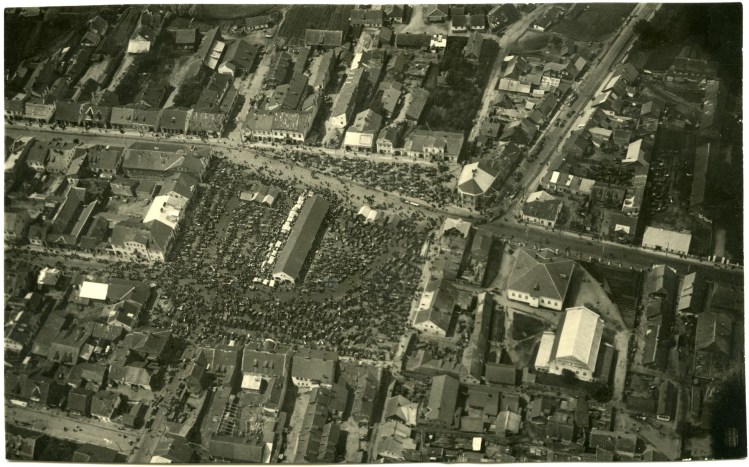
Here I want to include a short passage based on Avraham Tory – Golub’s “Portrait of Mariampole.” It paints such a realistic picture of the old market square in the beginning of the 20th century, that I can hardly add a word.
At one corner of the Market Square stood Dovid Berkson’s house, from which he ran a trade in scrap metal, flax, and hog bristles. Nearby rose the firehouse with its equipment, alarm bell, and a water pump close by. Directly opposite, Rosenthal’s Drug Store faced the “Shpritsarnie” firehouse, and in later years the second floor of that same building housed the “Folk’s Bank.” Iwashkovsky’s Galanterei (notions store) was located there as well.

Photo: FB page Lietuva senose fotografijose
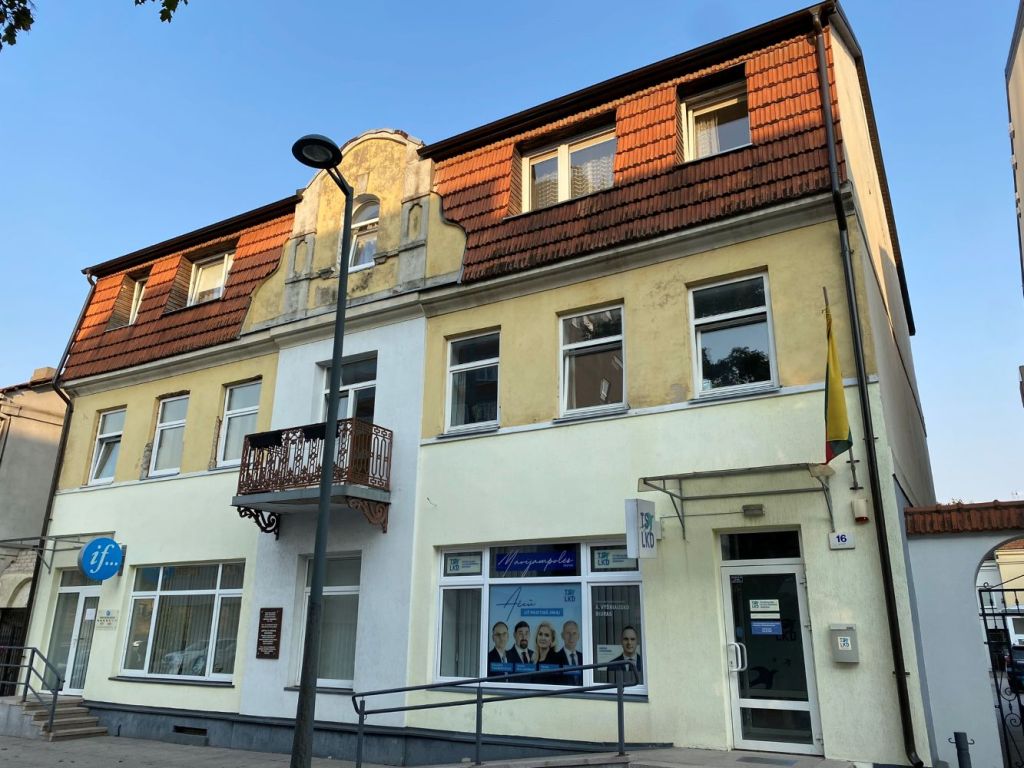
Next came Lichtenberg’s grocery, Nachimowsky’s bakery, and Friedberg’s woolen goods store. Nearby were London’s grocery, Yehudah Abbe Levinsohn’s shop of woolen goods, and the hardware store of Leiser Rosenthal and his son Abba Yitzhok. Moishe Dovid Heyman sold leather goods close to Warshaver Gaas (now Vytauto str.). From here a narrow street led down toward the Šešupė River, where townspeople drew “Good Water” from a public pump.

Photo: FB page Lietuva senose fotografijose

Photo from the Facebook page Lietuva senose fotografijose (courtesy of M. Vaitiekūnas).
Another corner of the Market Square was marked by the Evropeisky Gostinitse hotel. Here one found Abelson’s yard goods business and a non-Jewish cooperative store. In this same neighborhood lived Lipmanovits, known as der feldsher (the medic), Chaim Shimen der limonadnik (the soda-water maker), Chane Golde Goldstein, Altschuler, Bandalin, and Moshiach the tailor. The town’s public bathhouse also stood nearby.
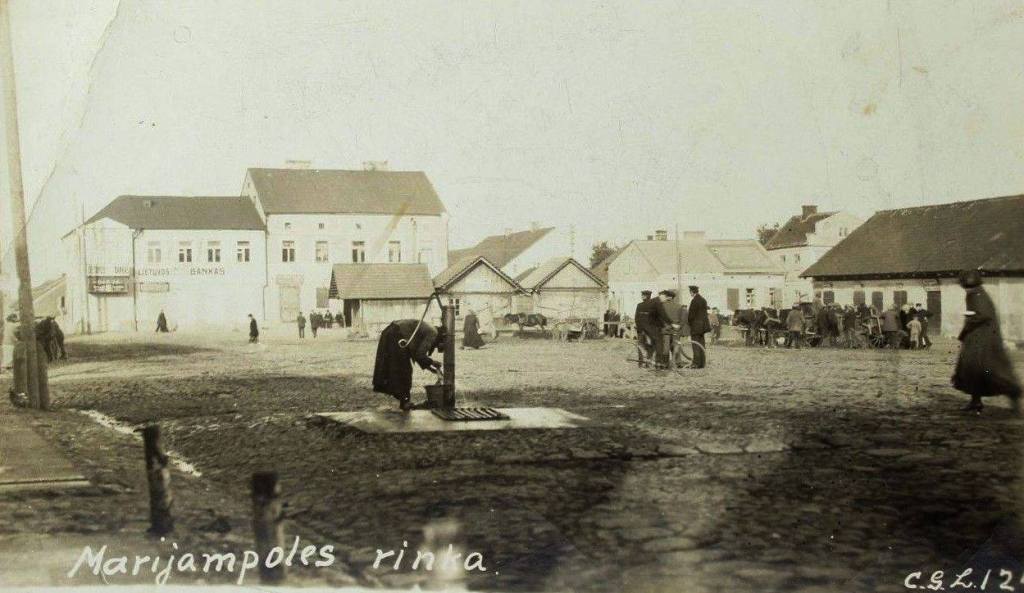
Photo: FB page Lietuva senose fotografijose
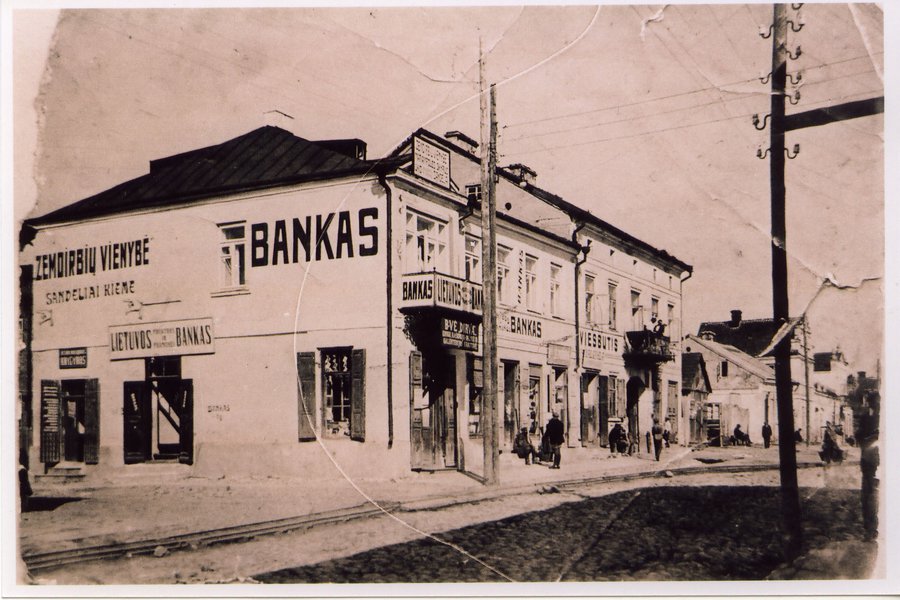
Photo: FB page Lietuva senose fotografijose
A bit further lived Reb Shlome der dian (the religious judge) and Izaak Achron. Turning off along a narrow lane by Bartling’s drugstore near Vilkovisker Gaas, one reached Kovner Gaas, where Perets Bloch and his son Mendel kept a tobacco shop. Close by were Garbarsky’s beerhouse and restaurant, Ruttenberg Shmeril’s hardware store, Ribitski’s grocery, and the Beth Hamedrash synagogue known as Shul Heiff.

Photo: FB page Lietuva senose fotografijose

Education was very important to to community life. Traditional cheder schools taught religion and Hebrew, while “improved” schools and yeshivas introduced literature and broader studies. By the 20th century, Marijampolė had Hebrew and Yiddish elementary schools.
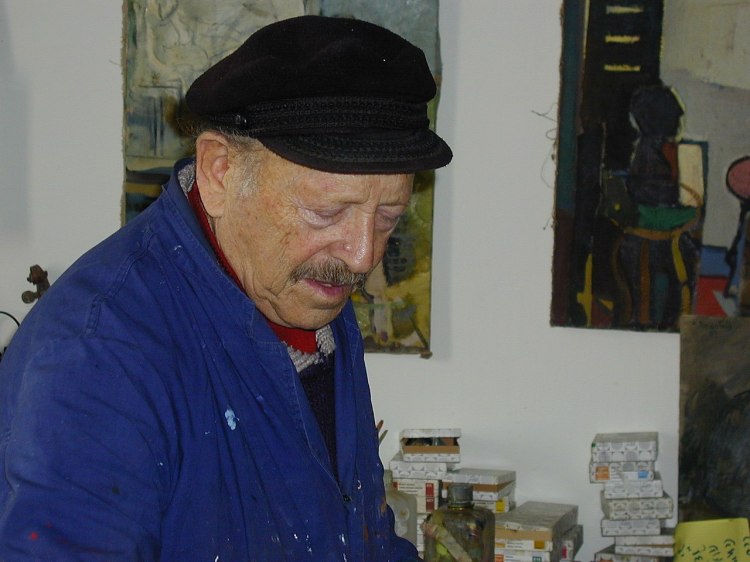
The Hebrew Gymnasium in Marijampolė was founded in 1919 and became the first modern Hebrew high school in Lithuania and one of the first in the Jewish diaspora. Inspired by the Herzliya Gymnasium in Tel Aviv, it was established by local Zionist leaders and staffed by both local and German Jewish teachers. The school offered a broad curriculum in sciences, humanities, and Hebrew studies. It was preparing a new generation of educated Lithuanian Jews devoted to Zionist ideals. Among its teachers was Max Band, who later became a well-known painter in Paris and the United States.
Libraries and cultural groups were very active, they organized Tarbut evening classes and drama circles.
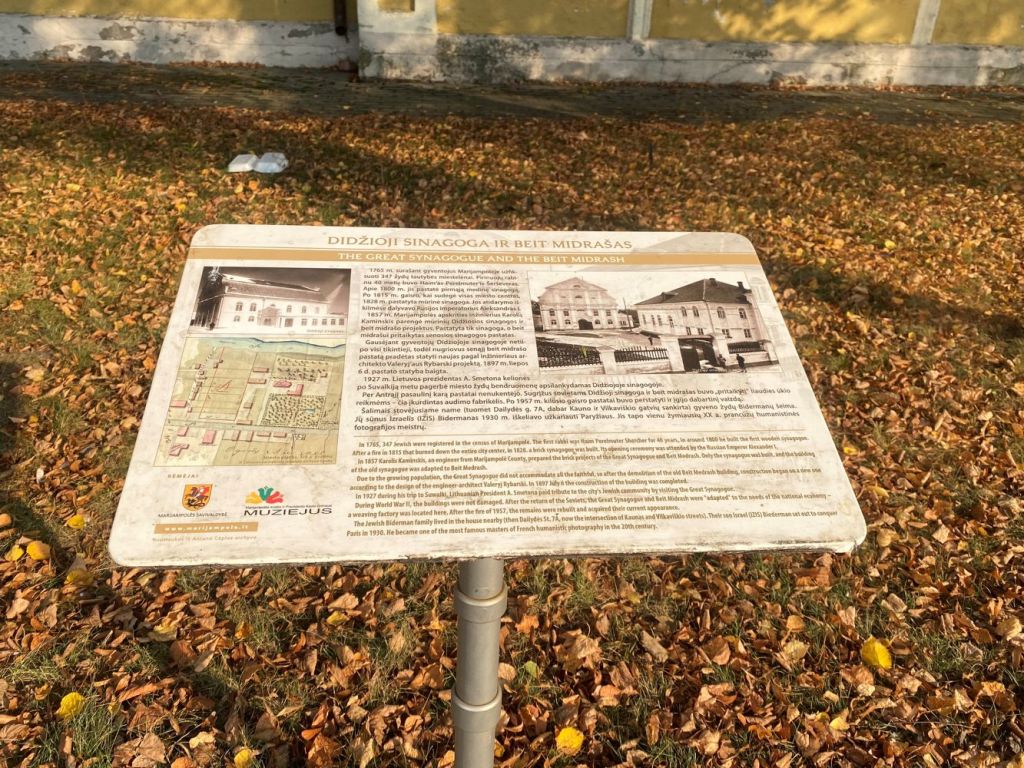
The town had three synagogues: the Central Synagogue, Hakhnasat Orhim (Hospitality for Wayfarers), and Beit Midrash. There were also numerous welfare organizations providing loans, medical care, housing, and support for the needy. Youth were active in Zionist movements like Hashomer Hatzair, Betar, and Hechalutz, as well as sports clubs such as Maccabi and Hakoah.

Economically, Jews dominated commerce, crafts, and industry. In 1931, 121 of 146 stores (83%) were Jewish-owned, and 26 of 54 factories were also Jewish-owned. Artisans numbered around 100, including tailors, shoemakers, bakers, carpenters, and watchmakers. The Jewish People’s Bank (Folksbank) supported 500+ members, while agricultural training farms prepared youth for settlement in Eretz Yisrael. A cinema, a few photo studios also belonged to Jews.
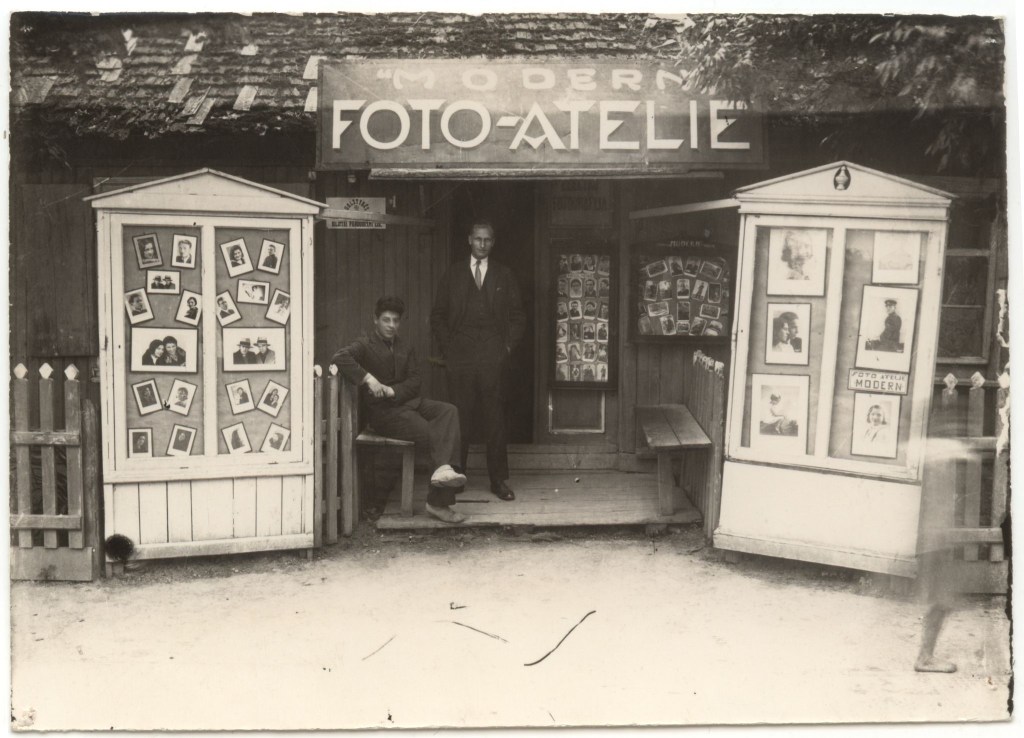

Photo FB page Lietuva senose fotografijose
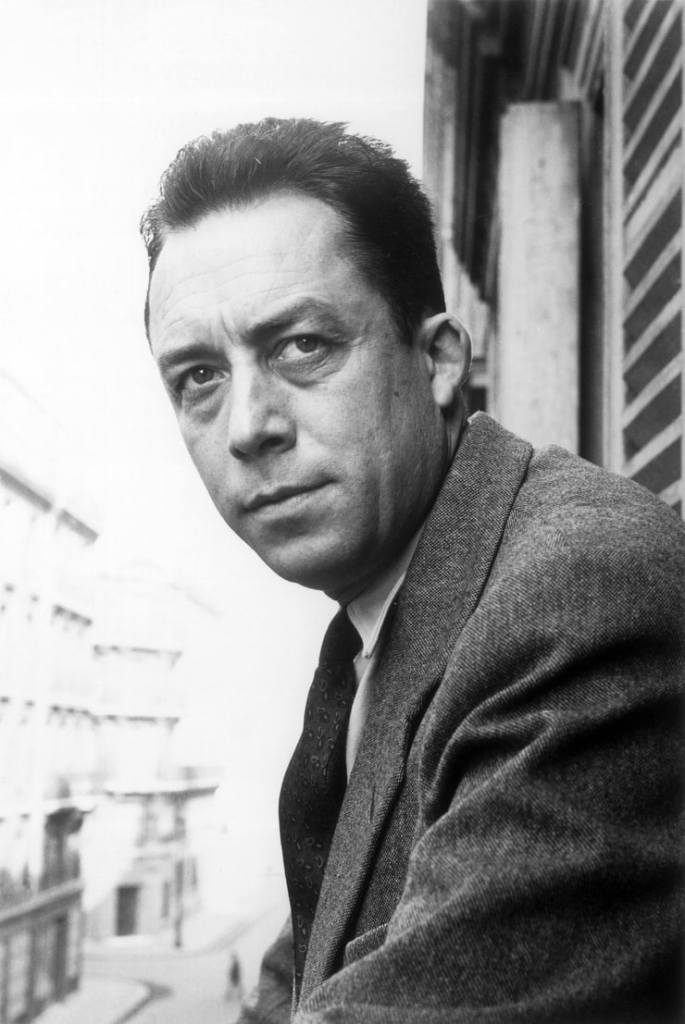
Notable figures from Marijampolė include Israel Prize-winning educator Dr. Barukh ben Yehuda, poet Alter Abelson, painter Moshe Rosenthalis, and photographer Israelis Bidermanas (Izis).
In 1939–1940, many Jews fleeing German-occupied Suwalki arrived in Marijampolė, and the local community took care of them. After the Soviet occupation in June 1940: most of city’s factories, shops and other businesses were nationalized, Zionist groups banned, Hebrew school was closed. The Jewish middle class suffered greatly.
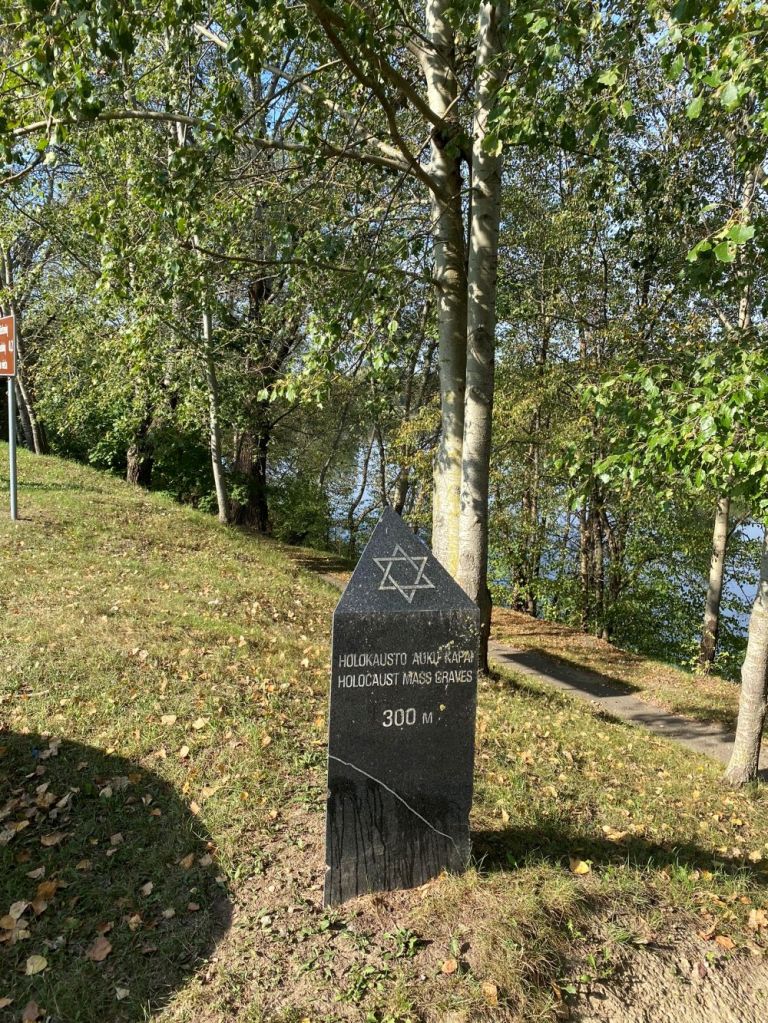
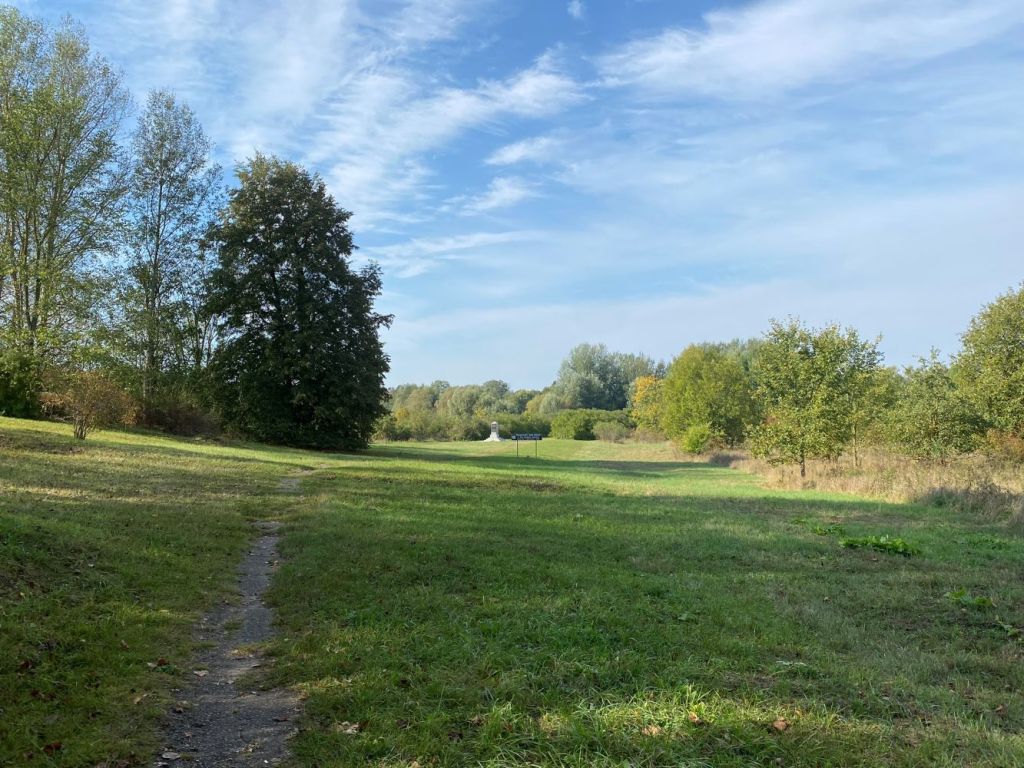
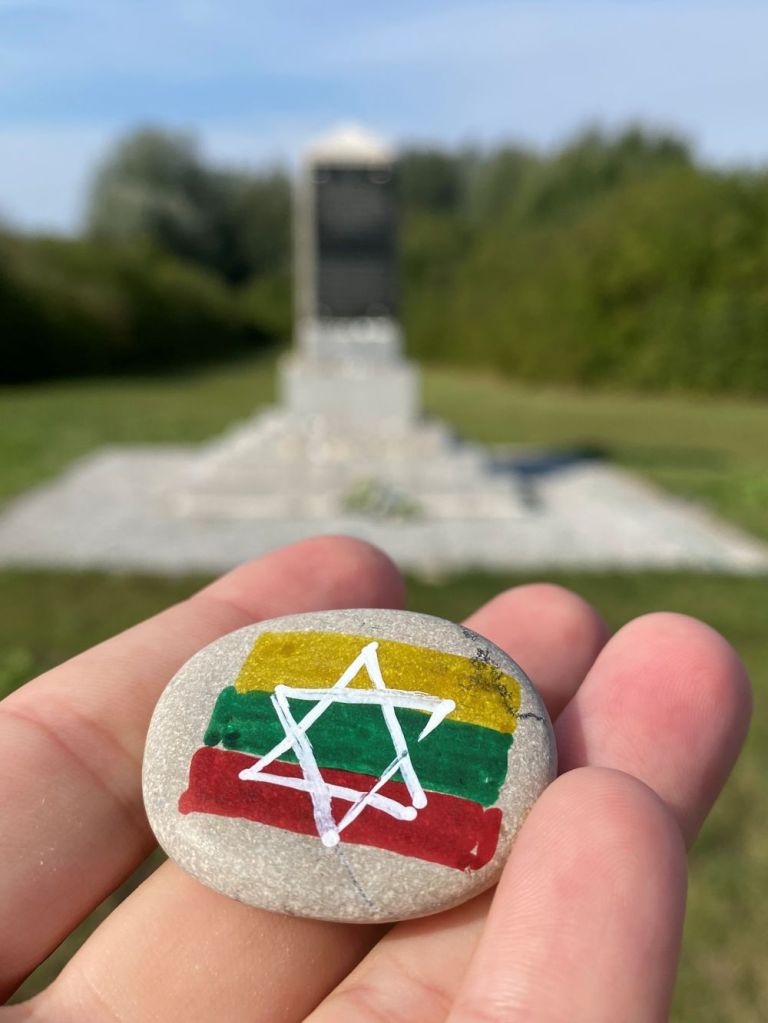
After the German invasion in June 1941 Jews were forced into labor. Dozens were killed in early shootings in July. On September 1, nearly all of Marijampolė’s Jews: men, women, and children, were taken to the ditches near the Šešupė River and murdered. The Jewish life in the town ended.
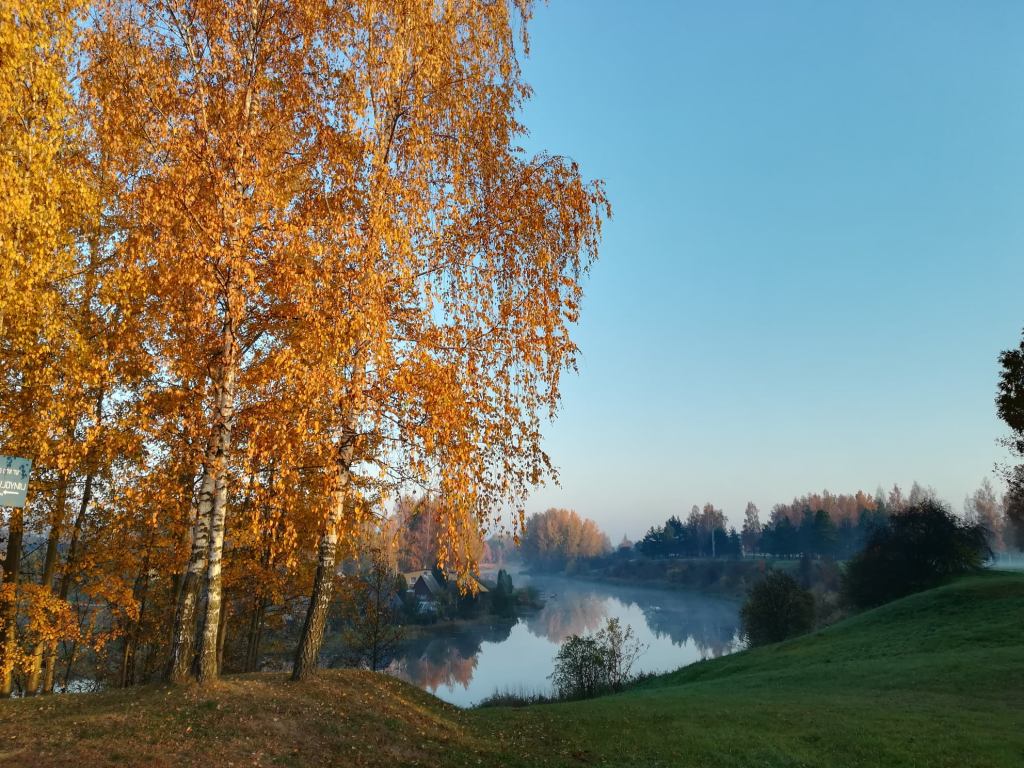

Jewish and artsy Marijampolė today
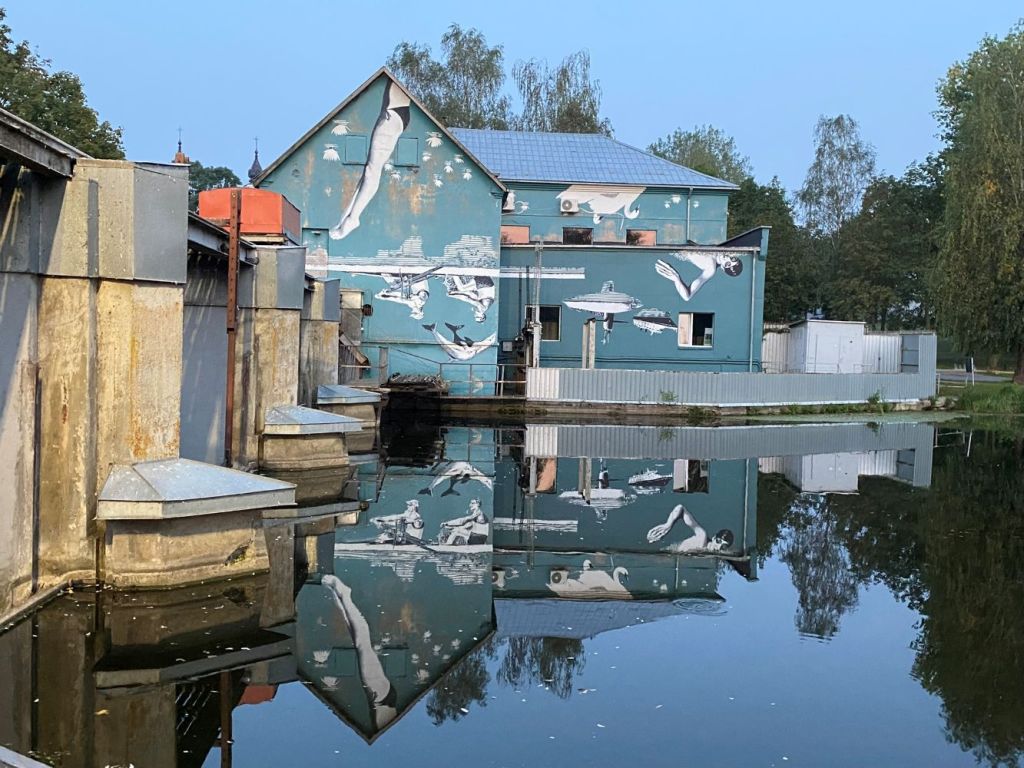
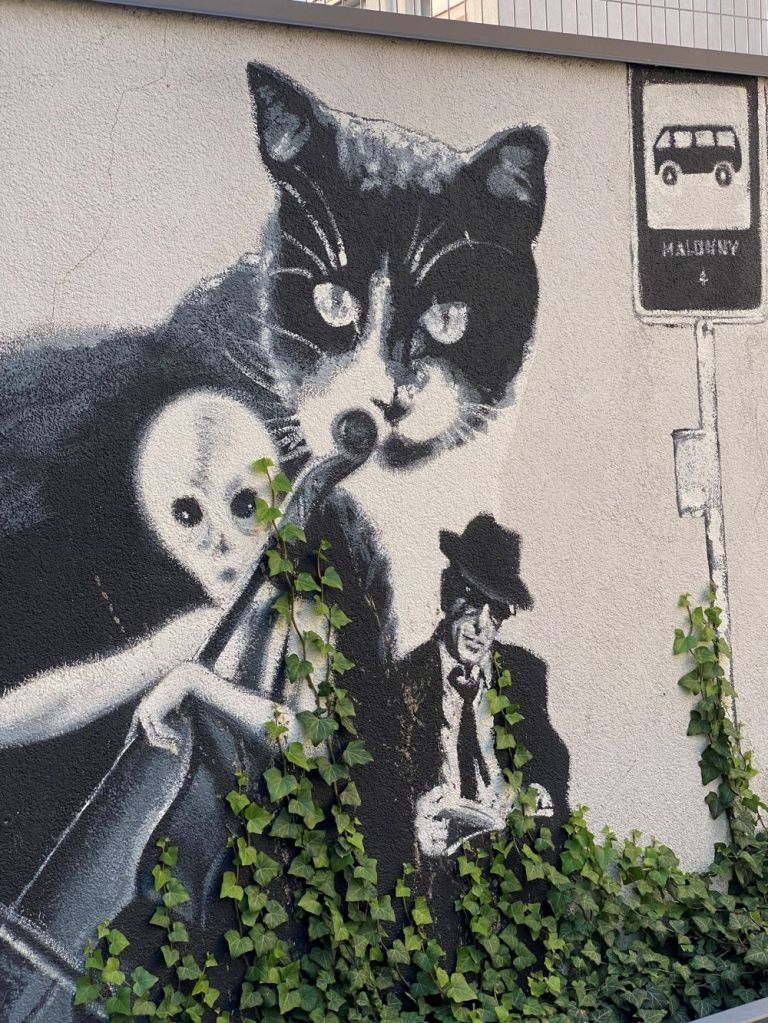
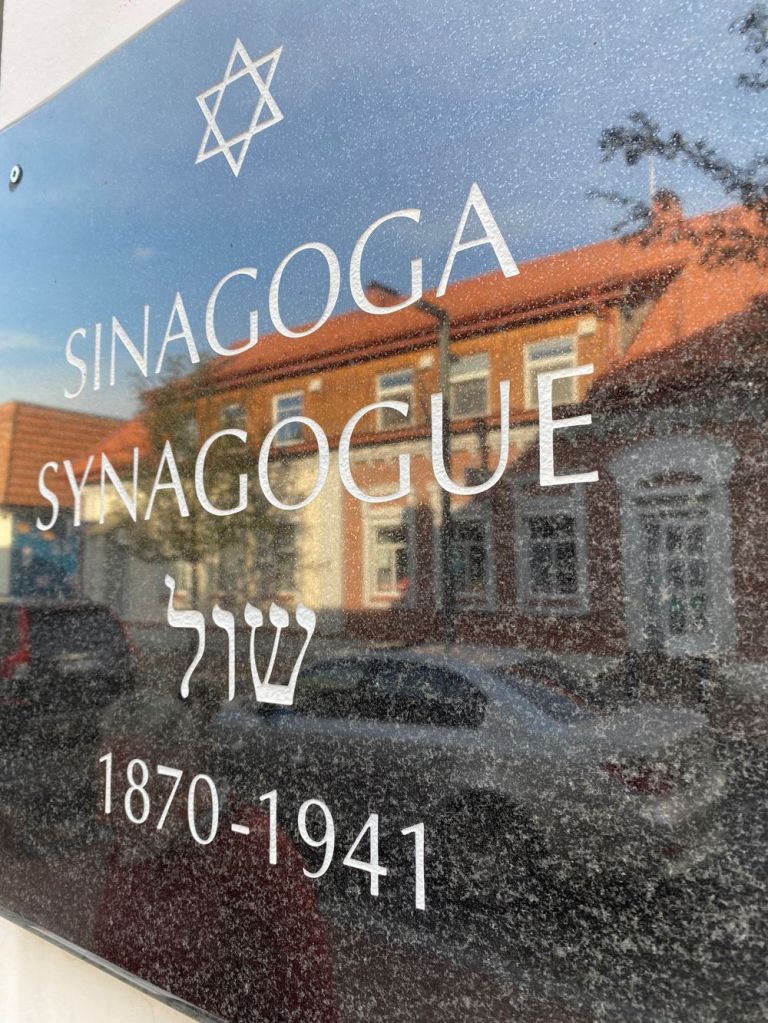
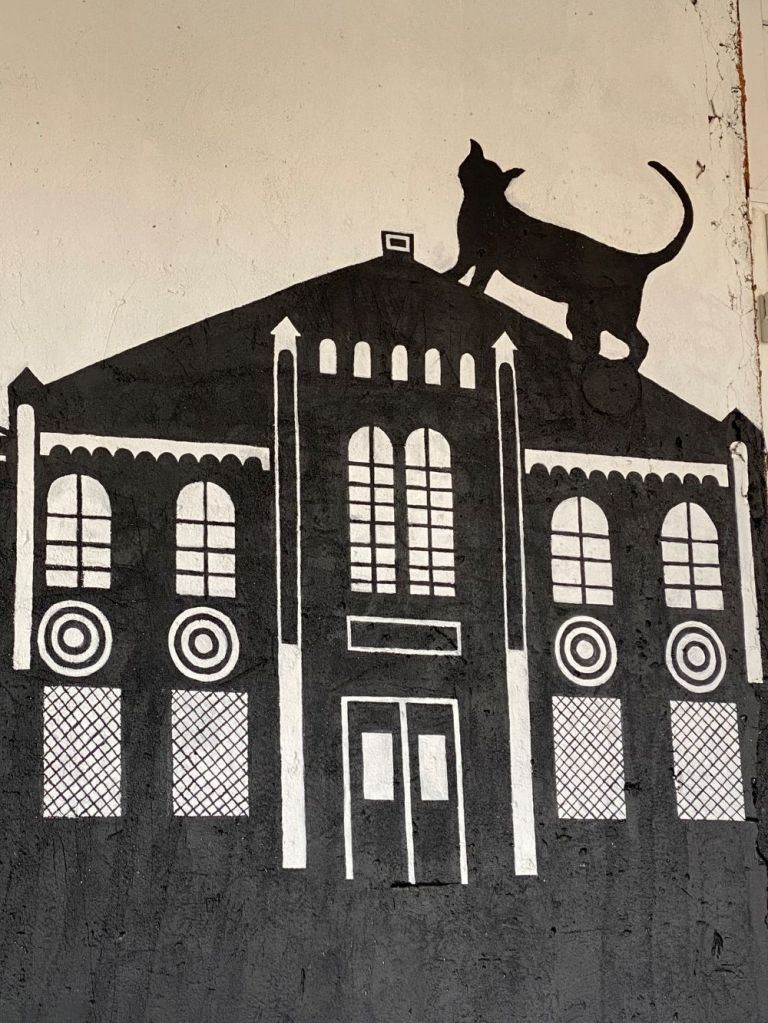
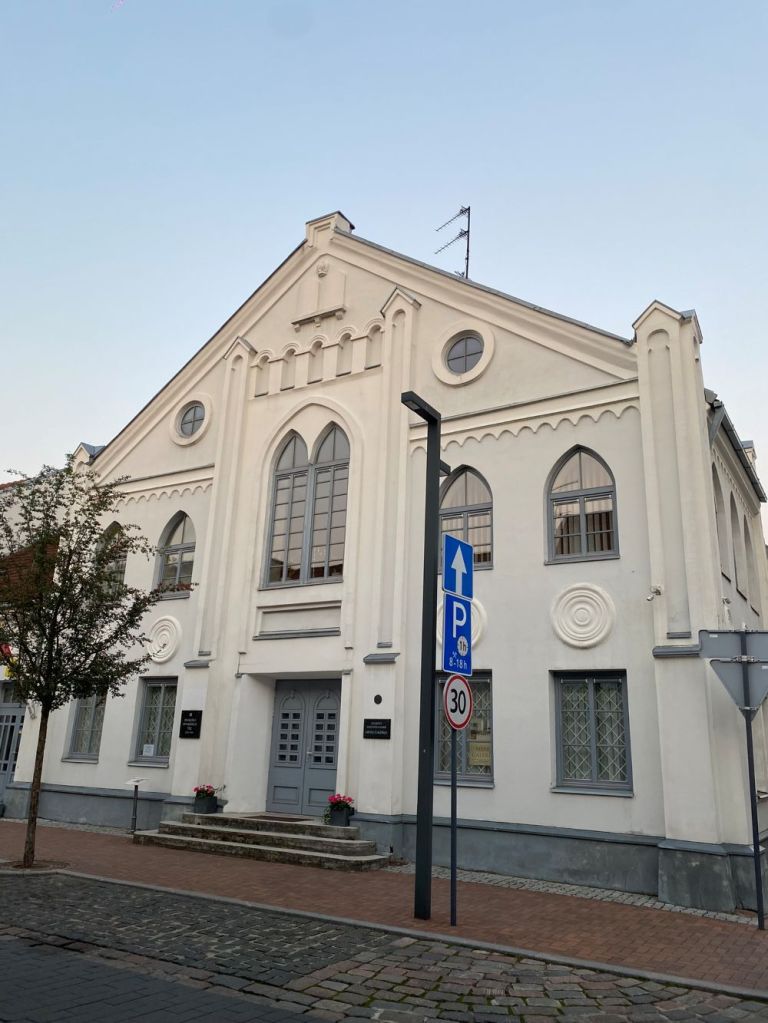
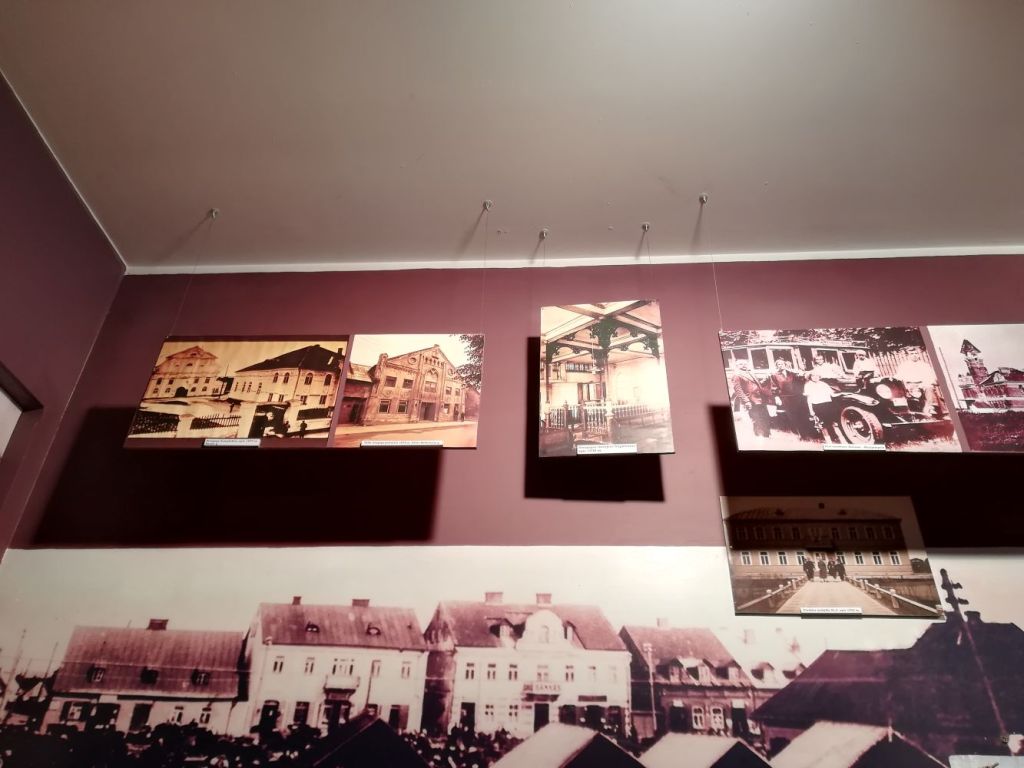
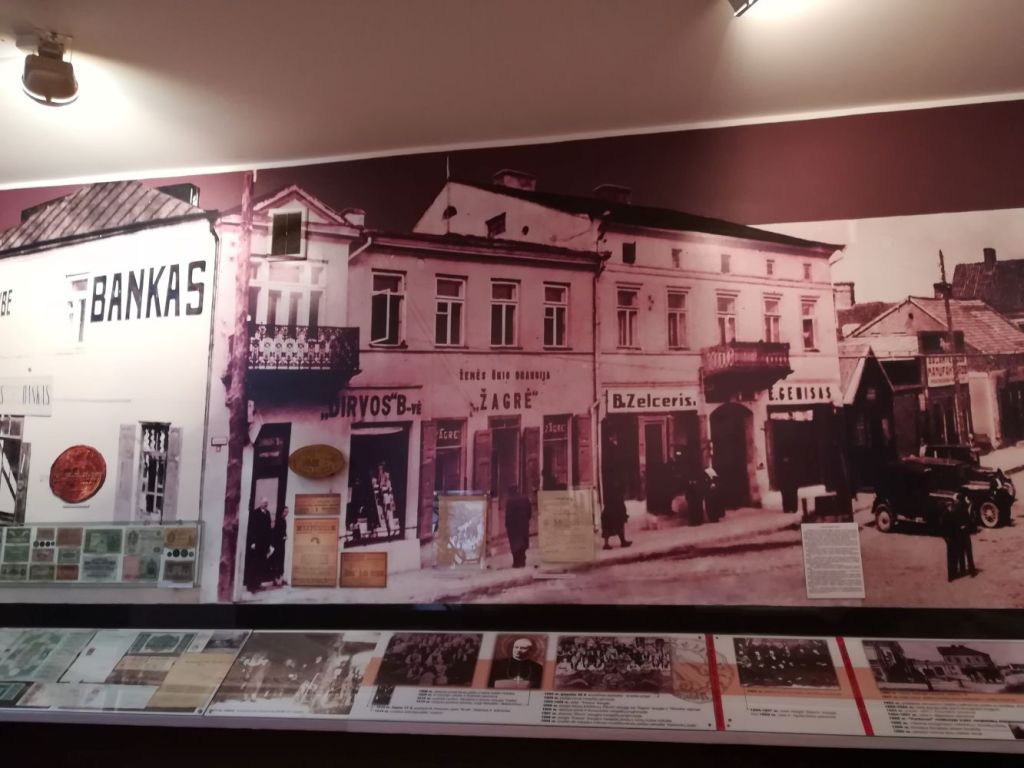
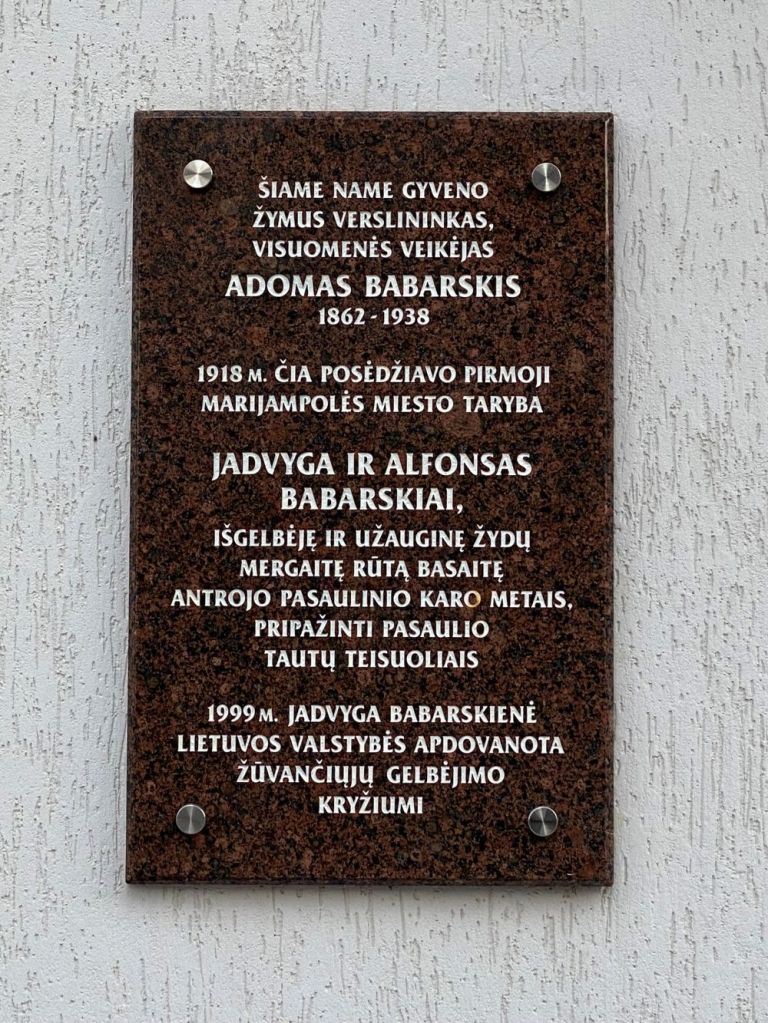
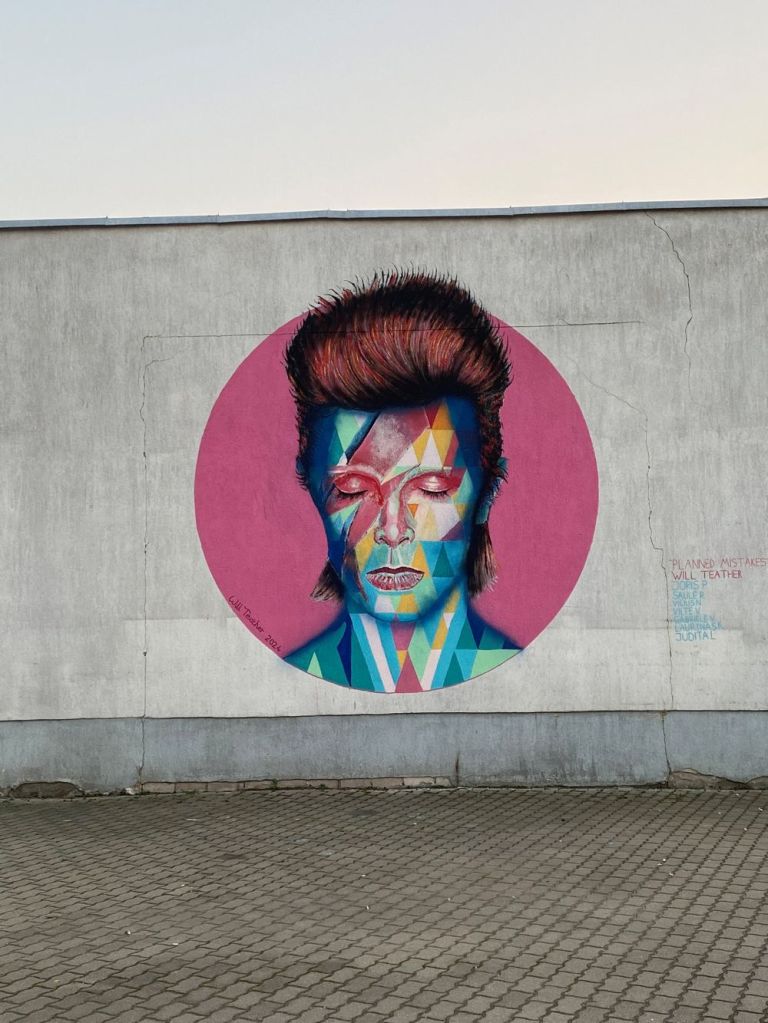
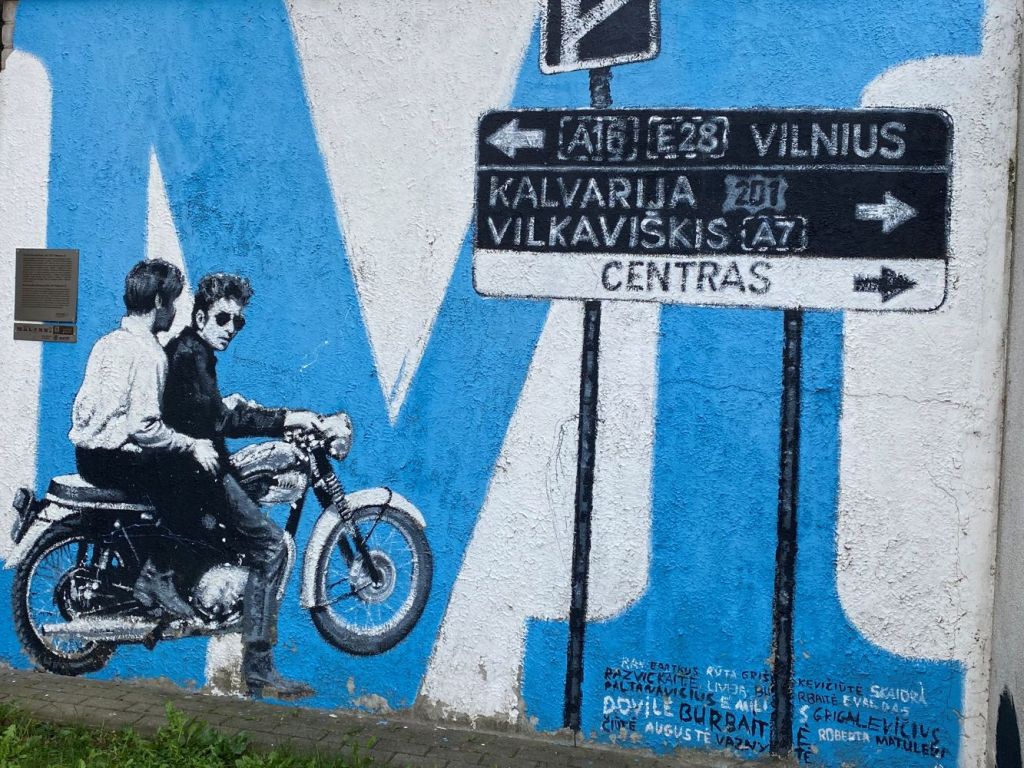
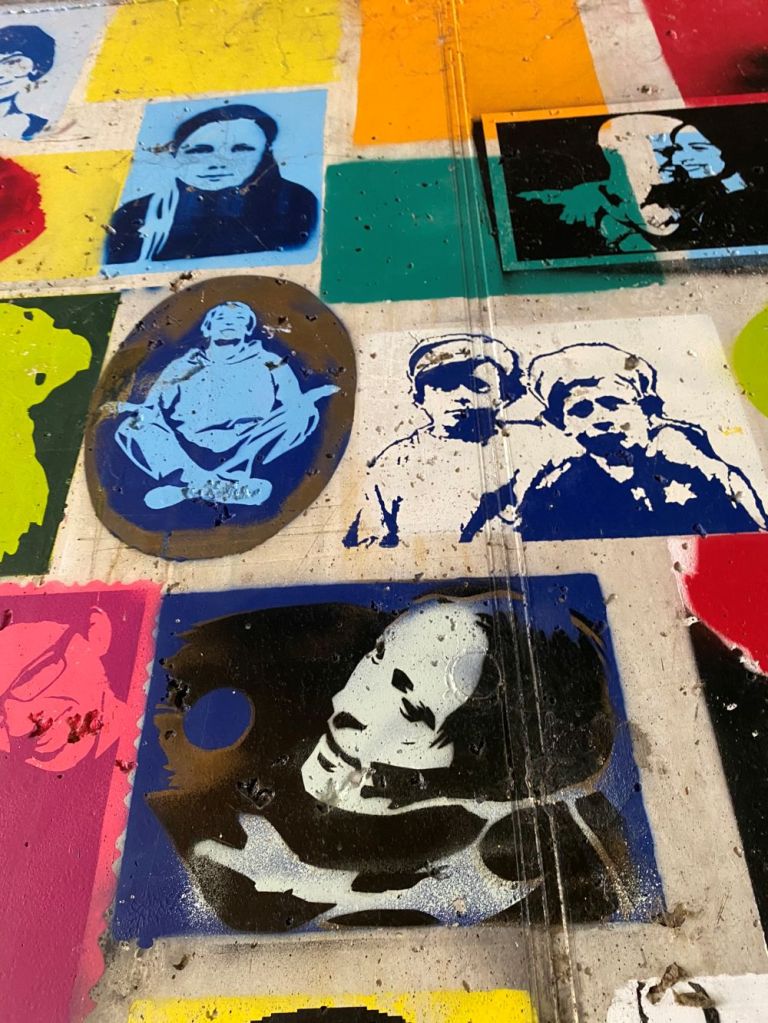
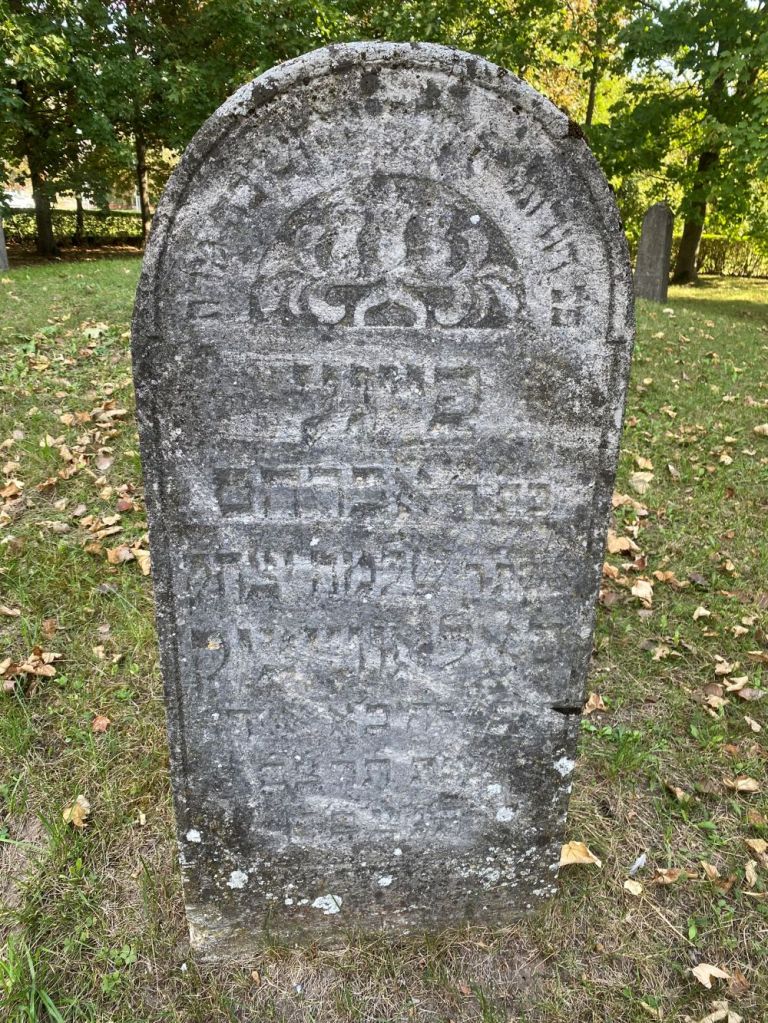
Today, the Jewish history of Marijampolė is remembered through the surviving synagogue, a few old buildings and streets, and the sites of Jewish cemeteries (one of them is turned into a memorial of gravestones). Informational boards in the city and exhibits in the local museum also preserve Jewish heritage, and you can spot Jewish-themed elements in the city’s street art.
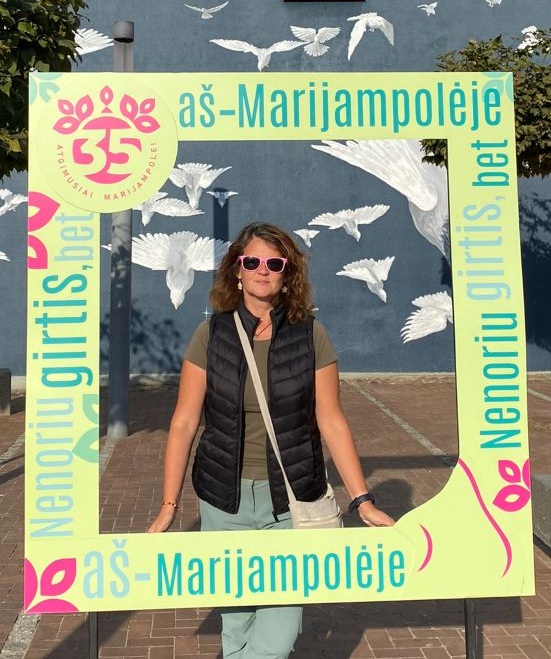
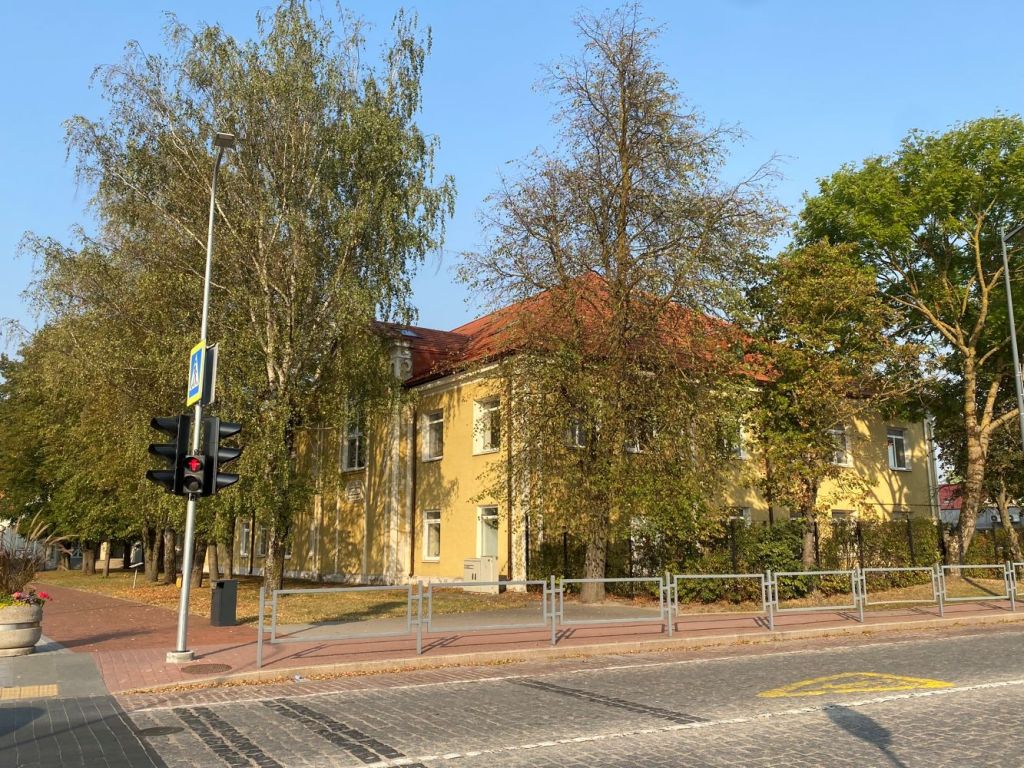
Marijampolė is also full of street art unrelated to Jewish history, which makes exploring the town even more interesting. Here are a few photos from Jewish and Artsy Marijampolė. If you would like a personalized itinerary, feel free to contact me via email. Alternatively, fill in the form below.
Sources:
- Mariampol (Marijampolė), Lithuania, written by Joseph Rosin. English edited by Fania Hilelson-Jivotovsky.
- Marijampole – Encyclopedia of Jewish Communities in Lithuania, written by Joseph Rosin.
- Arūnas Kasperavičius. Niekada nepalikę savo miesto, – Terra Publica, 2022.
- Marijampole on the river Sesupe, translation of Marijampole al gedot ha-nahar Sheshupe (Lita), edited by: Avraham Tory-Golub


 Litvak Shtetls