
Kuršėnai is a town many of us simply pass through without stopping. We rarely stop here, and even more rarely do we, as Lithuanians, pause to look at its Jewish past.
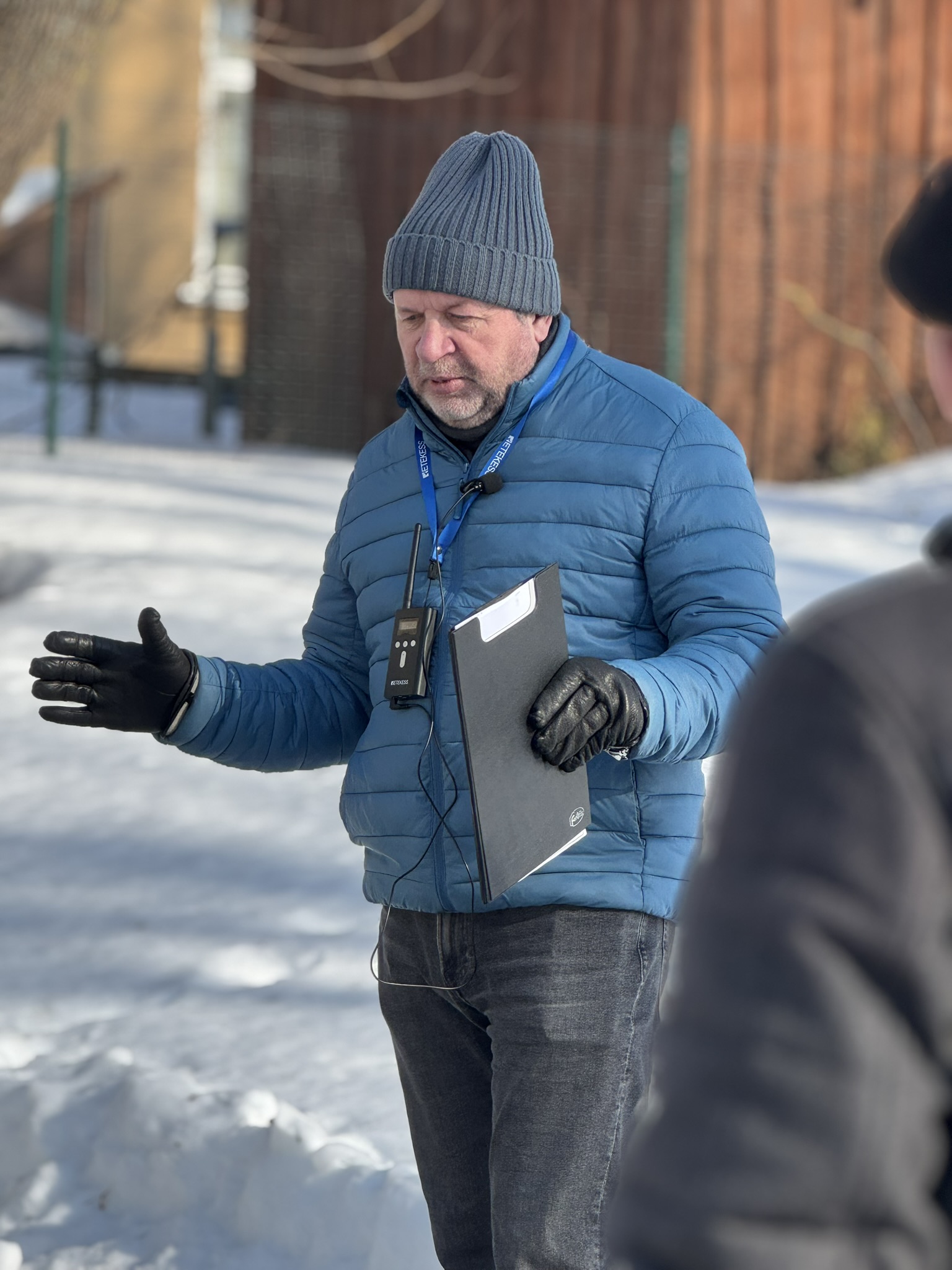
This time, I had the opportunity to join a tour organized by the association “Įdomūs Kuršėnai”. The tour was led by historian and researcher of the town’s Jewish history Jonas Kiriliauskas. He published a book on the Jewish community of Kuršėnai back in 2007.
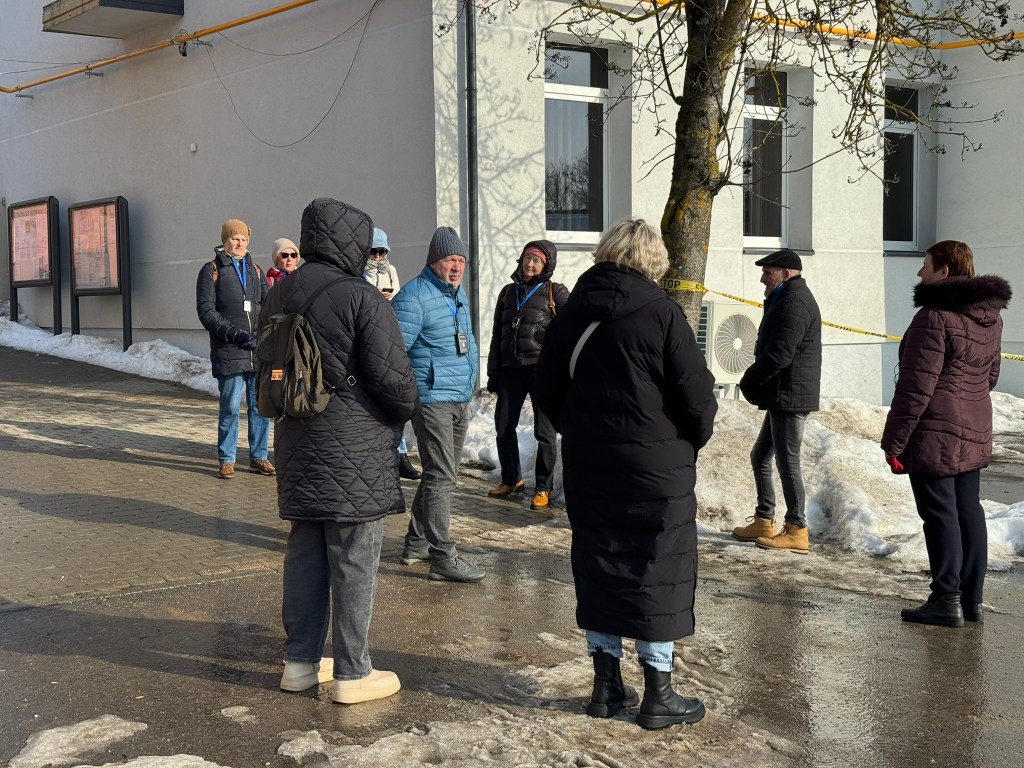
For me, it was a chance to see Kuršėnai from a different perspective, to hear new stories. It was also a good opportunity to introduce the town on this webpage.
I invite you to walk with me through the Jewish Kuršėnai (and beyond) as I experienced it both with the guide and on my own. The snowy photographs from the last day of winter will be complemented by images from my earlier visits.
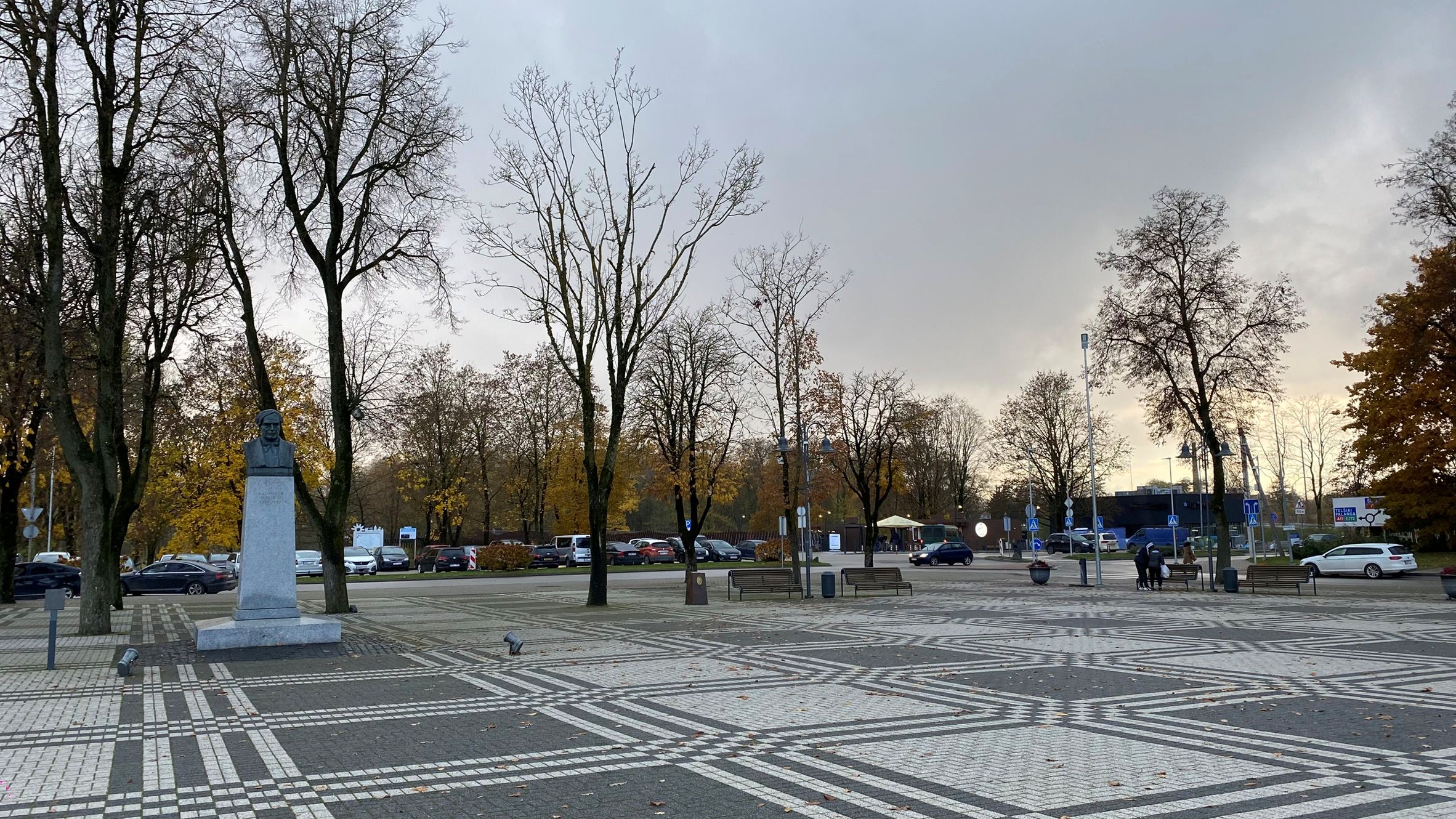
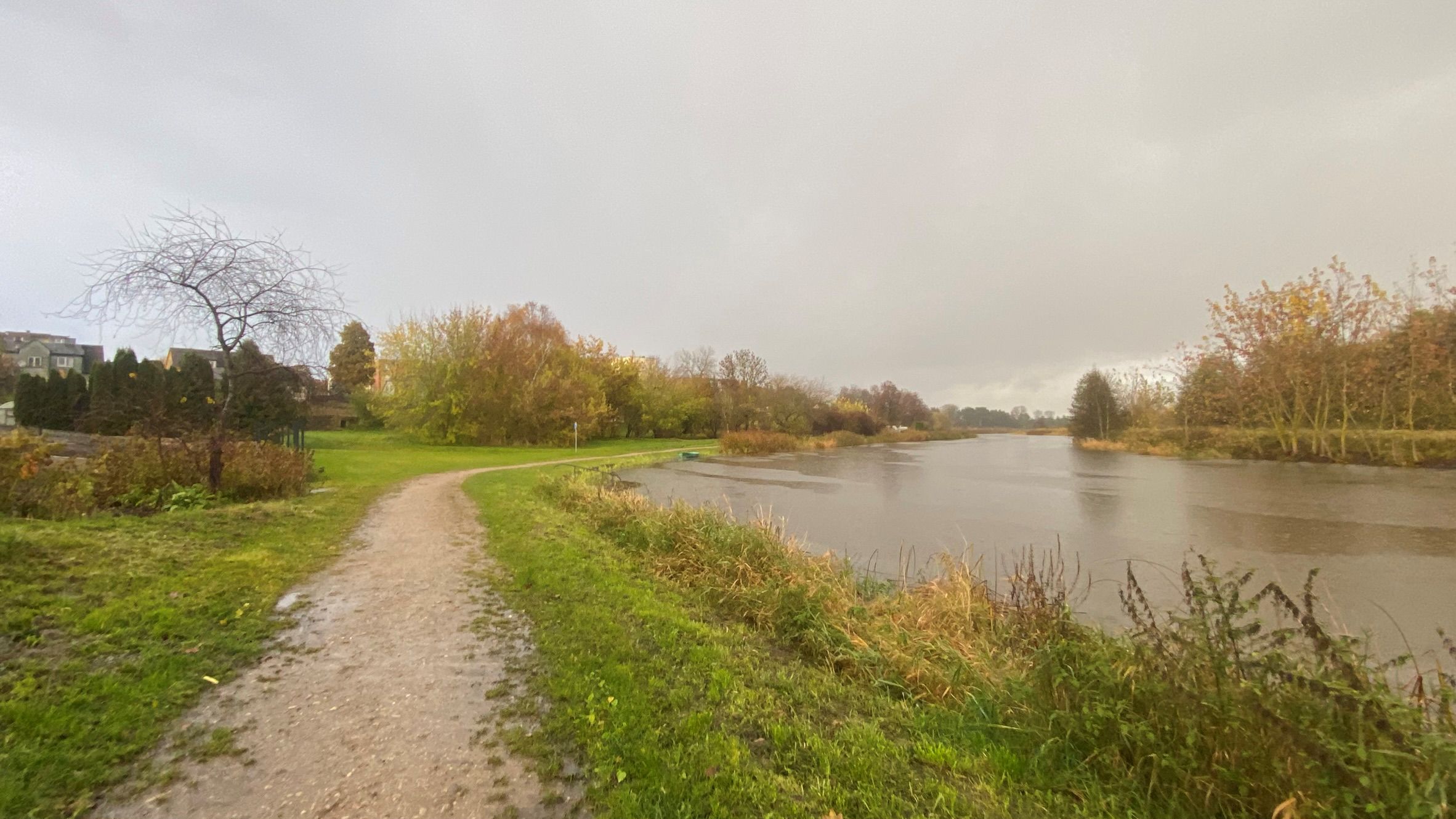
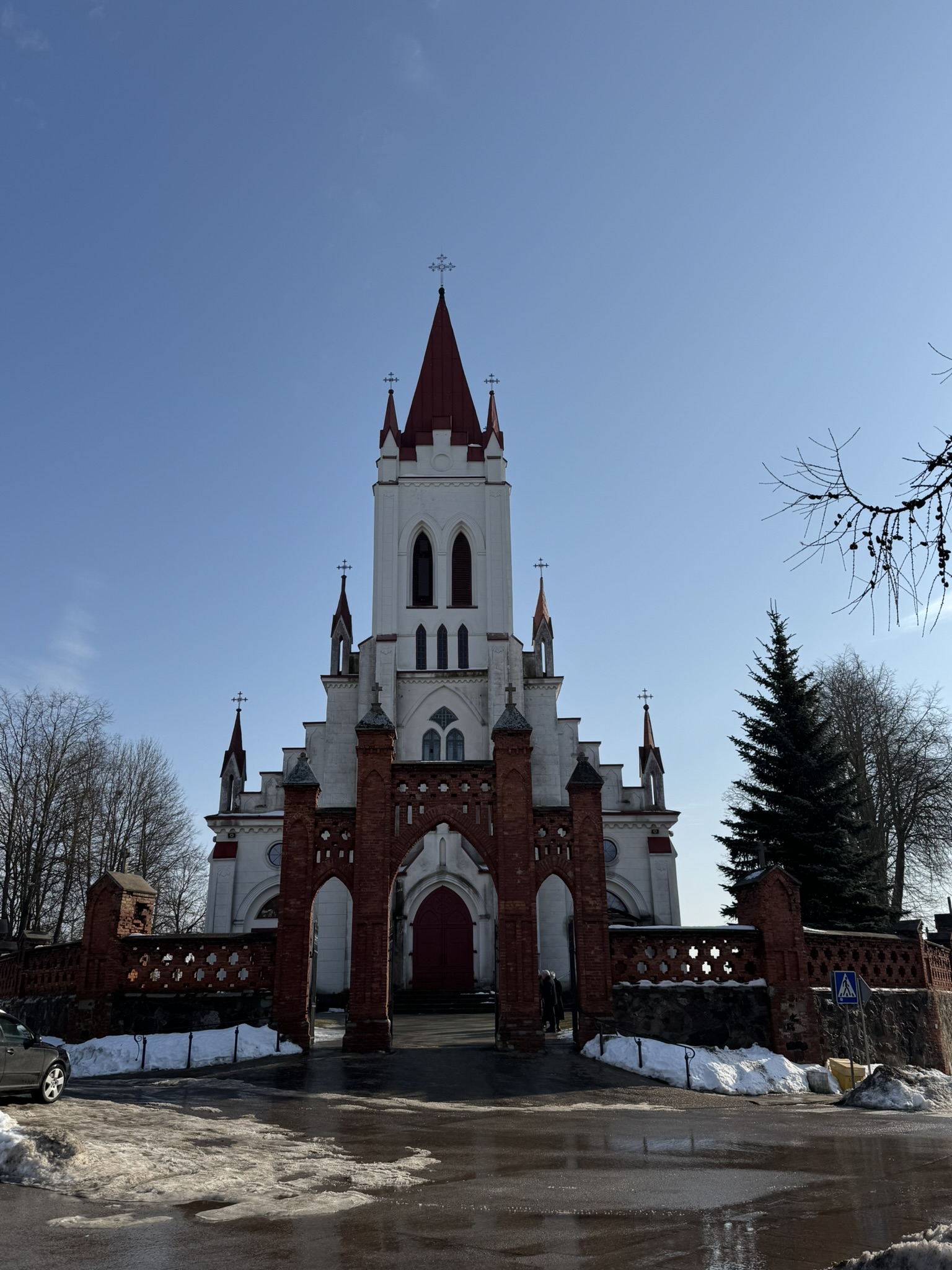
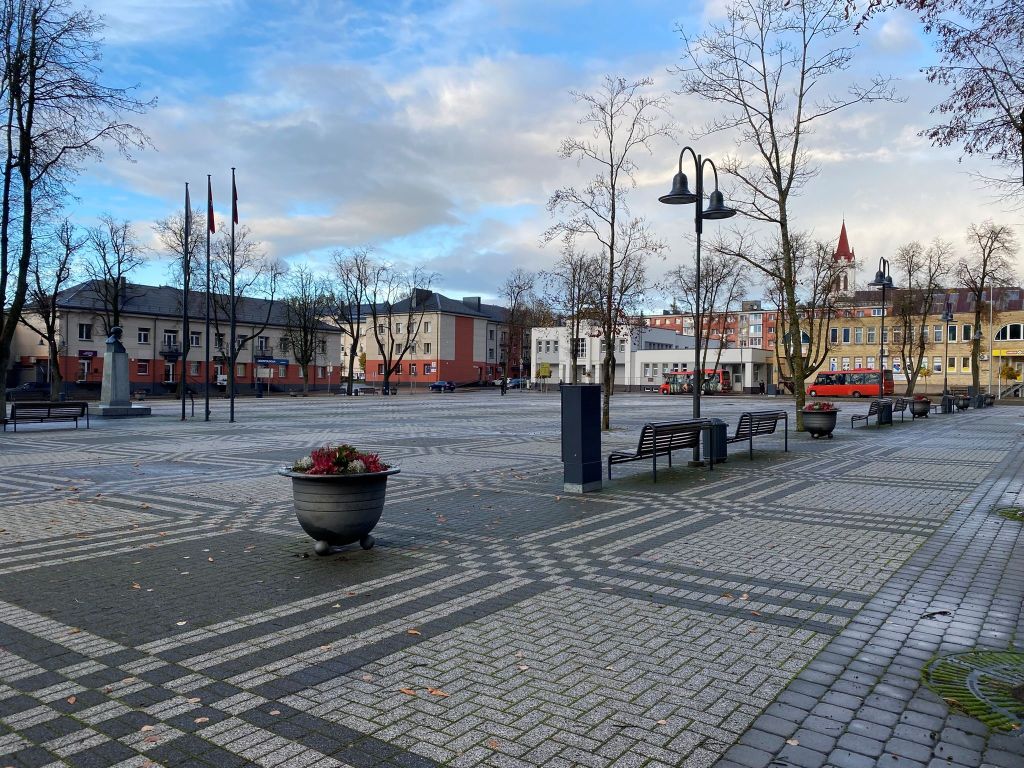
Kuršėnai is a town in Samogitia, located near Šiauliai, the fourth-largest city in Lithuania. The tower of the Church of St. John the Baptist, standing on a hill, is visible from afar. At the heart of the town is a square plaza named after Laurynas Ivinskis, the creator of the Lithuanian calendar. The scenic Venta River flows beside it. A pedestrian bridge crosses the river, connecting the square to the former estate of the Gruževskis family, the former owners of Kuršėnai town.
Historical Overview
Kuršėnai was first mentioned in written sources as an estate in 1563. From the 17th century, the manor and the town were owned by the Gruževskis family. The town grew most significantly in the second half of the 19th century, after the railway was built. Markets and small industries also stimulated the town’s life. Around the turn of the century, Kuršėnai had a dairy, a stove-tile factory, a brickwork, and a metal workshop.
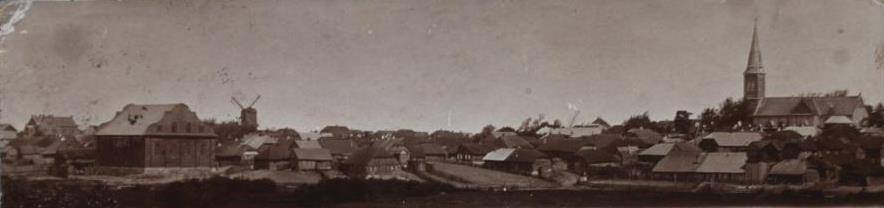
Credit: Lietuva senose fotografijose on Facebook
In 1874 and 1905, Kuršėnai suffered major fires, and parts of the town burned again during World War I. The town remained neglected and impoverished for a time. During the interwar period, Kuršėnai recovered and even became a modern town. A sugar factory was built, and residents gradually returned.
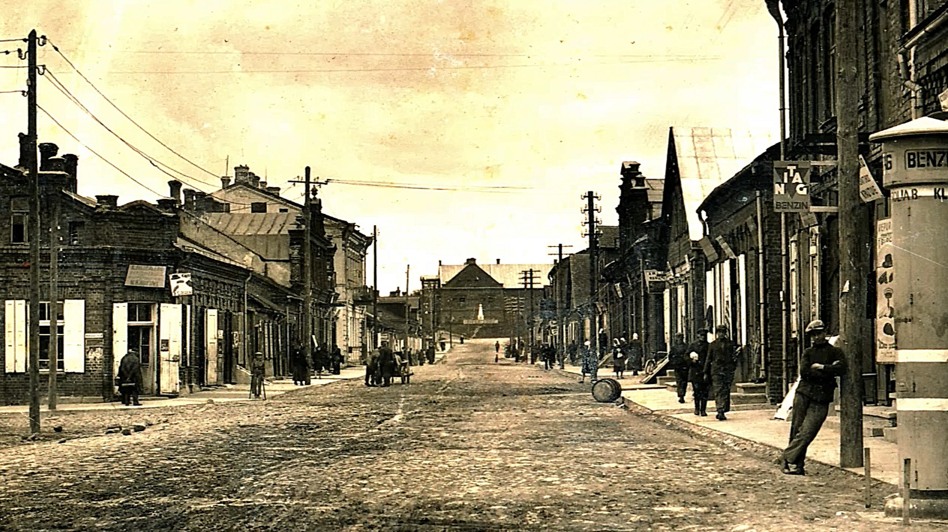
Credit: Lietuva senose fotografijose on Facebook
During the Soviet period, Kuršėnai was granted town status and served as a district, later subdistrict, center.
Today, Kuršėnai is the largest town in the Šiauliai district and is home to around 10,000 residents. The town is best known for its sweet pastry, the Kuršėnai roll, as well as its calendars and traditional clay pottery.
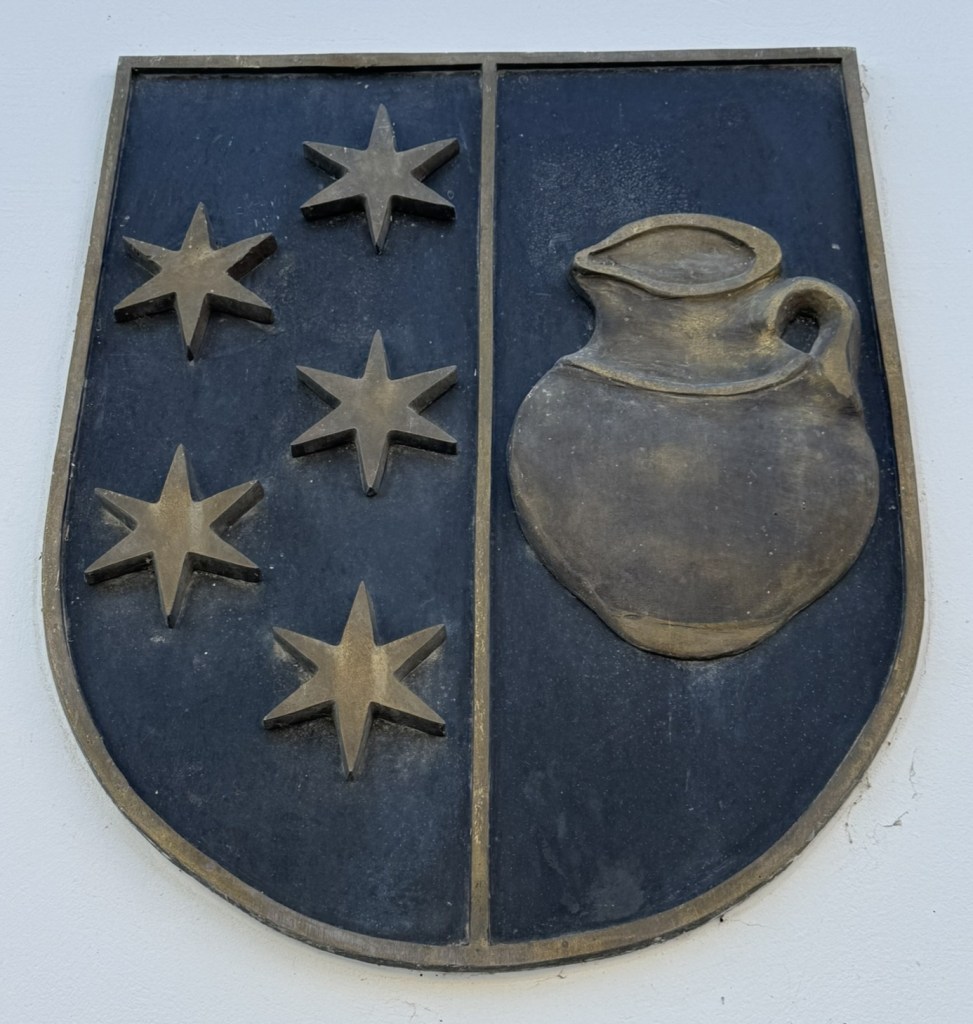
Jewish Community
The Jewish community in Kuršėnai formed around the mid-18th century. By the end of the 19th century, Jews made up roughly half of the town’s population. According to the 1897 census, 1,542 of the 3,189 residents were Jewish. Their numbers later declined due to emigration, fires, and deportations during World War I.
During the interwar period, under independent Lithuania, the community gradually revived, and by 1923 there were 841 Jews living in Kuršėnai. Just before World War II, the town’s Jewish population numbered around 900.
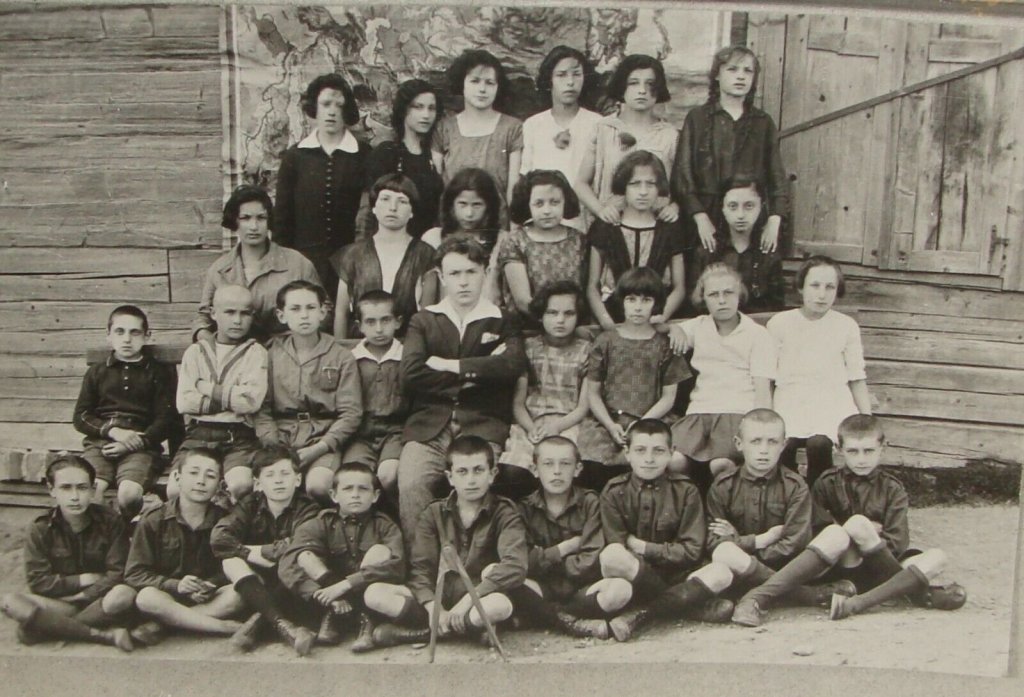
Credit : Yad Vashem
As in other towns, Jews in Kuršėnai worked in crafts and trade. They sold foodstuffs and meat, leather and fur goods, textiles, haberdashery and cosmetics, building materials and timber, and even ran one electronics shop.
Many were shoemakers, tailors, butchers, tinsmiths, barbers, hatters, knitters, stitchers, bakers, glaziers, and more. Jews also owned a mill, a pharmacy, several restaurants and inns, cinemas, and even a hotel.
Community members were active in political, youth, sports, and charitable organizations such as HaShomer HaTsair, Tseirei Zion, Betar, Maccabi, Ezrah, Bikur Holim, and Gemiluth Hesed. There was also a Jewish People’s Bank (Volksbank), the craftsmen’s mutual aid society, and local branches of the Small Traders’ Central Union and the OZE health organization.
Most Jews lived around the former Market square. They ran their shops or workshops there. Some were also active in a few nearby streets.
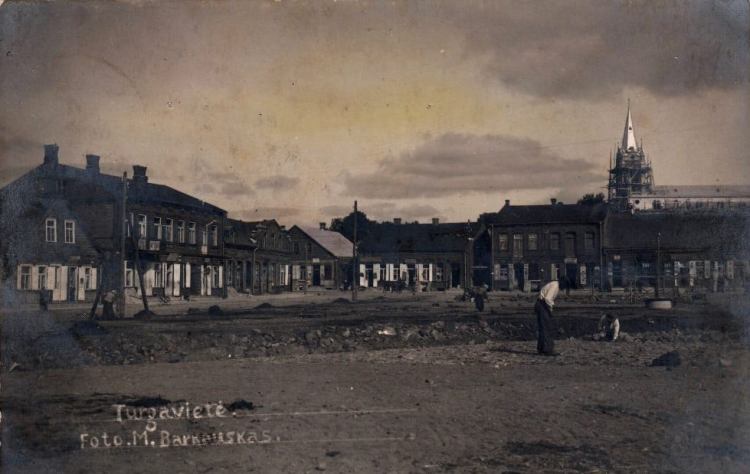
Credit: Lietuva senose fotografijose on Facebook
Following the Jewish Traces in Kuršėnai with the guide Jonas Kiriliauskas
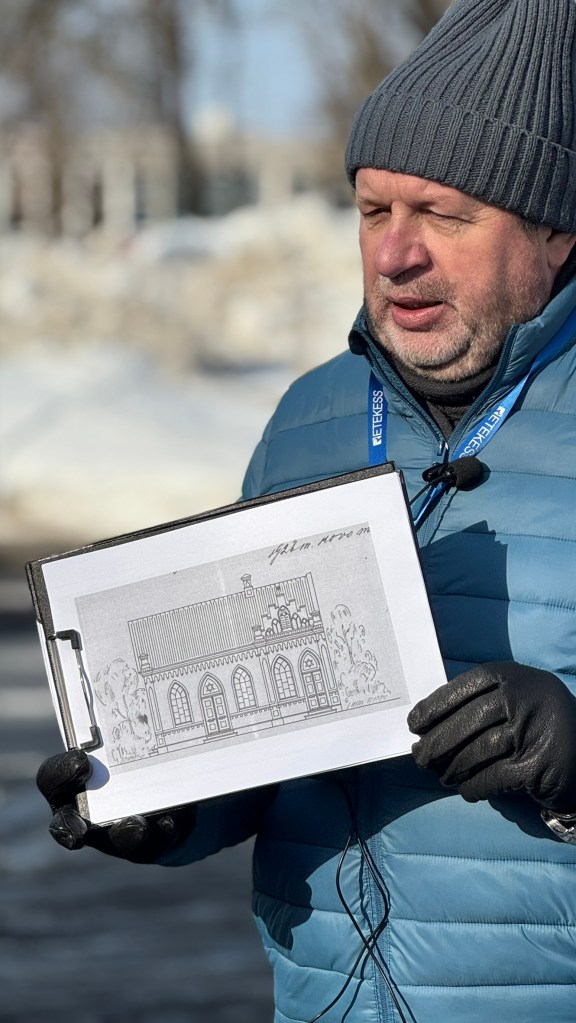
We met our guide Jonas at the site of the former Kuršėnai market square, near the pedestrian bridge. He took us to the memorial of the former synagogue.
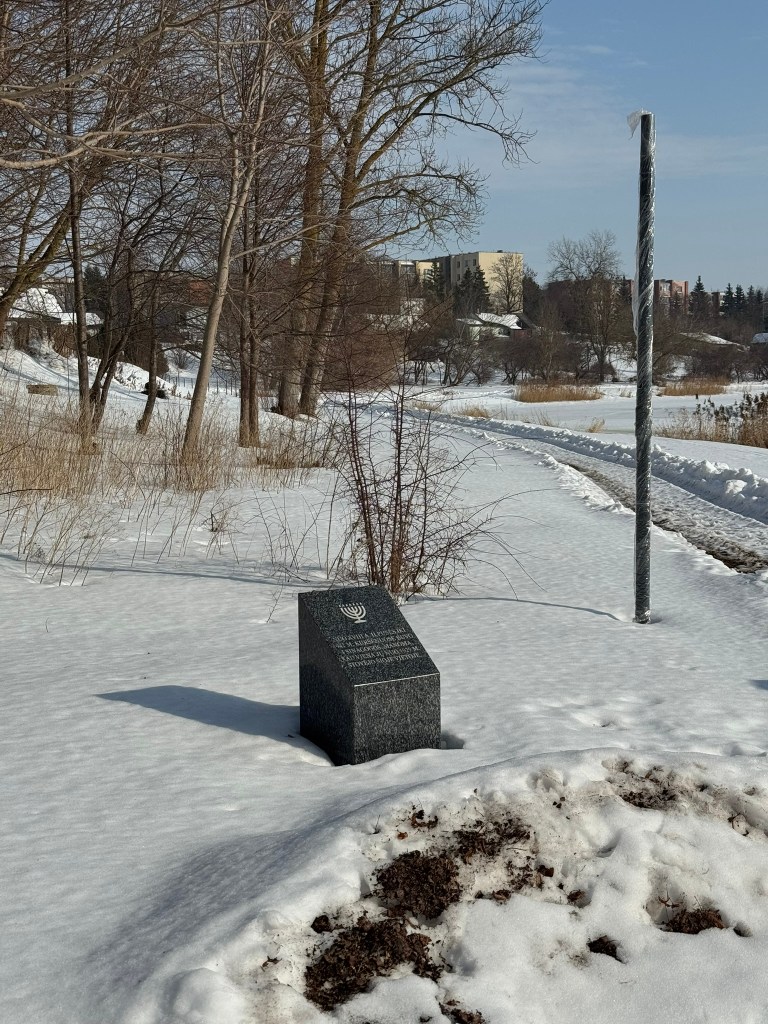
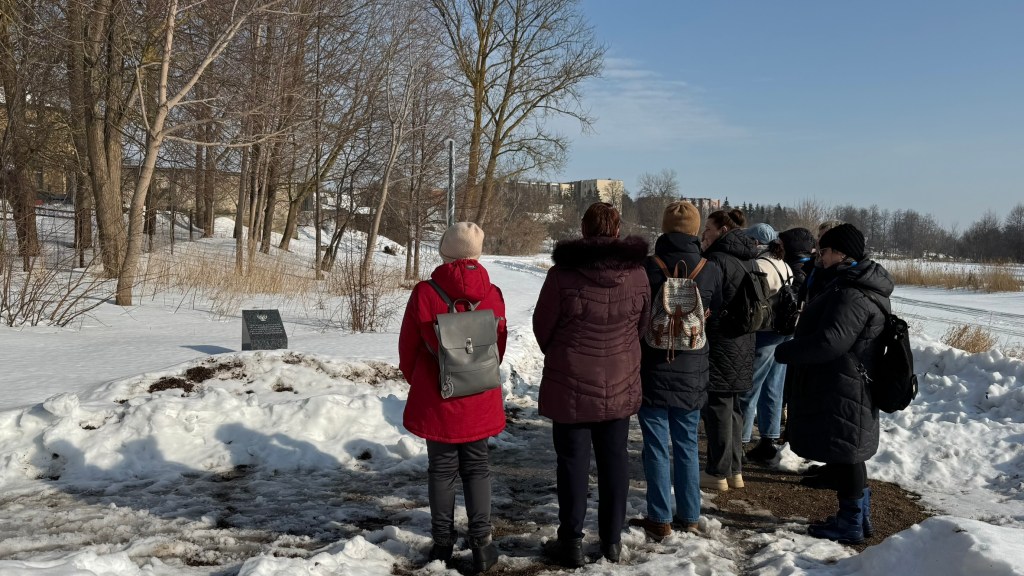
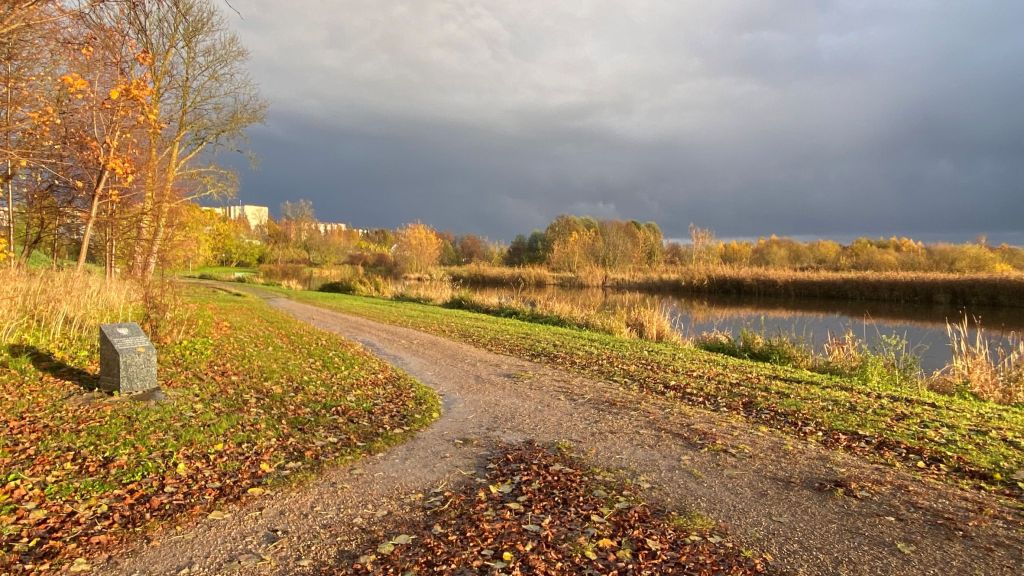
Not much is known about the synagogues of Kuršėnai. One early 20th-century photograph shows a grand wooden synagogue standing on the banks of the Venta River. This synagogue was built in 1879 and sadly burned down in 1915. During the interwar period, Kuršėnai had two Jewish prayer houses located closer to the market square.
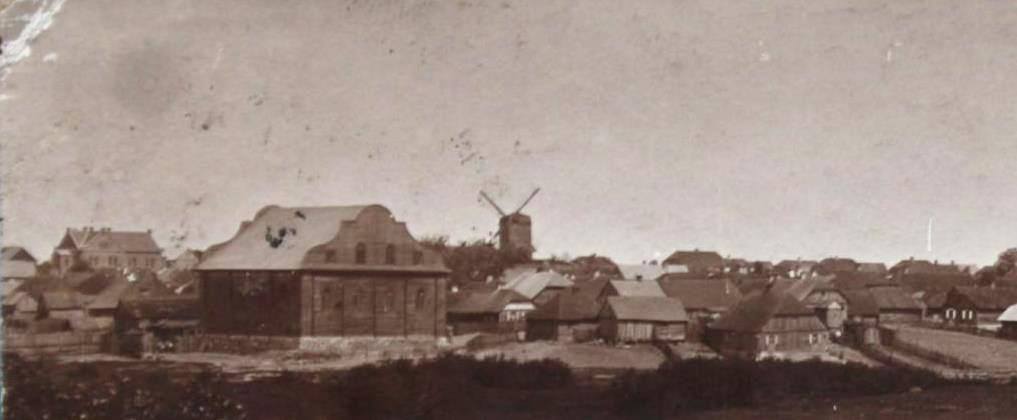
Credit: Lietuva senose fotografijose on Facebook
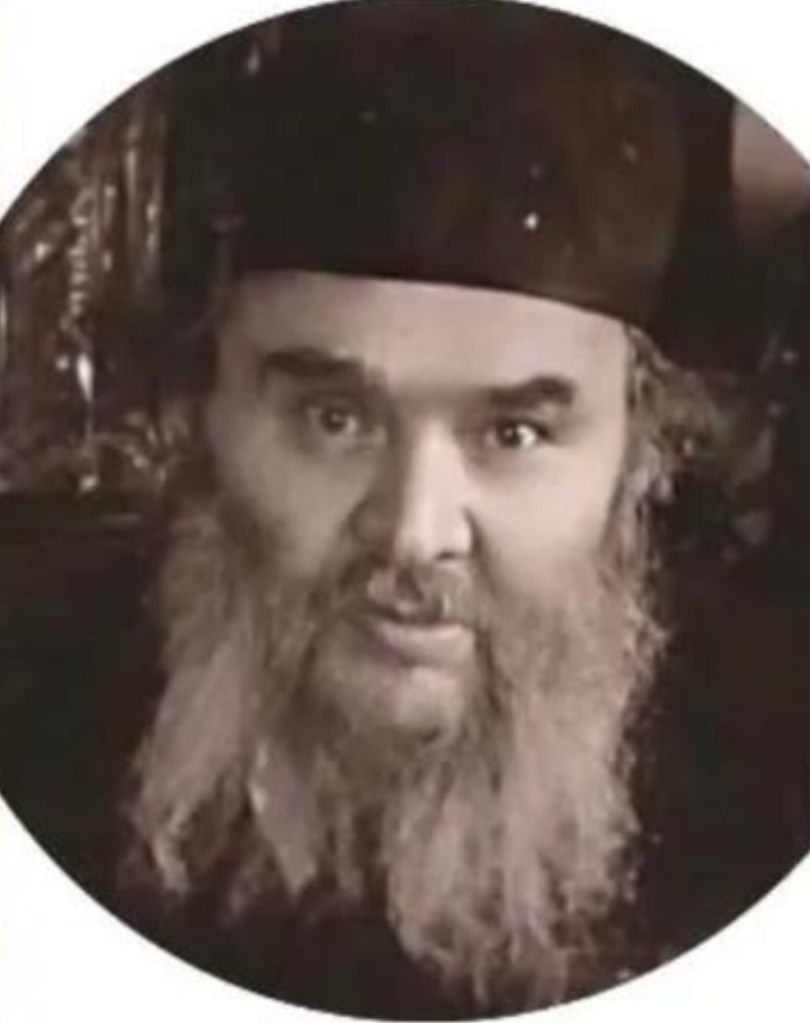
Over the years, Kuršėnai’s Jewish community was guided by several remarkable rabbis. According to the Yizkor Book of Lithuanian Jewry, in the decades before World War I Yehiel-Mihel HaCohen Gold led the community from 1840 to 1880. He was followed by Shemuel-Mosheh Shapiro, who arrived in 1879.
Credit : Wikipedia
Rabbi Shlomo Nosson Kotler (1856–c.1945) was one of the most internationally active rabbis connected with Kuršėnai. He was born in Kovno and trained in the great Lithuanian yeshivot. Later, he served in New York as a rabbi and rosh yeshiva at the newly founded Rabbi Isaac Elchanan Theological Seminary. After returning to Europe, he held rabbinical posts in Kuršėnai and Luokė, before eventually settling in Palestine. He was a well-known Talmudic scholar who wrote several books, although some of his manuscripts were later lost.
Rabbi Yitzhak-Izik Fridman (1874–1944) led the community from 1914 to 1924. He wrote extensively, and was one of the founders of the Mizrakhi party in Lithuania before emigrating to Eretz Yisrael in 1935.
The last rabbis of Kuršėnai were Rabbi Yerachmiel Litvin (d. 1941) and Rabbi Yisrael Rif (1870–1941). Both rabbis were killed during the Holocaust. May their memory be for a blessing.
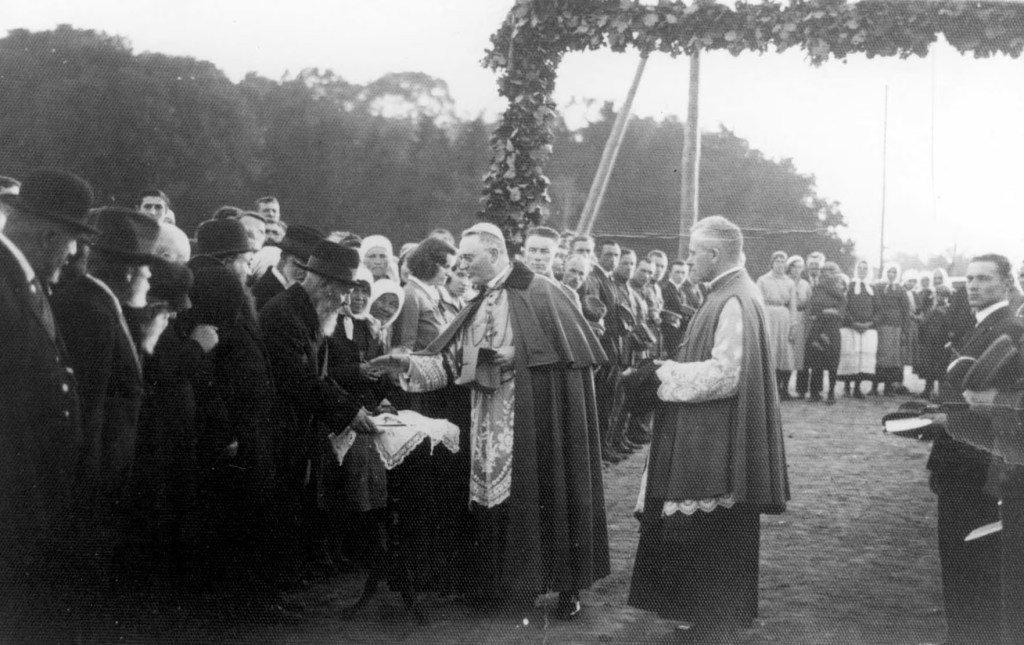
Credit : Yad Vashem
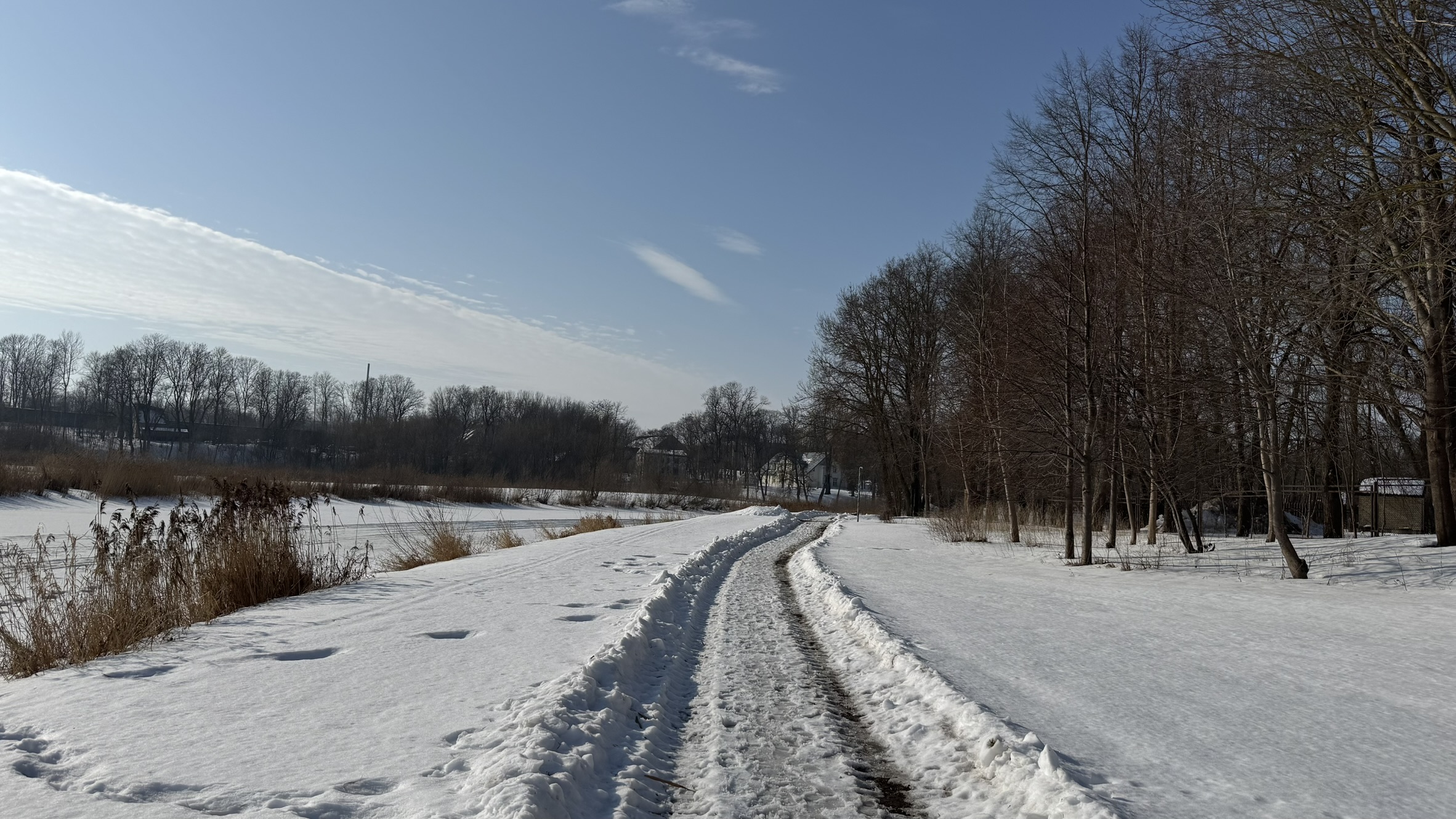
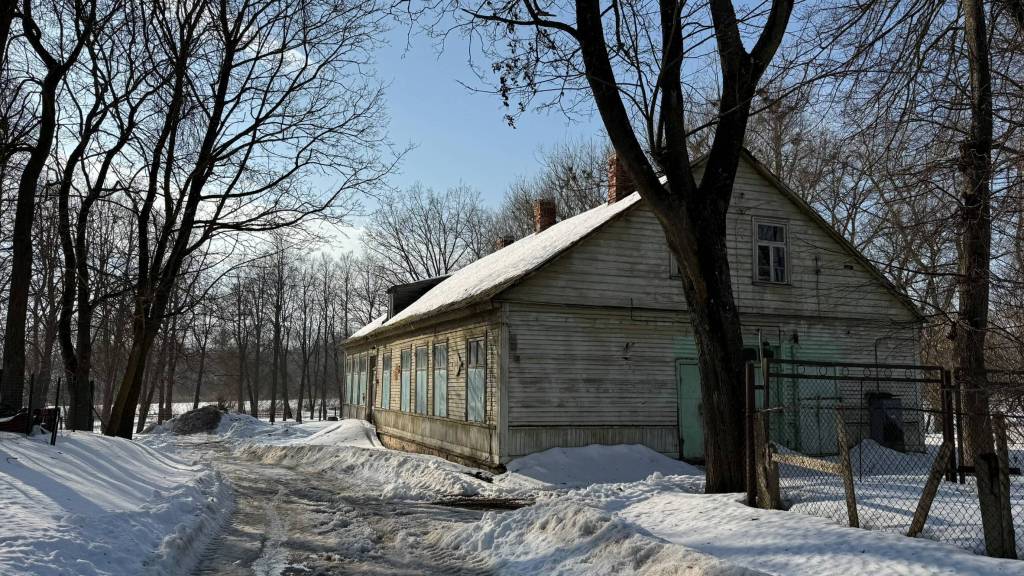
Continuing along the snow-covered bank of the Venta River, we reached the former Jewish school building.
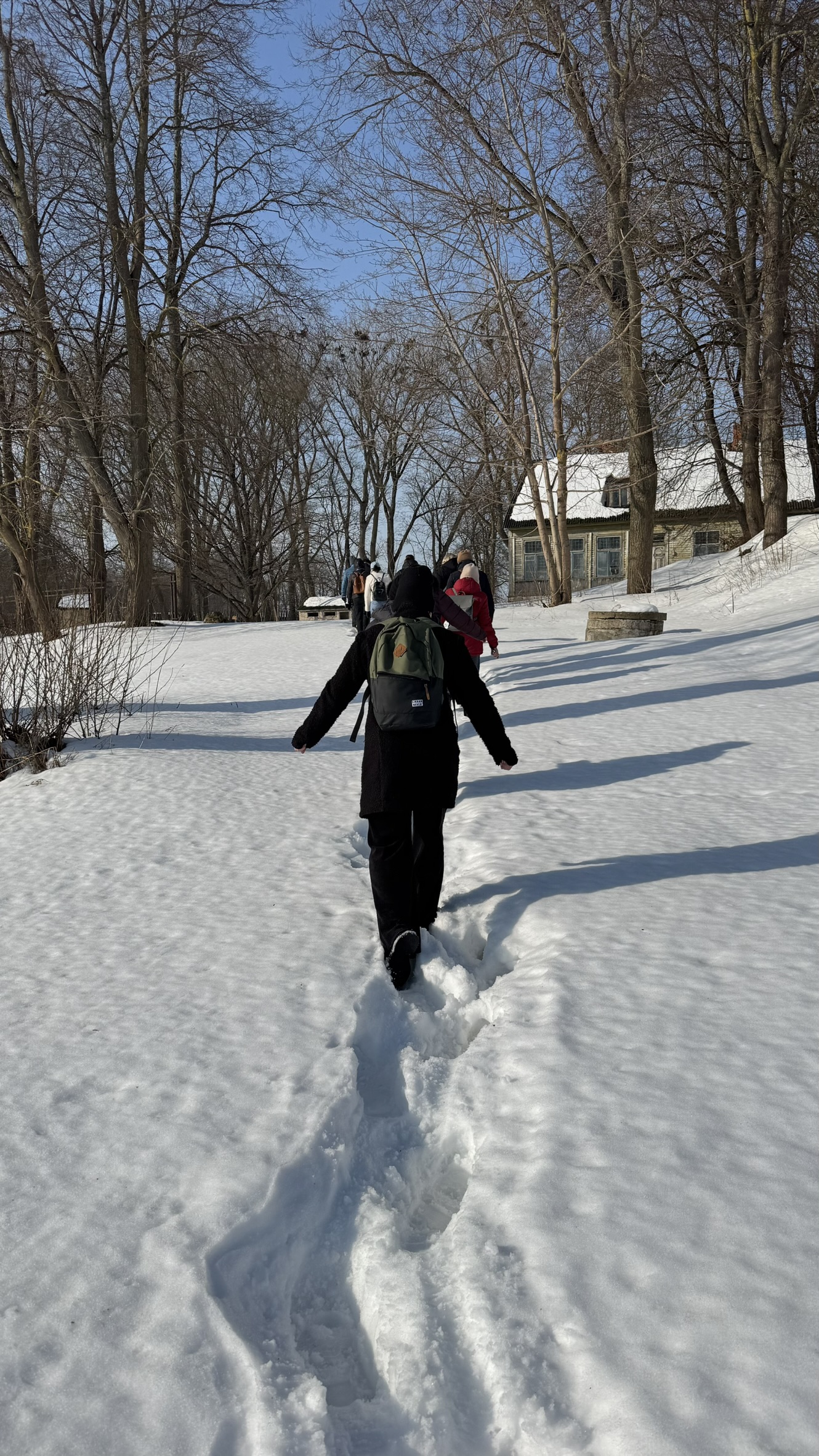
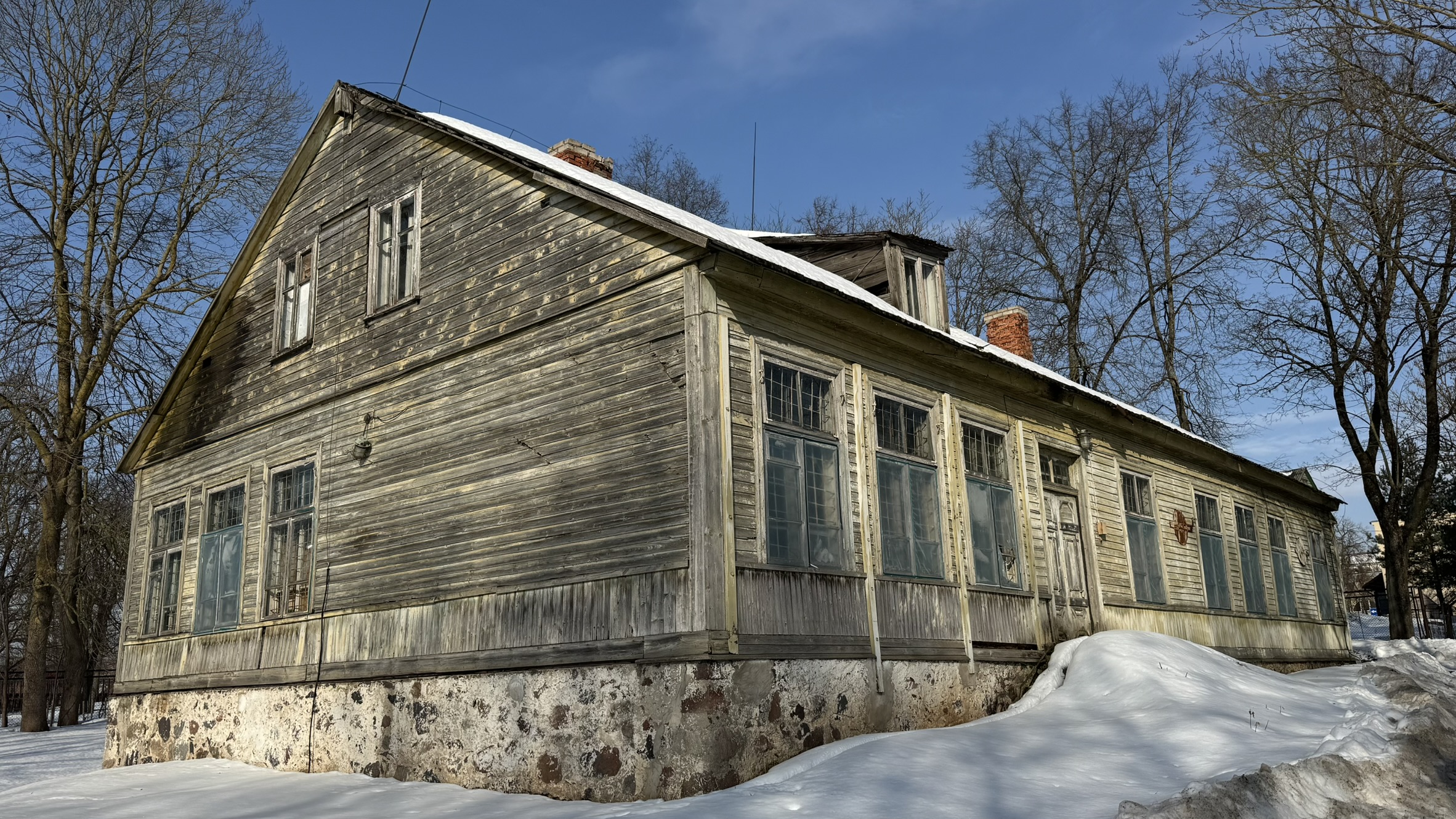
In Kuršėnai, a Jewish school operated since the late 1800s. During the Interwar period, Jewish community had a Hebrew Tarbut school. The school included a library where books could be read in both Yiddish and Hebrew. From 1927 onward, a Jewish kindergarten also functioned in Kuršėnai, the first and only one in the town at that time.
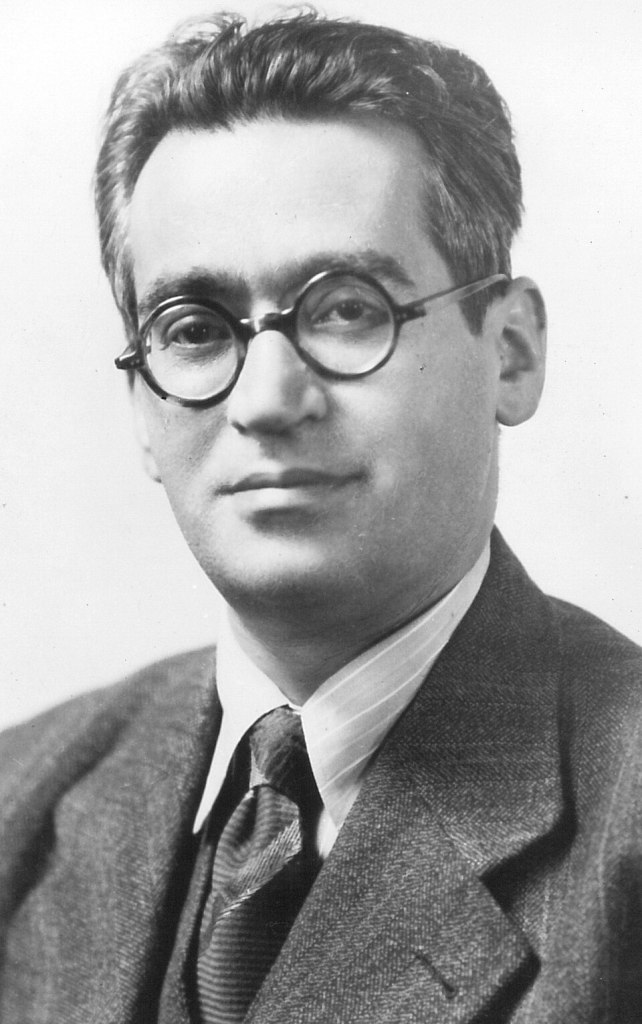
Jonas Kiriliauskas briefly mentioned the well-known Israeli politician and diplomat Aryeh Kubowitzky–Kubovy, who was born in Kuršėnai and attended primary school there as a child.
Credit : Wikipedia
Aryeh Leon Kubovy (1896–1966) was an Israeli lawyer, diplomat, and influential Zionist leader. He was one of the founders of the World Jewish Congress in 1936 and served as its General Secretary from 1945 to 1948, playing a key role in representing Jewish interests internationally after the Holocaust. After settling in Israel (1948), Kubovy served that country in diplomatic posts in Czechoslovakia, Poland, and several South American countries. He was chairman of Yad Vashem (Holocaust Martyrs’ and Heroes’ Remembrance Authority) from 1959 until his death.
Credit : Wikipedia
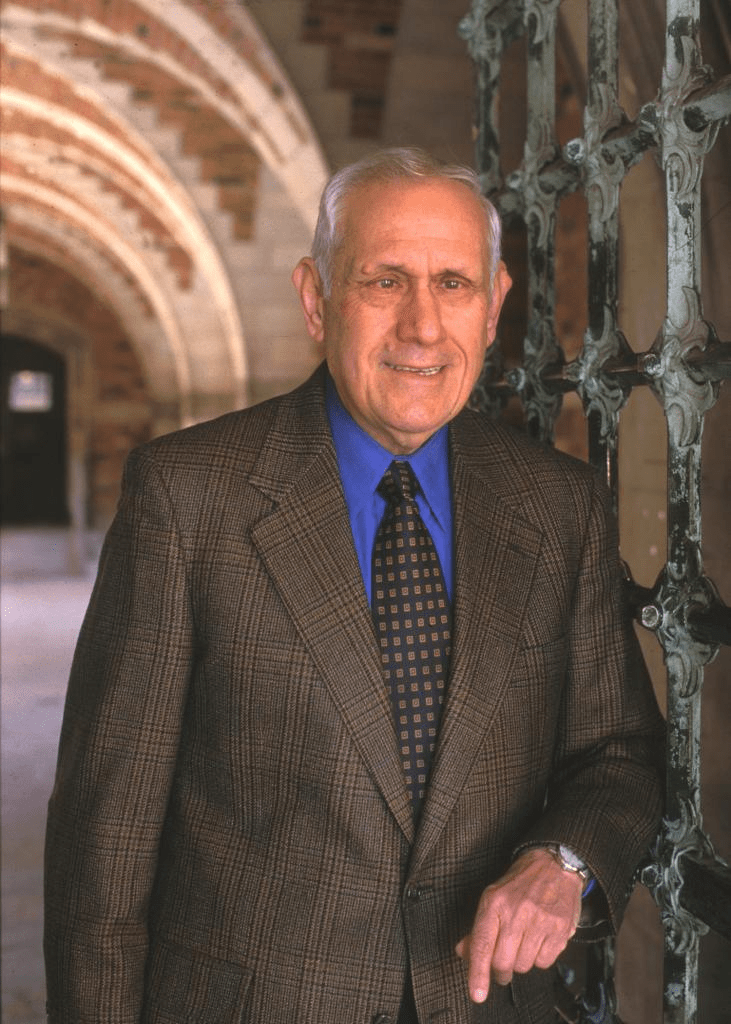
Another famous native was Donald Kagan (1932–2021), a historian born in Kuršėnai who emigrated to the United States with his family as a child. He became one of the foremost scholars of ancient Greek history and a long‑time professor at Yale University. Kagan was particularly known for his influential work on the Peloponnesian War, and his historical writing helped shape contemporary understanding of ancient military and political affairs.
The next stop will be at the building with the tower
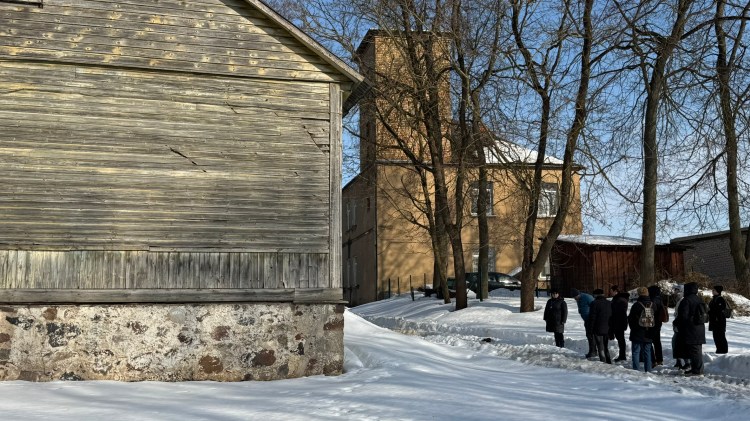
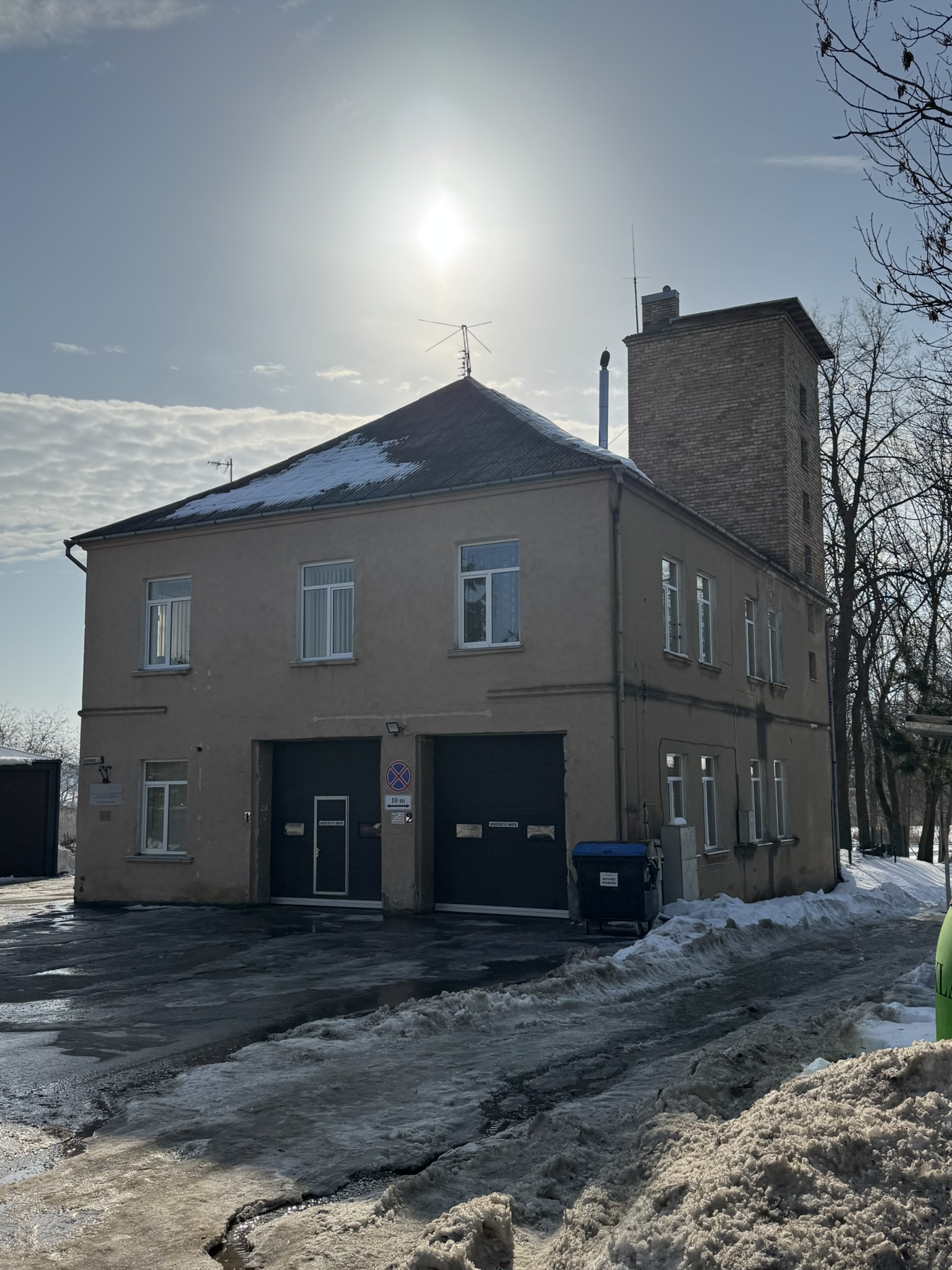
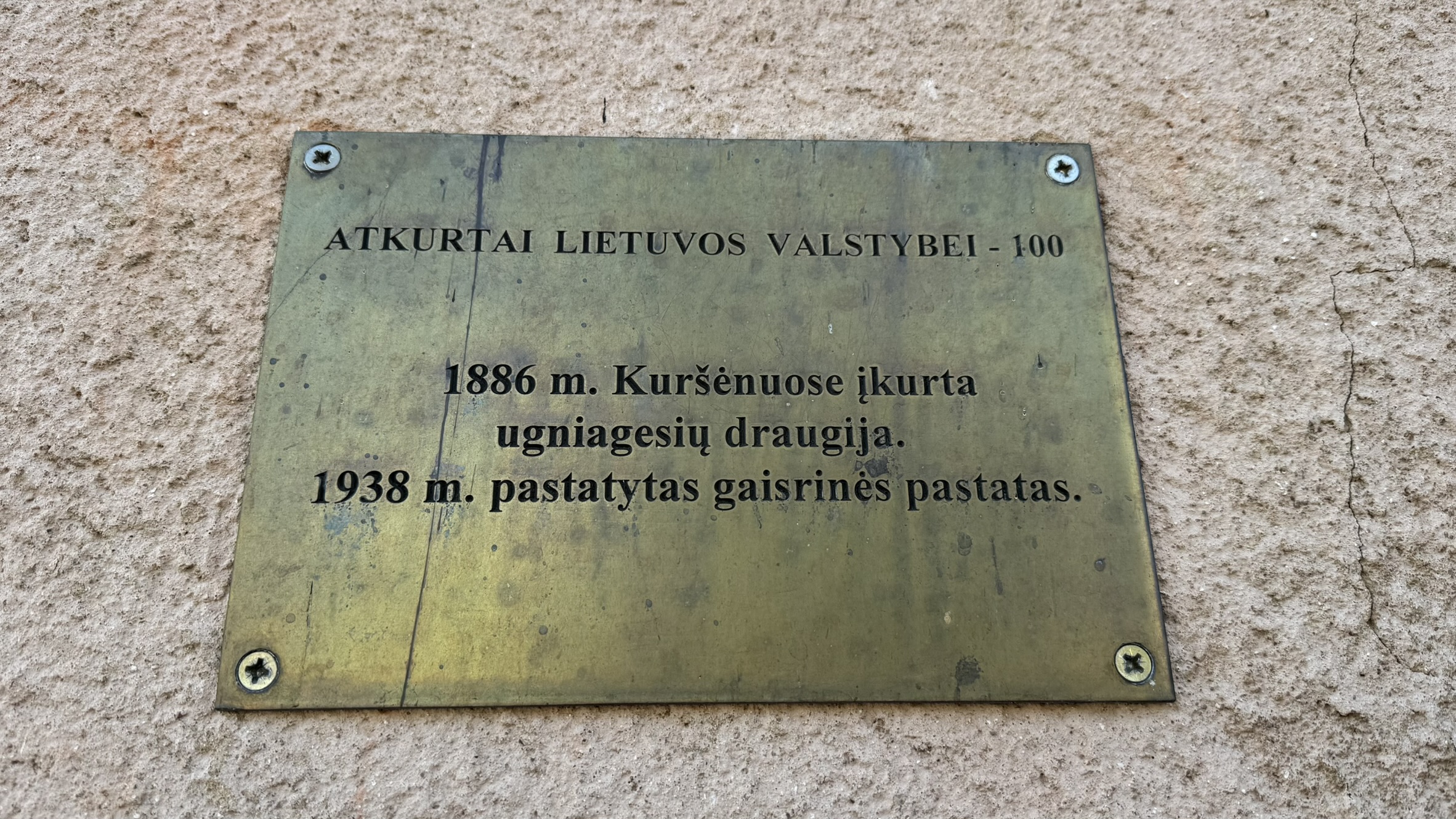
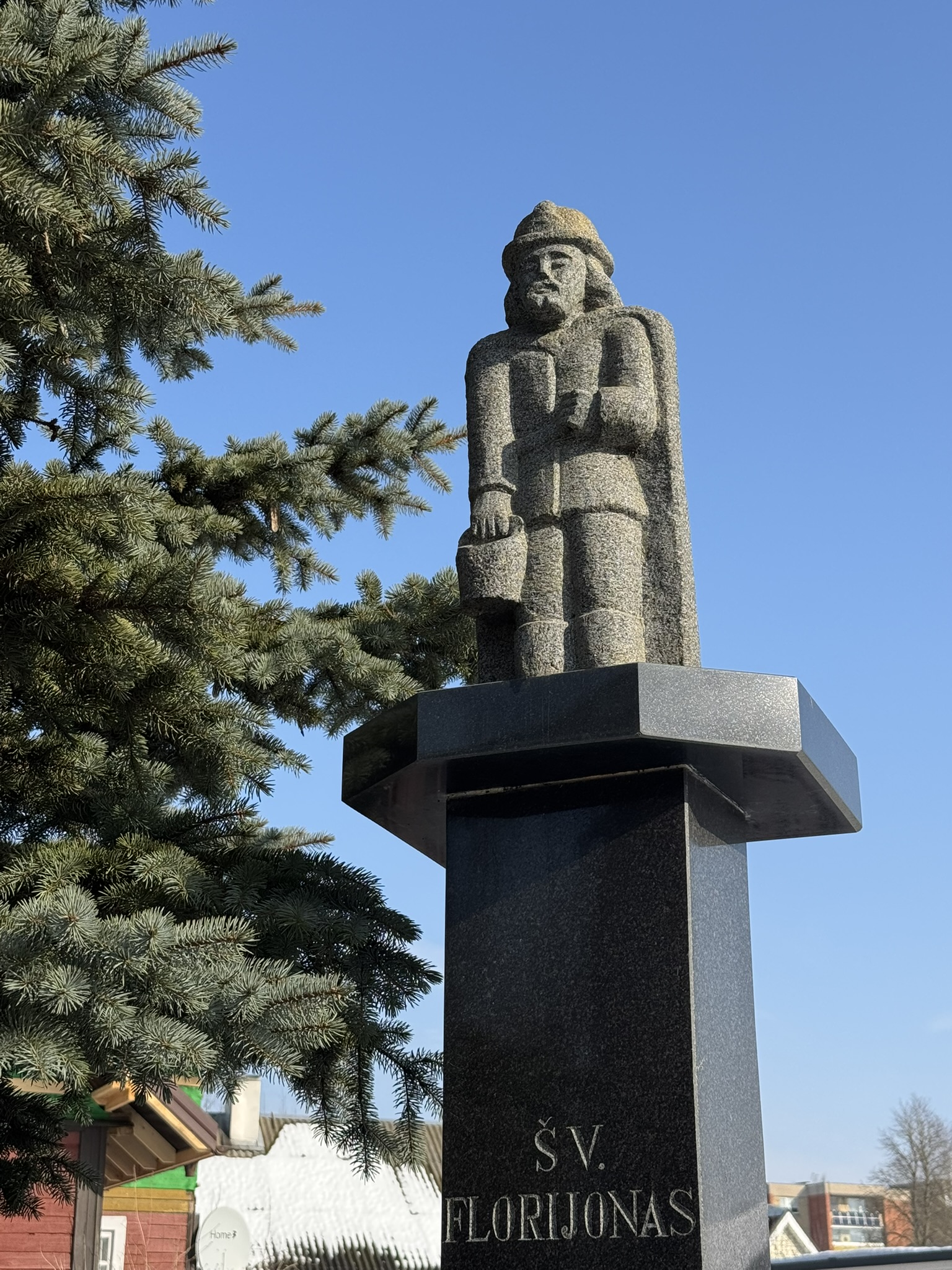
The fire brigade in Kuršėnai was established in the 19th century, with members including local Jews who helped protect the town from fires. In the interwar period, a modern fire station was built, featuring a garage for several vehicles, a basement, and even central heating. The firefighters not only fought fires but also organized community events and competitions. Since the brigade was a volunteer organization, they often had to raise money themselves, for example, through these events, to buy equipment and maintain the station. Today, this station is still used by Kuršėnai firefighters.

We returned to the Town Square, where Jews had been living since the 19th century. Today, a couple of wooden pre-war houses and a single red-brick building still stand, while most of the original buildings were replaced during the Soviet era.
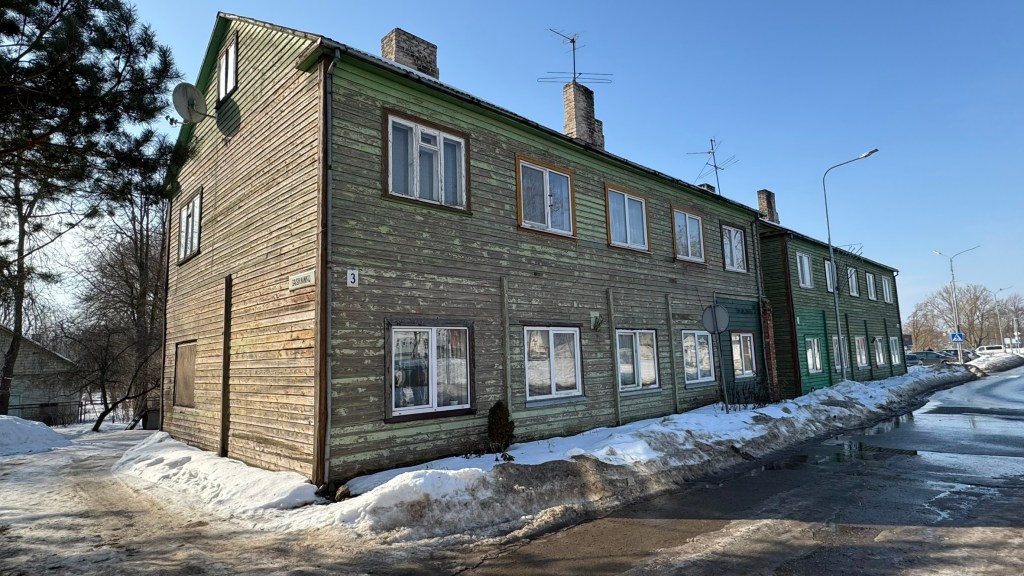
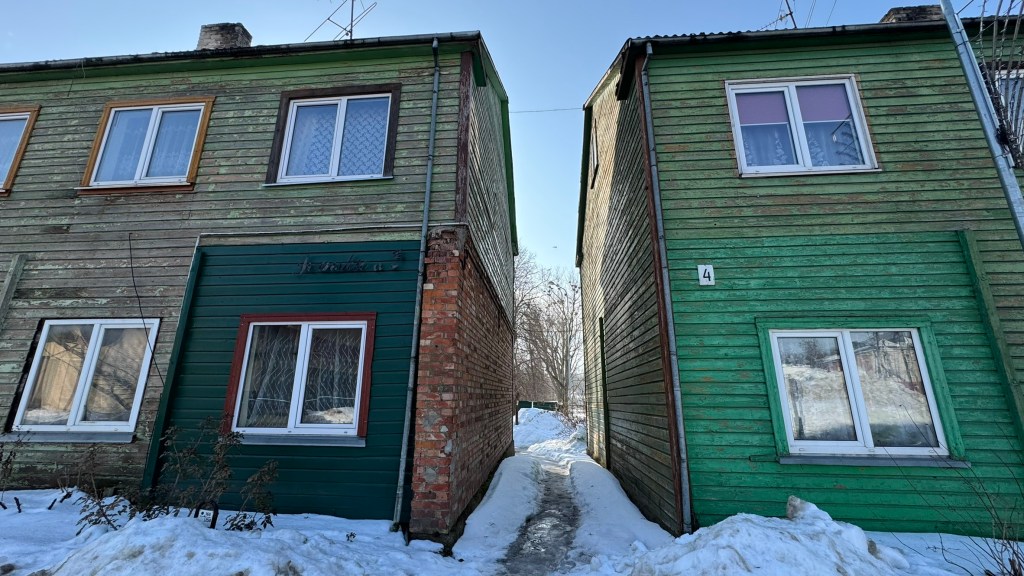
In 1928, a synagogue was built on the private plot of Gurvich. It was the first brick synagogue in the town.
The square was renovated after independence, now featuring paving patterns inspired by traditional Lithuanian ornaments.
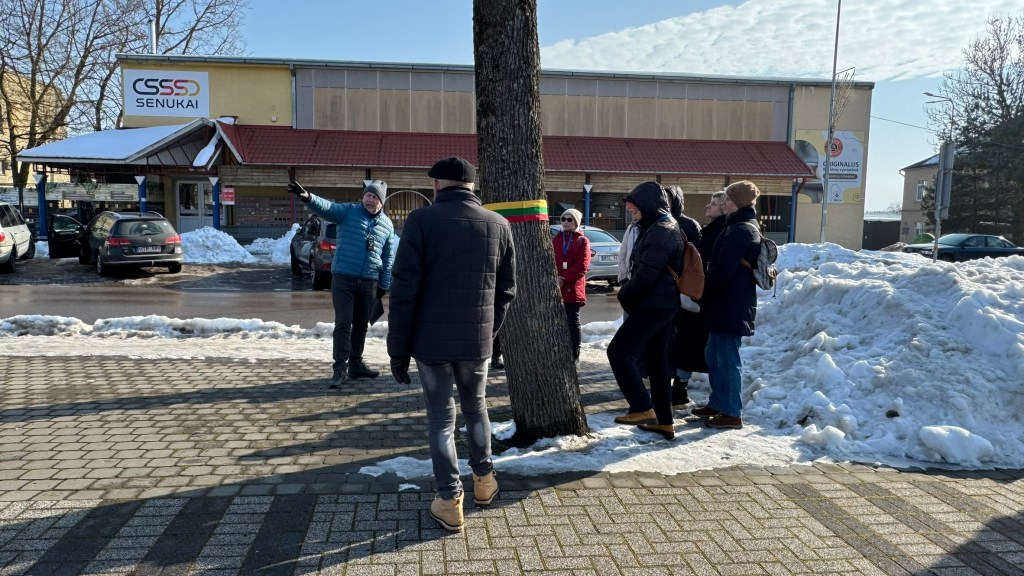
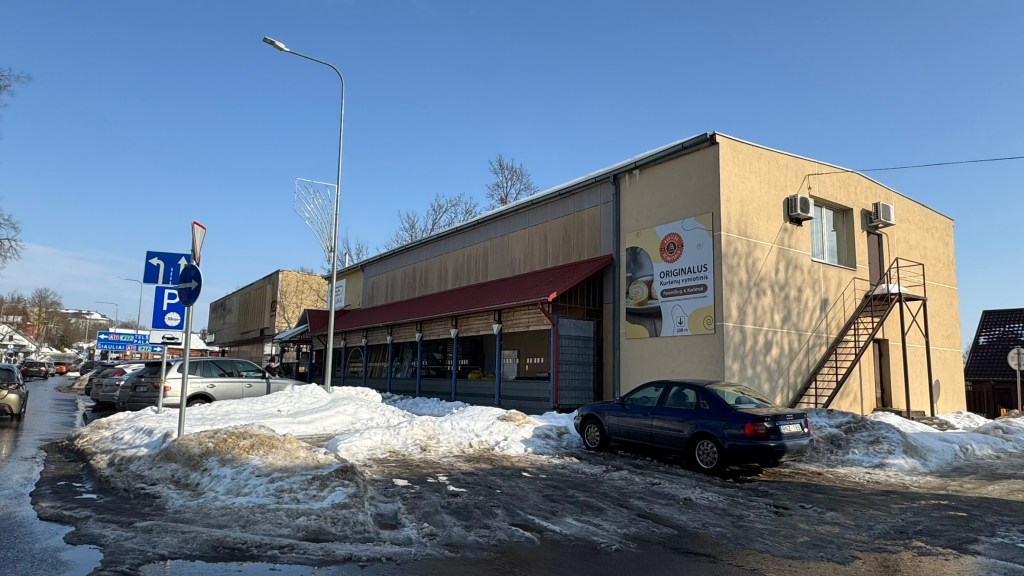
Kapų Street begins just off the square, near the red brick building mentioned earlier. The street leads toward the Kuršėnai cemetery. During the interwar period it was also home to the town’s second synagogue.
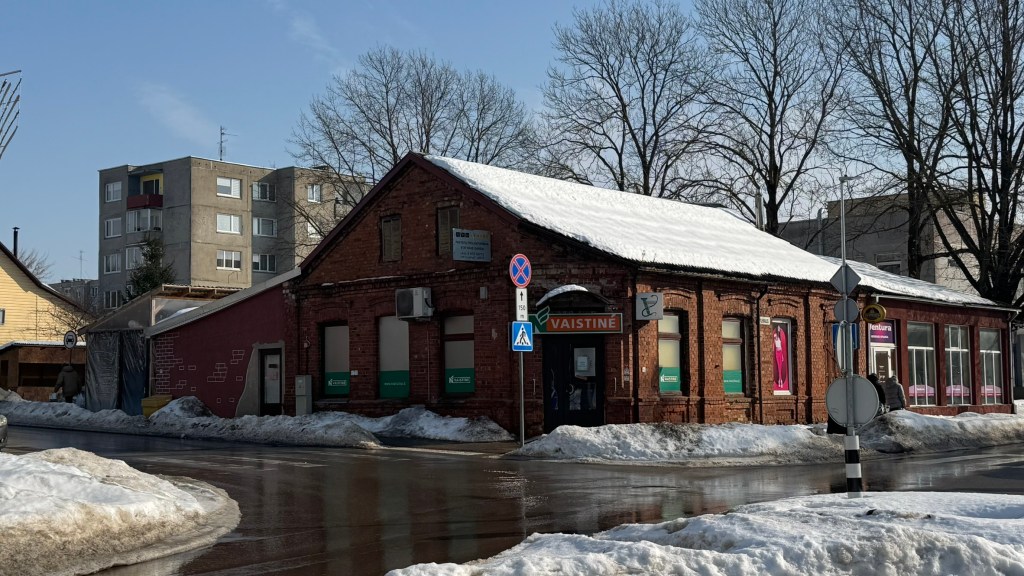
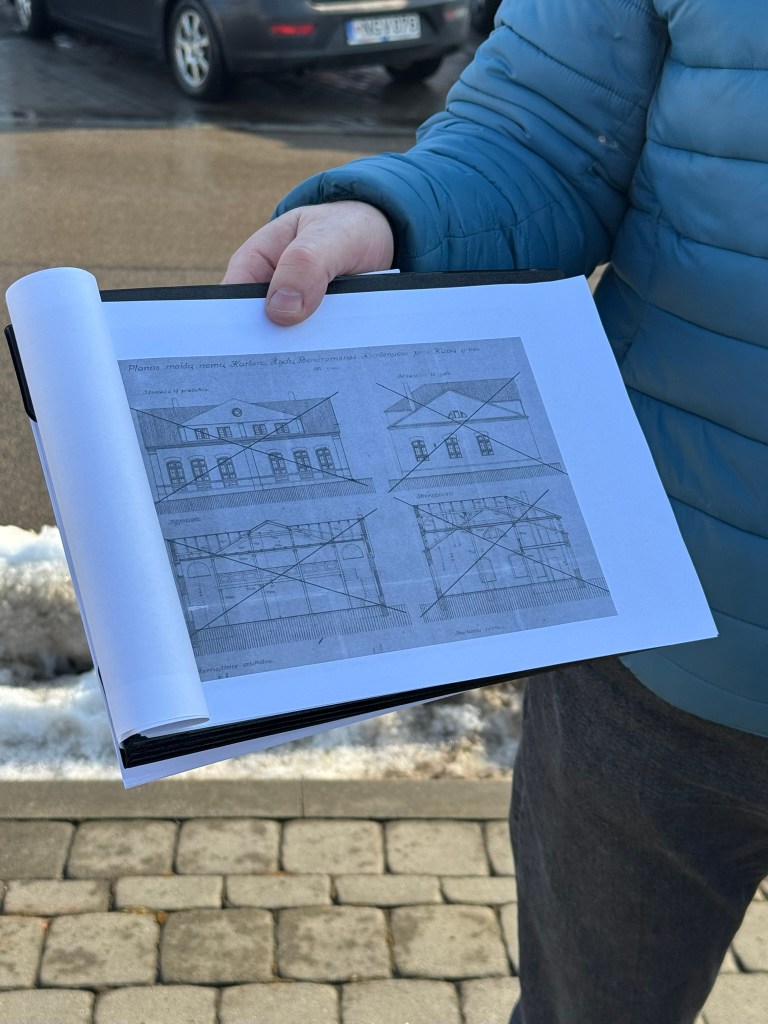
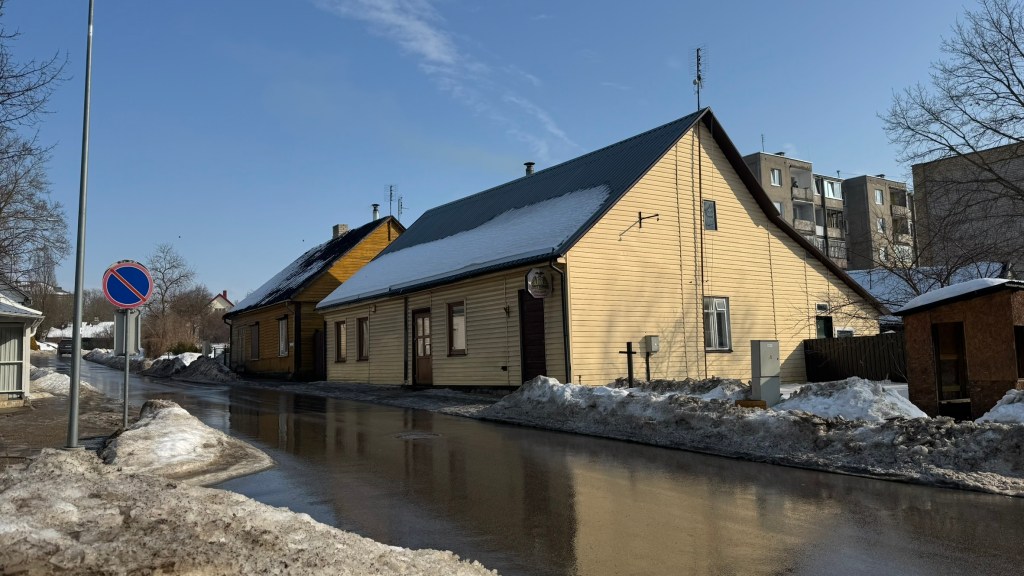
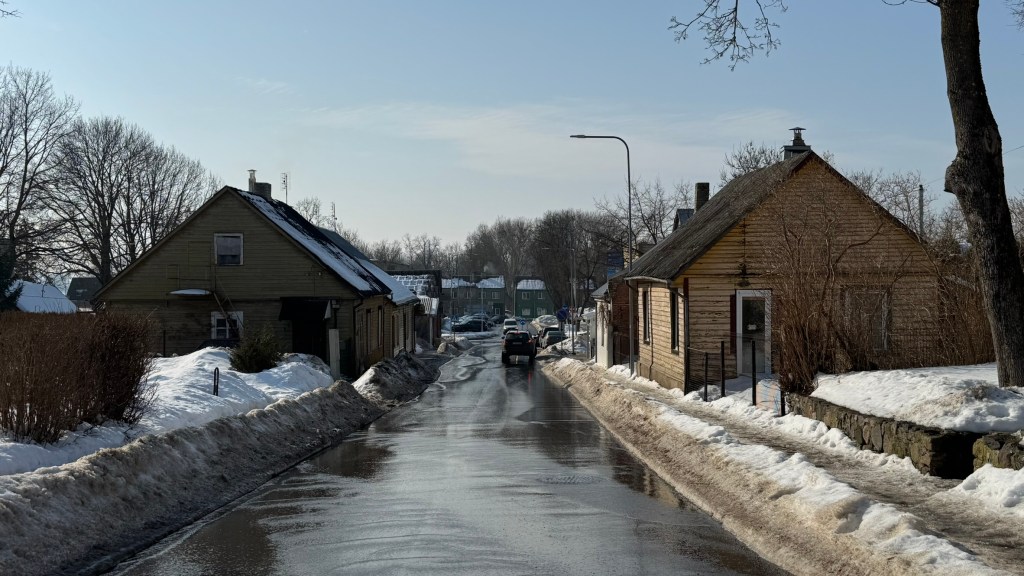
Jonas Basanavičius Street is our next stop. It was, and remains, the town’s central street. Today it is home to the municipal offices, the tourist information centre, the library, banks, shops, and pharmacies. Before the war, it was just as lively, lined with small shops, workshops, and businesses.
It was interesting to see and hear that two former streets — Tilto and Bažnyčios — have changed a lot. One has disappeared entirely, while the other has become a pedestrian path. Along this street, the Fartman family lived and ran a pharmacy on Basanavičius Street, while the Lipshits family operated a small manufactory shop, selling textiles and clothing.
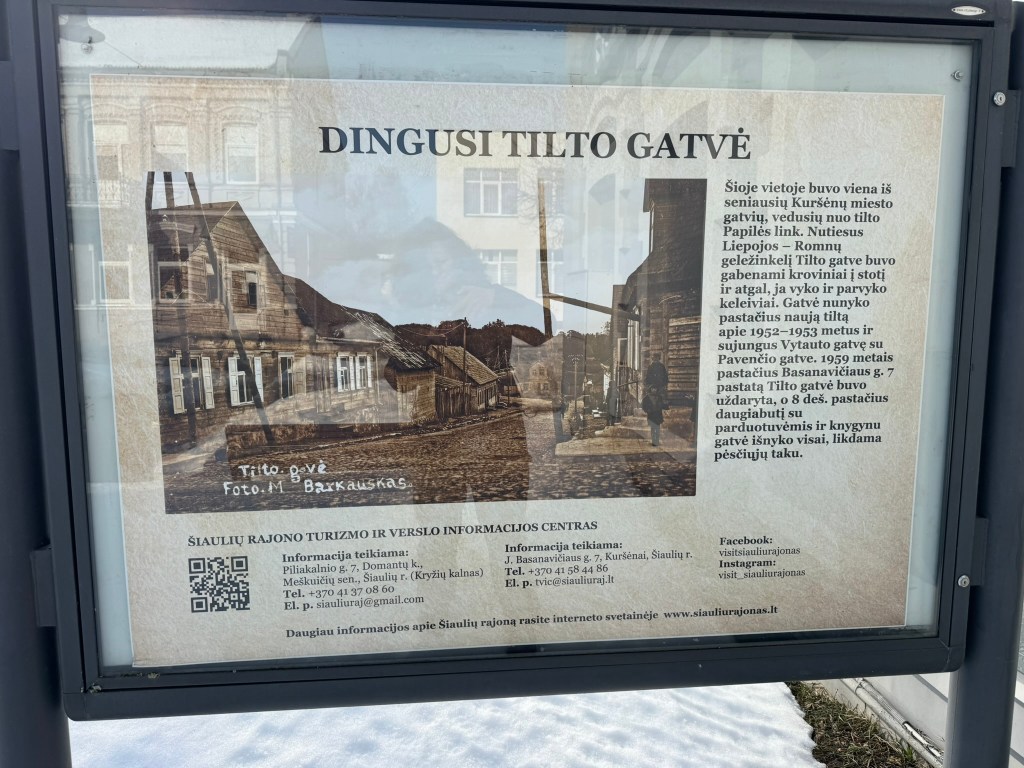
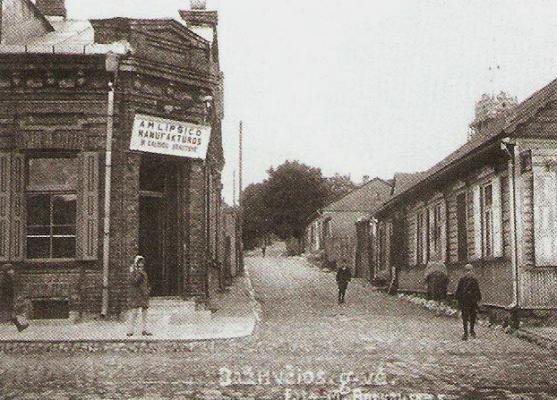
Credit: Lietuva senose fotografijose on Facebook
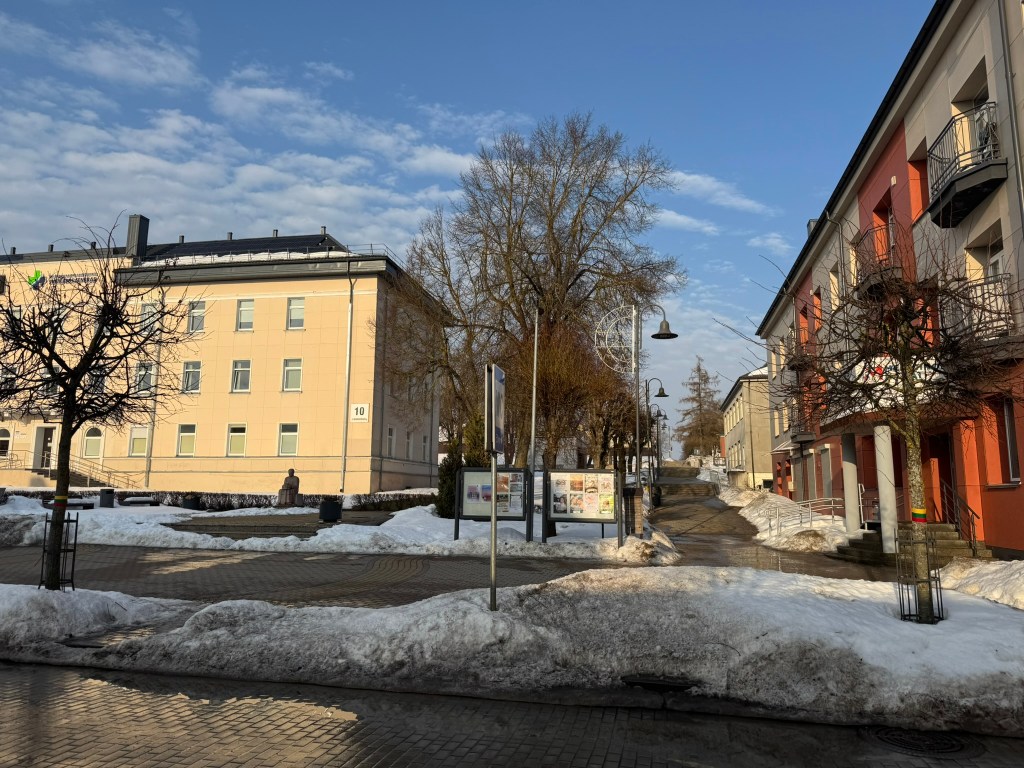
The guide pointed out three authentic buildings that have survived on this street. In one of them there was once a vodka shop and the butcher’s shop of a Jew named Sher. On the opposite side of the street stood an iron goods store. And in the courtyard of the building that now houses the towns government’s office (we call it eldership), the Preis brothers operated their dairy.
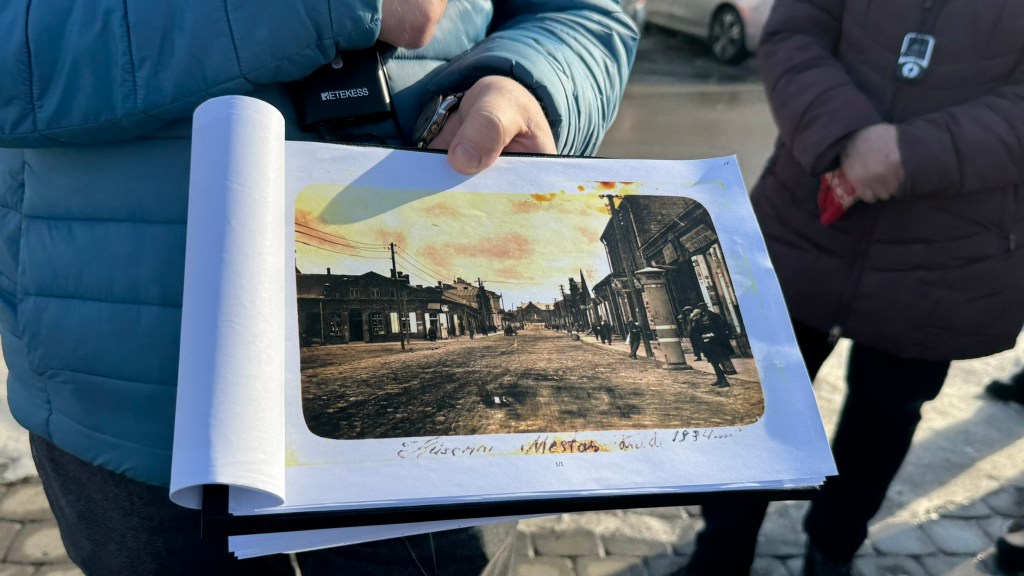
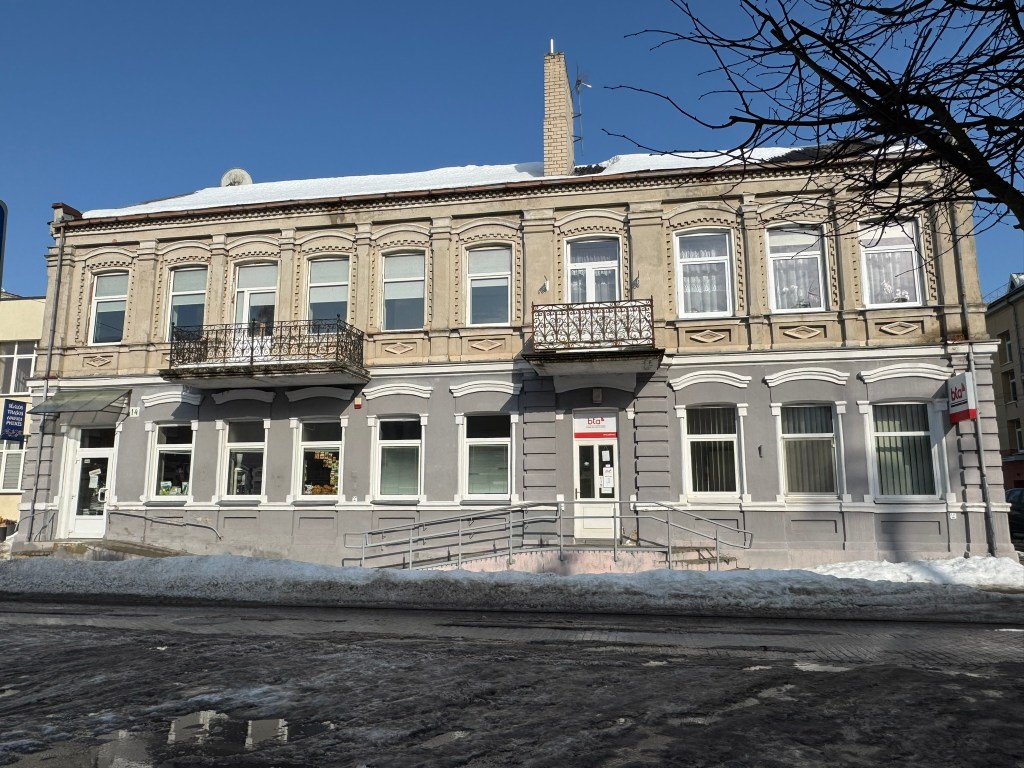
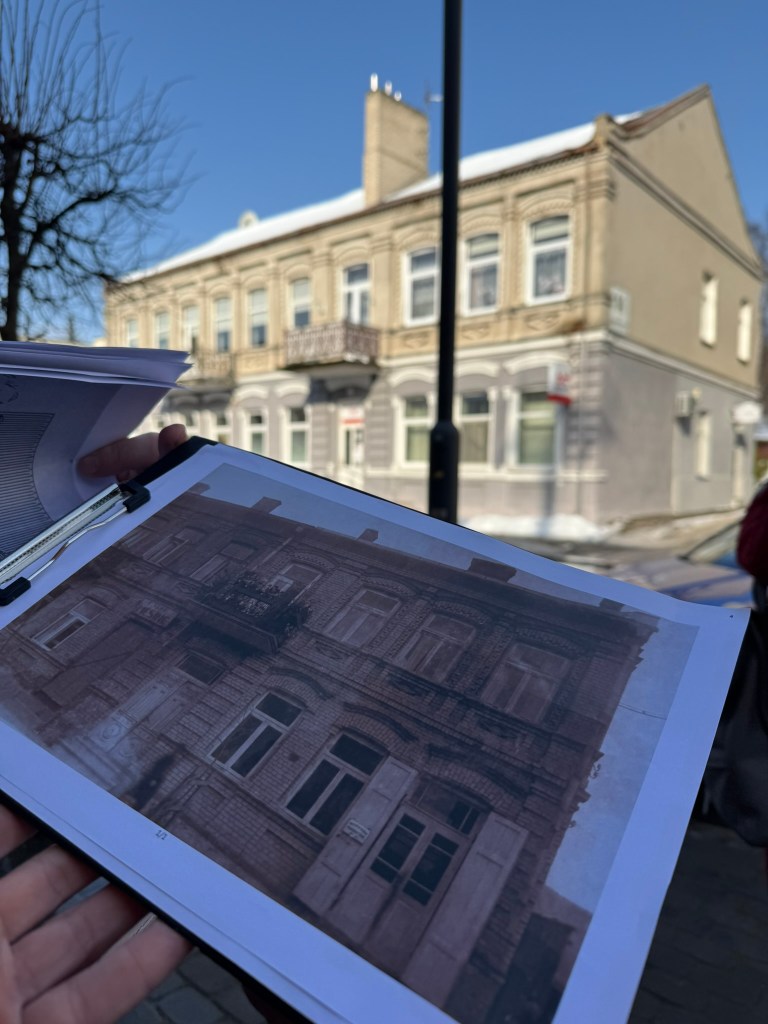
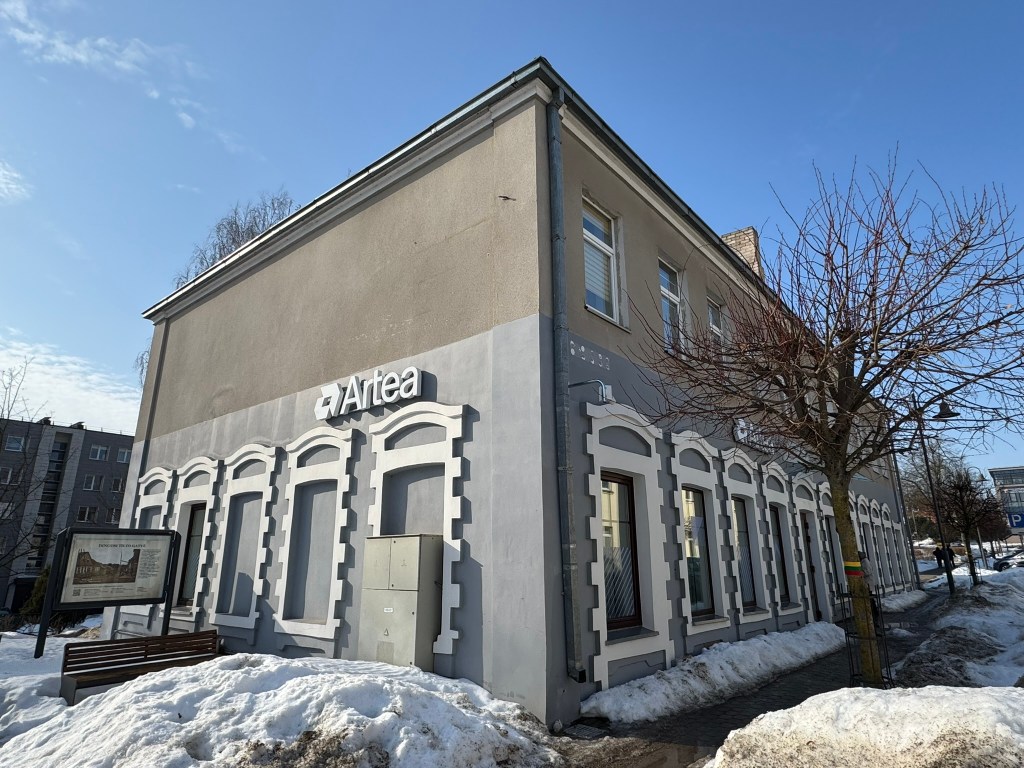
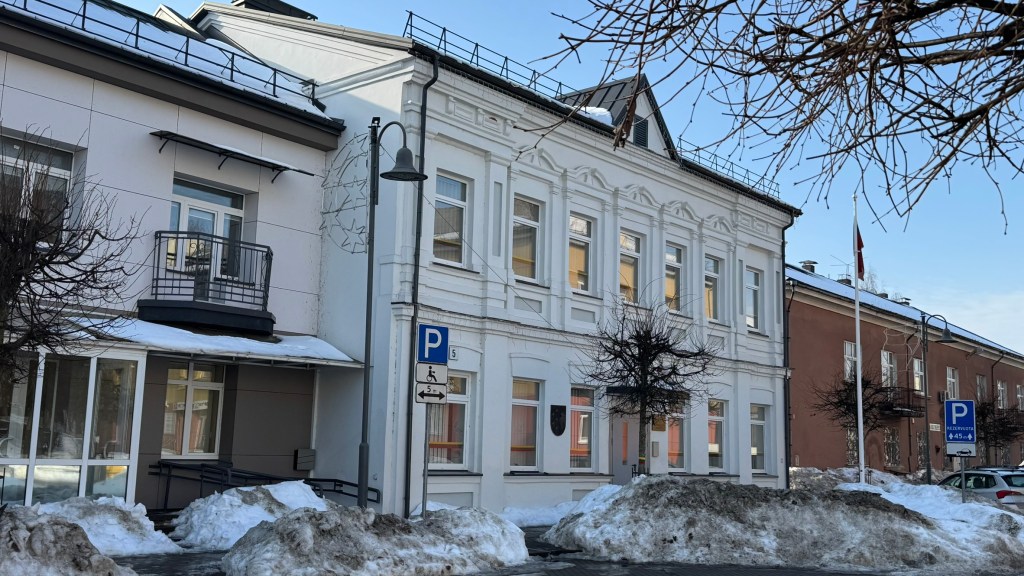
The Preis brothers, according to the guide Jonas Kiriliauskas, were known for their initiative and courage. When the monopolistic company “Pieno centras” was buying up small dairies throughout Lithuania — and even the Gruževskis family, owners of the Kuršėnai manor, sold theirs — the brothers refused. Instead, they continued running their business independently, purchasing milk from local farmers and selling their cheese and other dairy products not only to the town’s residents but also to visitors.
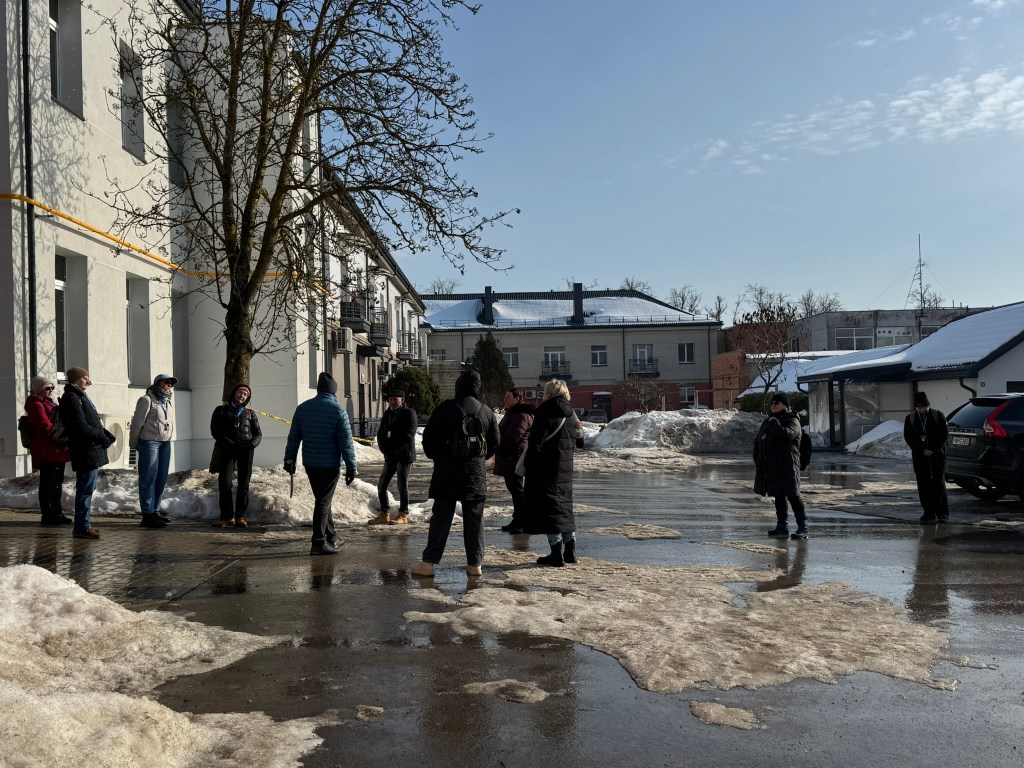
In the same yard where the Preis brothers’ dairy once operated, a ghetto was established in 1941. Jonas Kiriliauskas described how barracks were built on this plot in August, housing around 500–600 people, mostly women and children. They were later transported to Žagarė and killed there.
The guide also briefly mentioned another group of Kuršėnai residents, about 120–180 people, who on July 21 were taken to the nearby Padarbiai forest. There, in pre-dug pits, mostly local activists were shot. Since no exhumation was conducted, the exact number of victims remains unknown. Later, as mentioned, most of the Kuršėnai Jews were deported to Žagarė, while those remaining were sent to so-called forced labor camps at the Pavenčiai sugar factory and the Daugėliai stove-tile factory. Gradually, they died from exhaustion or disease, and the survivors, together with Jews from the Šiauliai ghetto, were killed on January 30, 1944, in the Kužiai forest.
The guide also spoke about several Jews from Kuršėnai who survived the Holocaust with the help of local Lithuanians. He also mentioned the last manor owner, Gruževskis, who was murdered in Majdanek for helping Jews.
As we discussed the tragic fate of the Kuršėnai Jewish community, the participation of Lithuanians in the Holocaust, and the limits of what can still be researched, the tour came to an end.
My Walk Through Kuršėnai: Gruževskis Manor, Jewish Cemetery, Holocaust Memorial, and the Righteous Among the Nations
I then took the opportunity to enjoy the still-wintry weather with a short walk around the town on my own. Later, I visited the former Jewish cemetery across the Venta River, as well as two cemeteries where Kuršėnai residents honored as Righteous Among the Nations are buried. This time I did not visit the Holocaust sites, but I will share photographs from my previous trips.
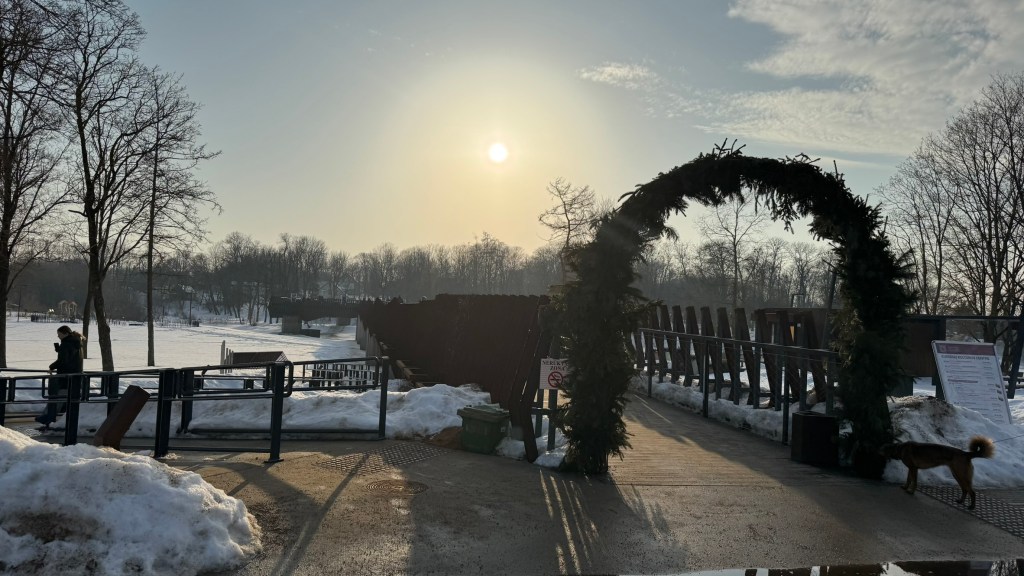
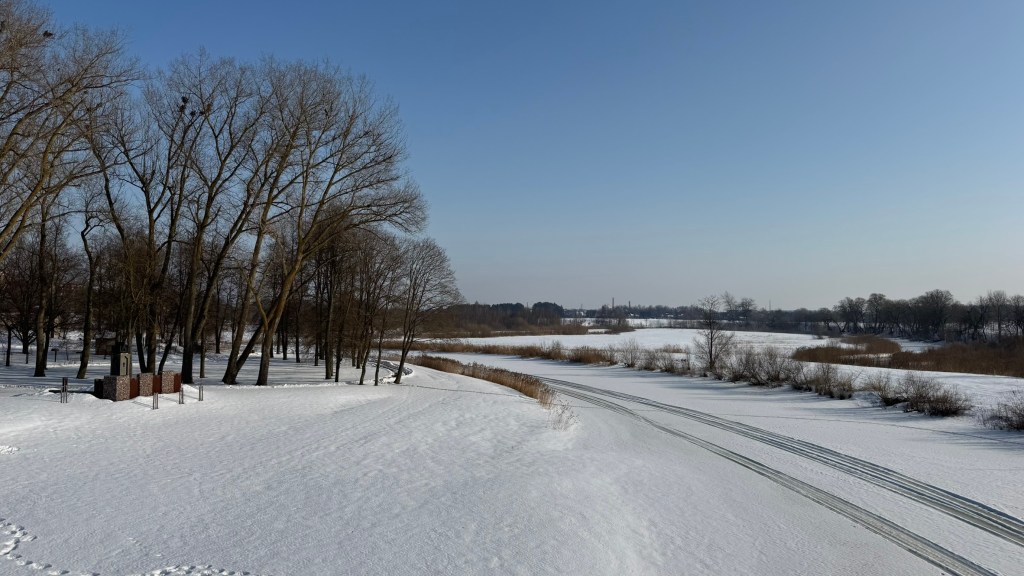
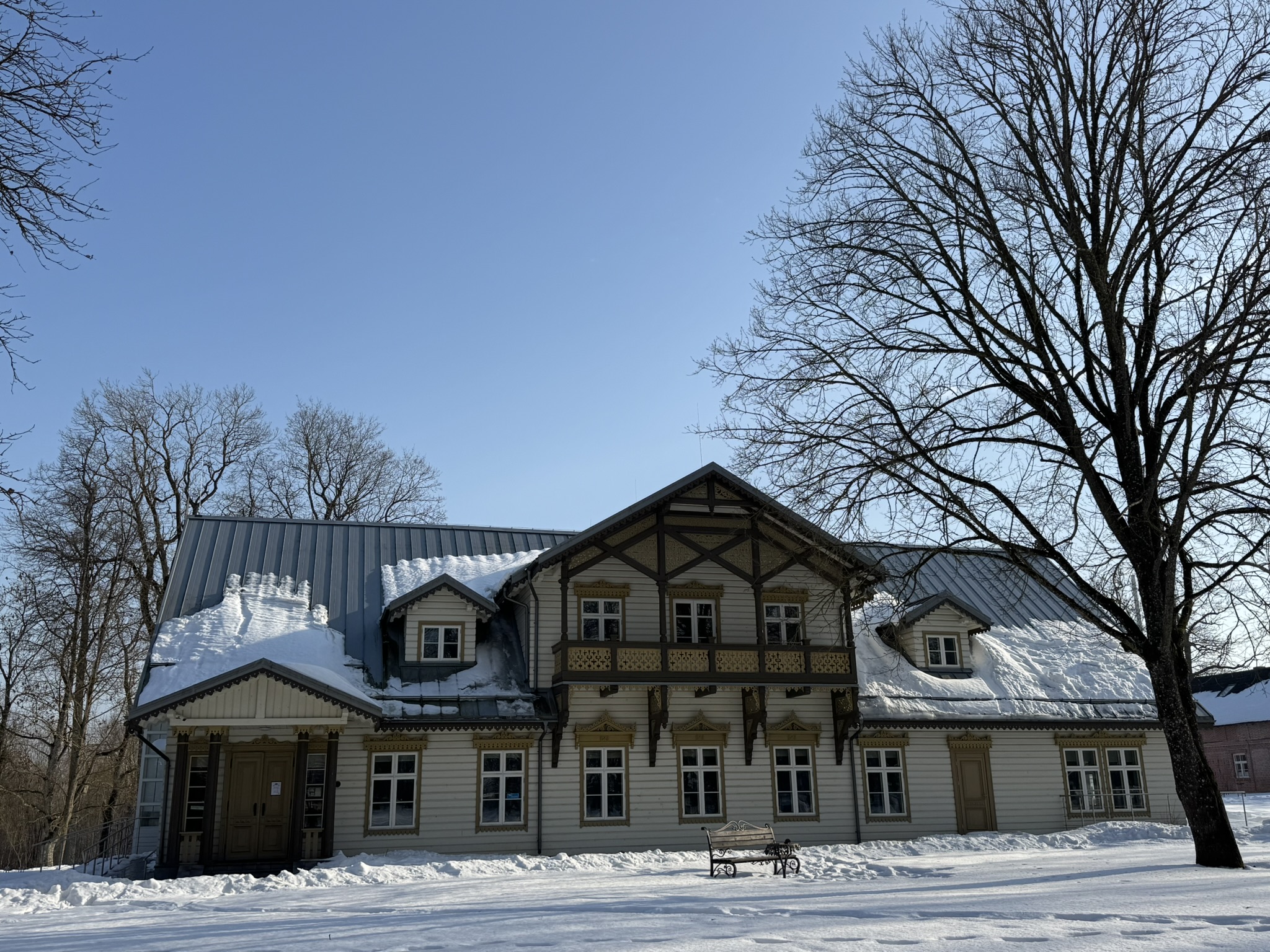
On the opposite bank of the Venta River stands the Gruževskis manor estate, now home to the Centre for Ethnic Culture and Traditional Crafts.
The estate’s history goes back to 1564, when King Sigismund Augustus granted it to the Despot-Zenavičius family. It later passed to the Pacas family, and from 1631 until its nationalization in 1940, it was owned by the Gruževskis family.
Kuršėnai Manor was once among the wealthiest estates in Samogitia. It had its own dairy, sawmill, and brickyard, and relied heavily on livestock farming. The estate complex included 24 buildings; today, five remain: the palace, the office building, the servants’ quarters, the stable, and the cowshed. Under the Gruževskis family, the estate flourished, and their farming activities were awarded at agricultural exhibitions.
The last owner of the manor, Jurgis Gruževskis, was executed in the Majdanek concentration camp.
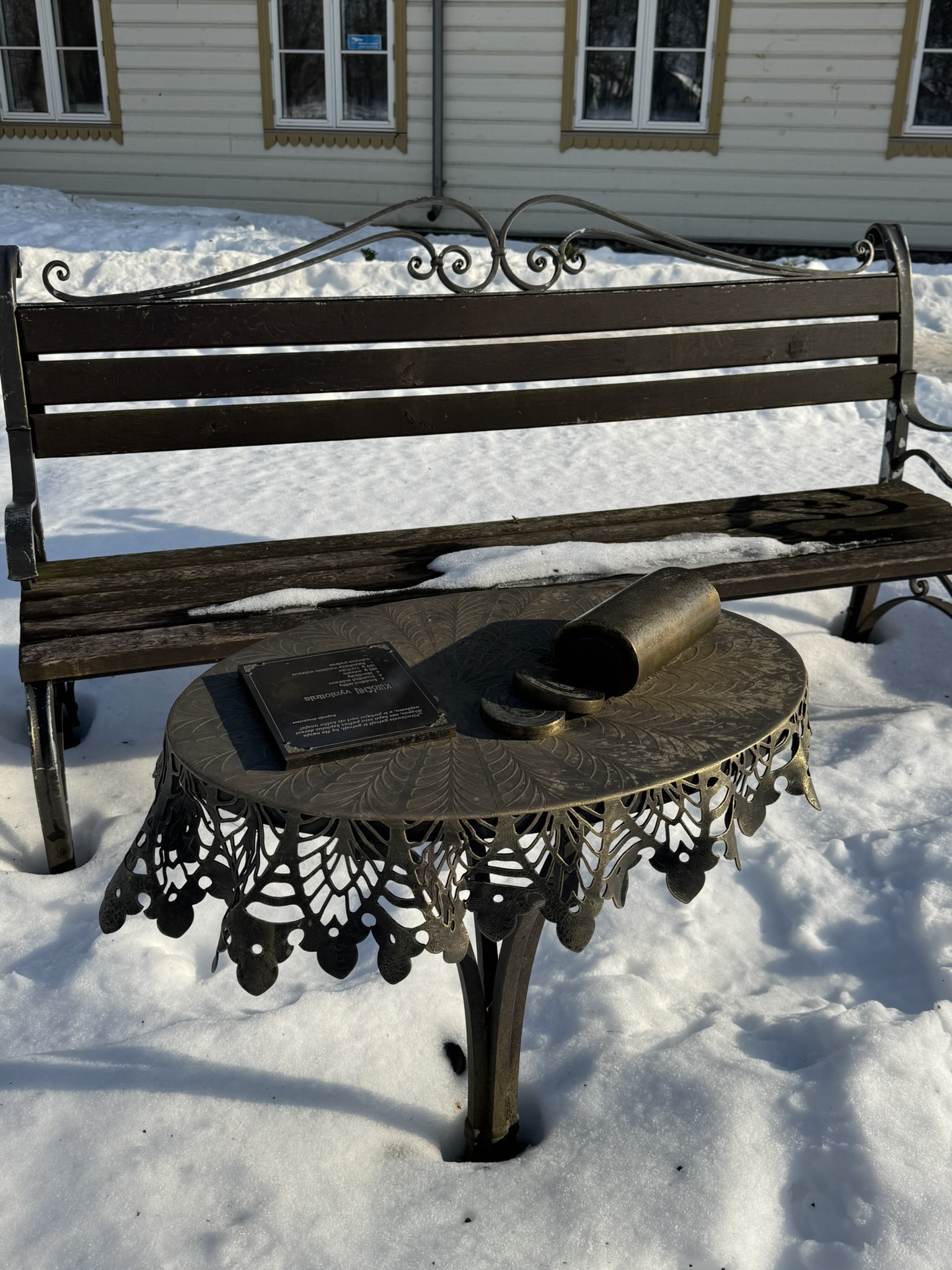
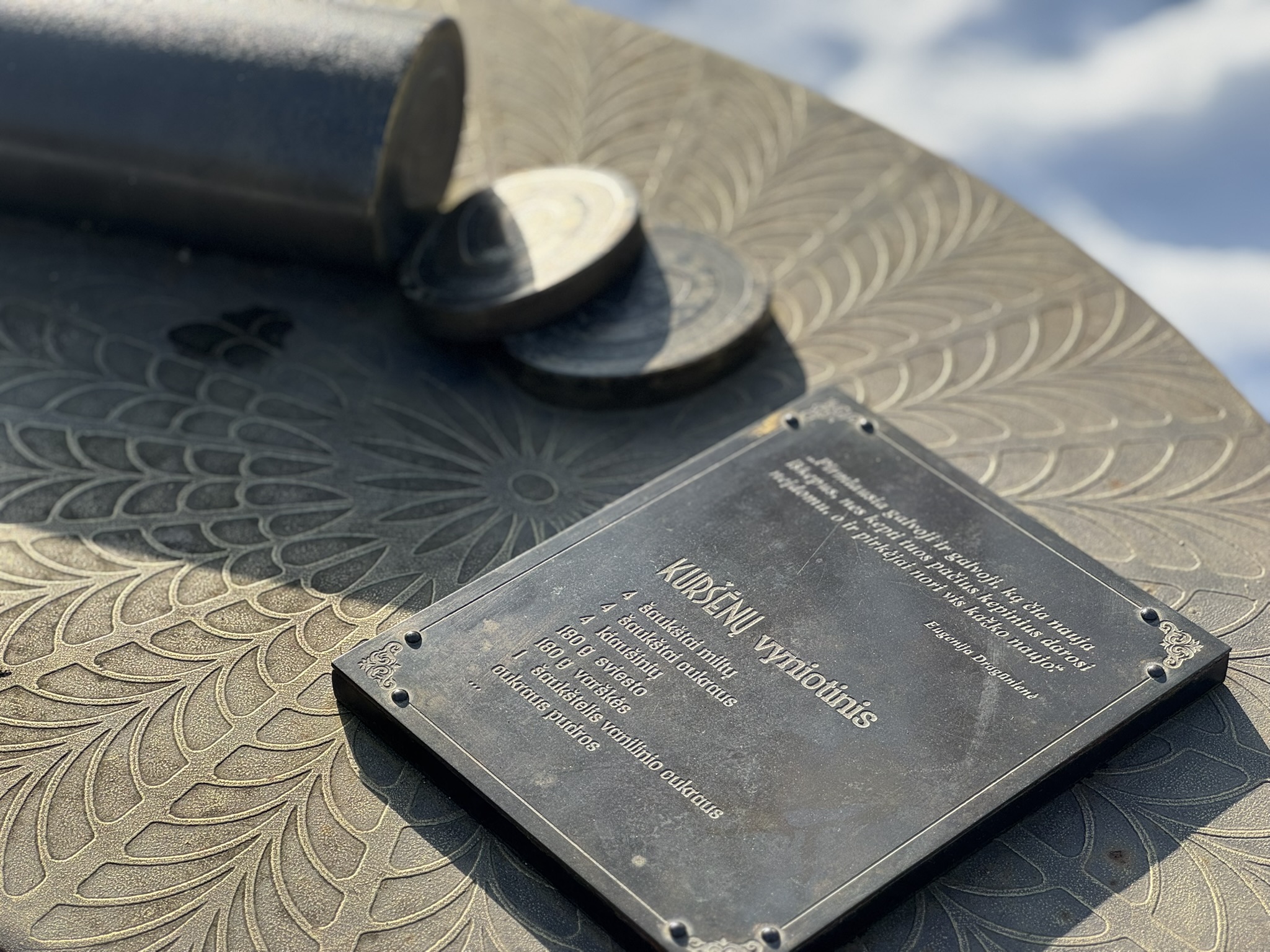
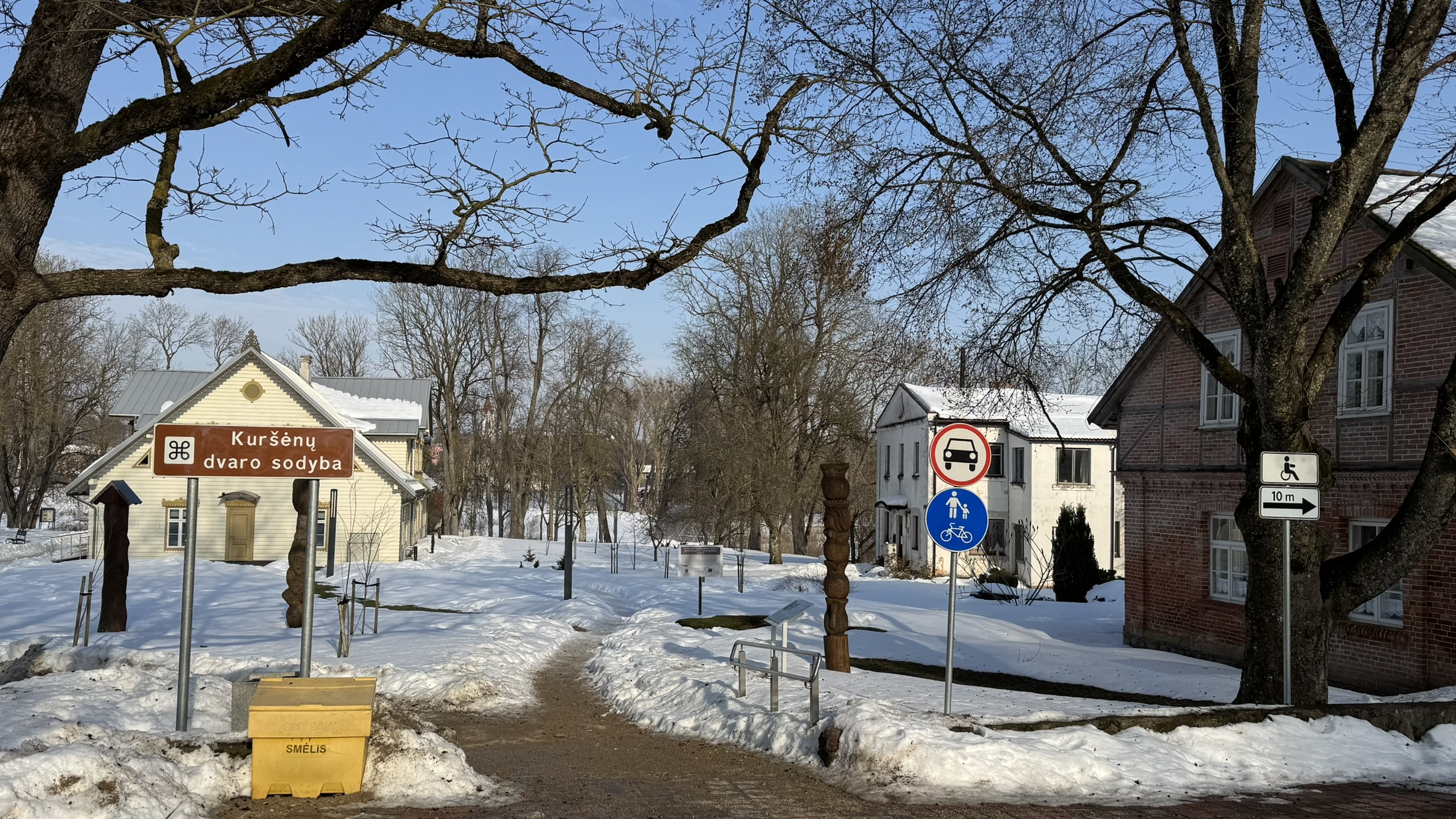
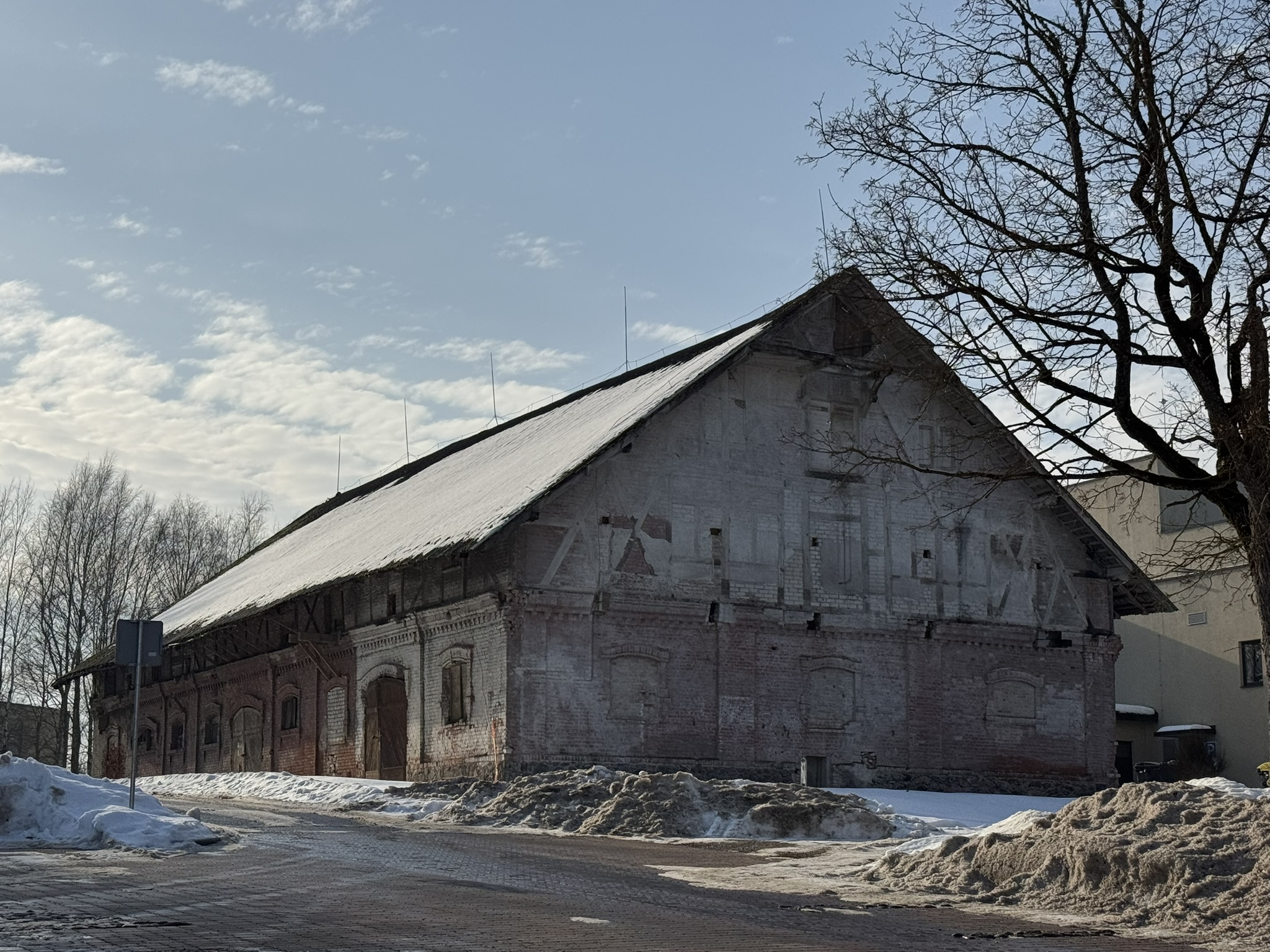
From the opposite bank of the Venta River, the Kuršėnai old town strongly reminded me of the town’s historic photographs.
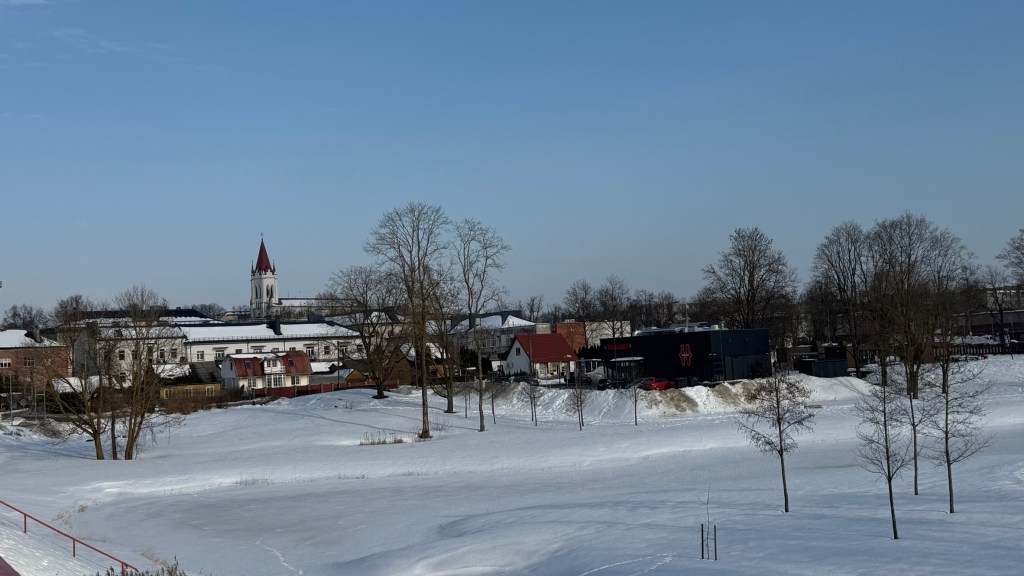
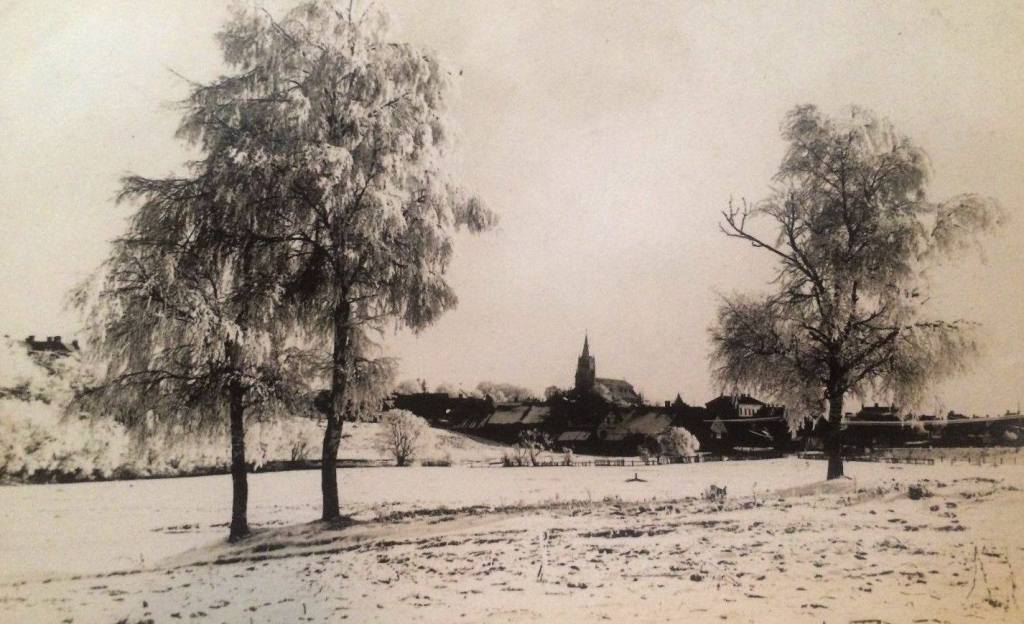
Credit: Lietuva senose fotografijose on Facebook
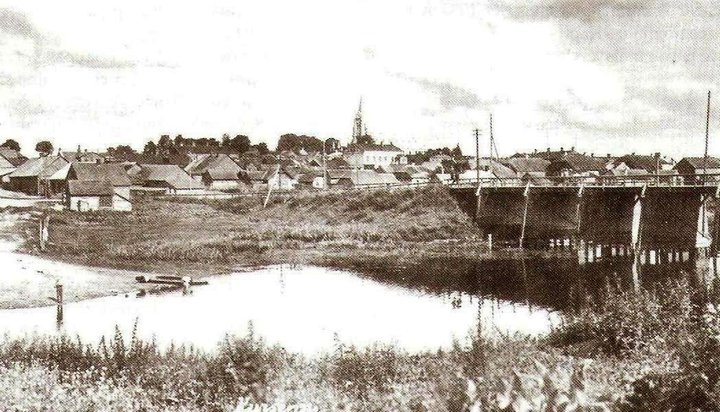
Credit: Lietuva senose fotografijose on Facebook
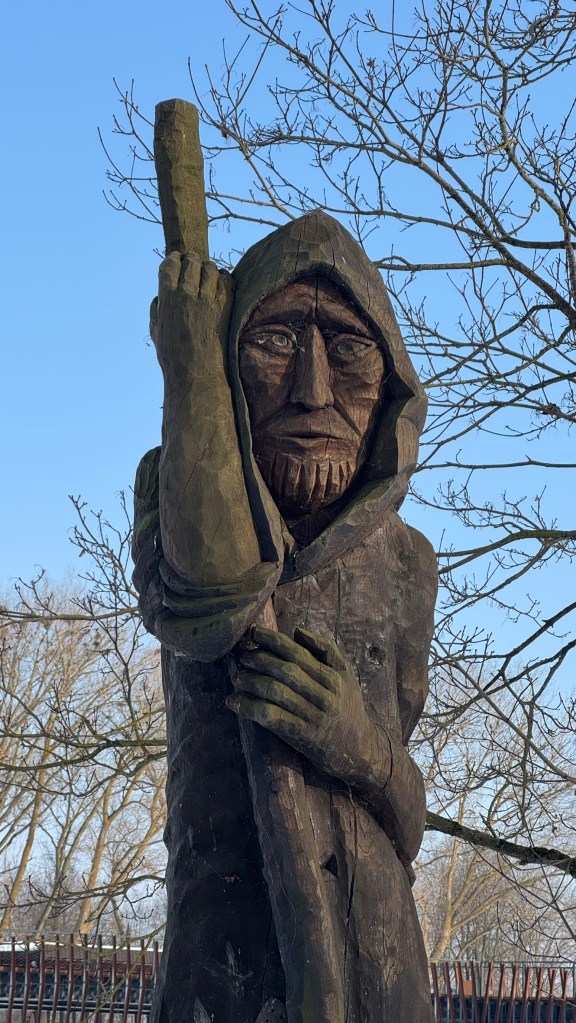
The sculpture The Ferryman by Vaclovas Tamošaitis recalls old stories of townspeople waiting in the fog to see who was rowing from the manor.
According to Įdomūs Kuršėnai, in the 19th century there were no bridges in Kuršėnai, only a ferry. A Jewish man named Jodeikinas operated it and devised a clever system of annual “passes” for passengers. They could pay with geese, flax, or grain and use the ferry as often as they wanted throughout the year.
A little farther from the town center, on the way to Pavenčiai train station, are (or rather, was) the old Jewish cemetery of Kuršėnai. How the entrance looked in the past and what remains today can be seen in photographs. Only two monuments mark that a cemetery once stood here. When I visited in the summer more than five years ago, I also saw a few remnants of stone gravestones.
Now, after heavy snowfall, nothing was visible, just the tracks of people, animals, and skis.
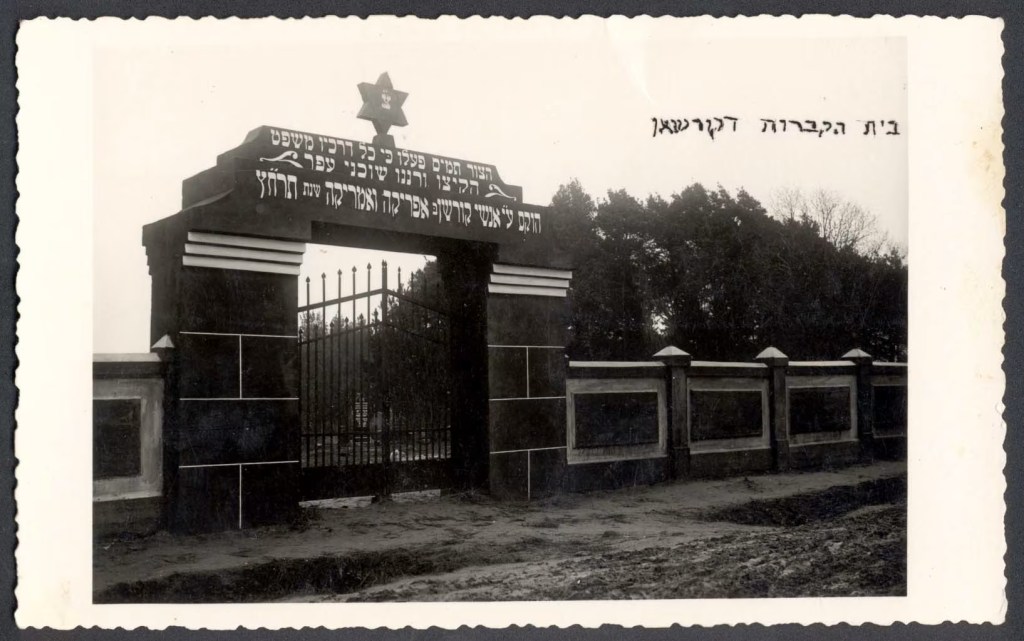
Credit: Yad Vashem
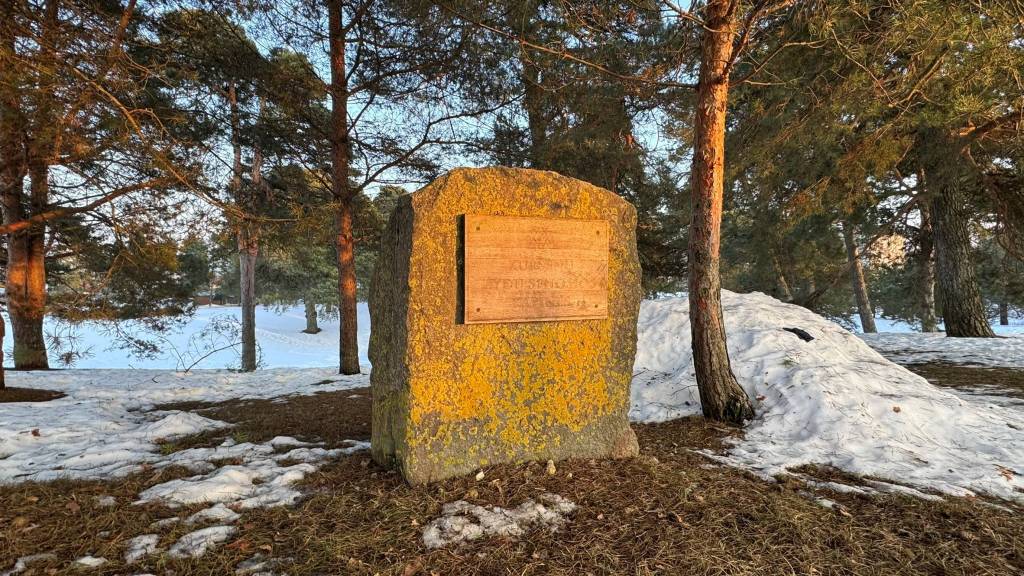
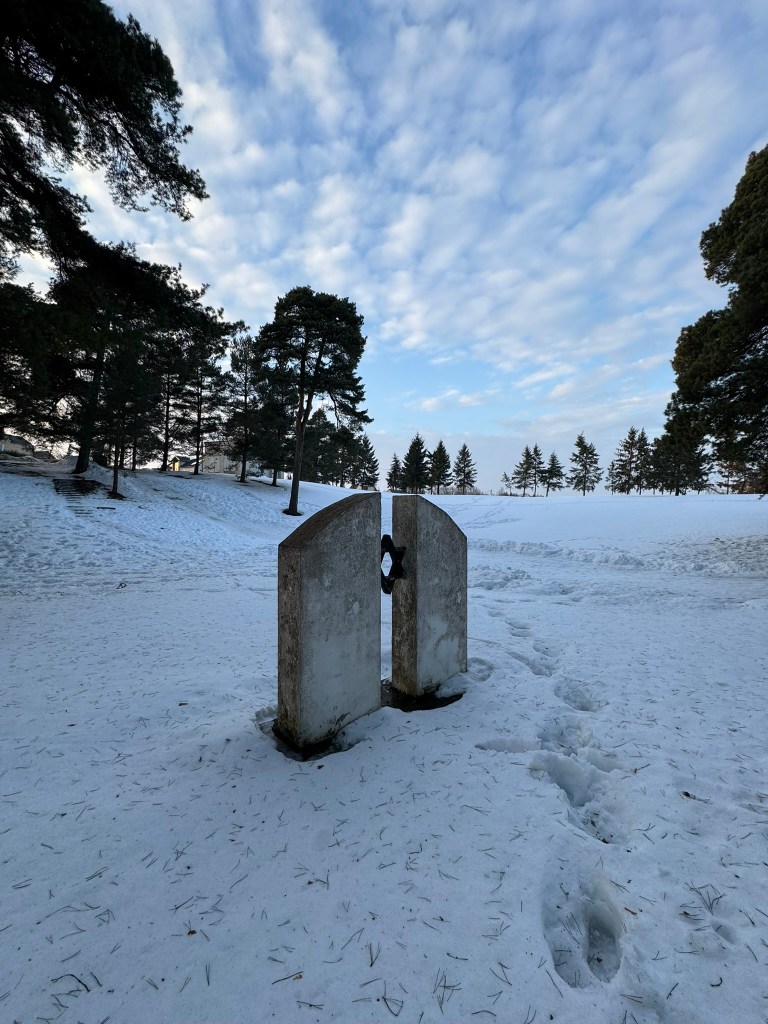
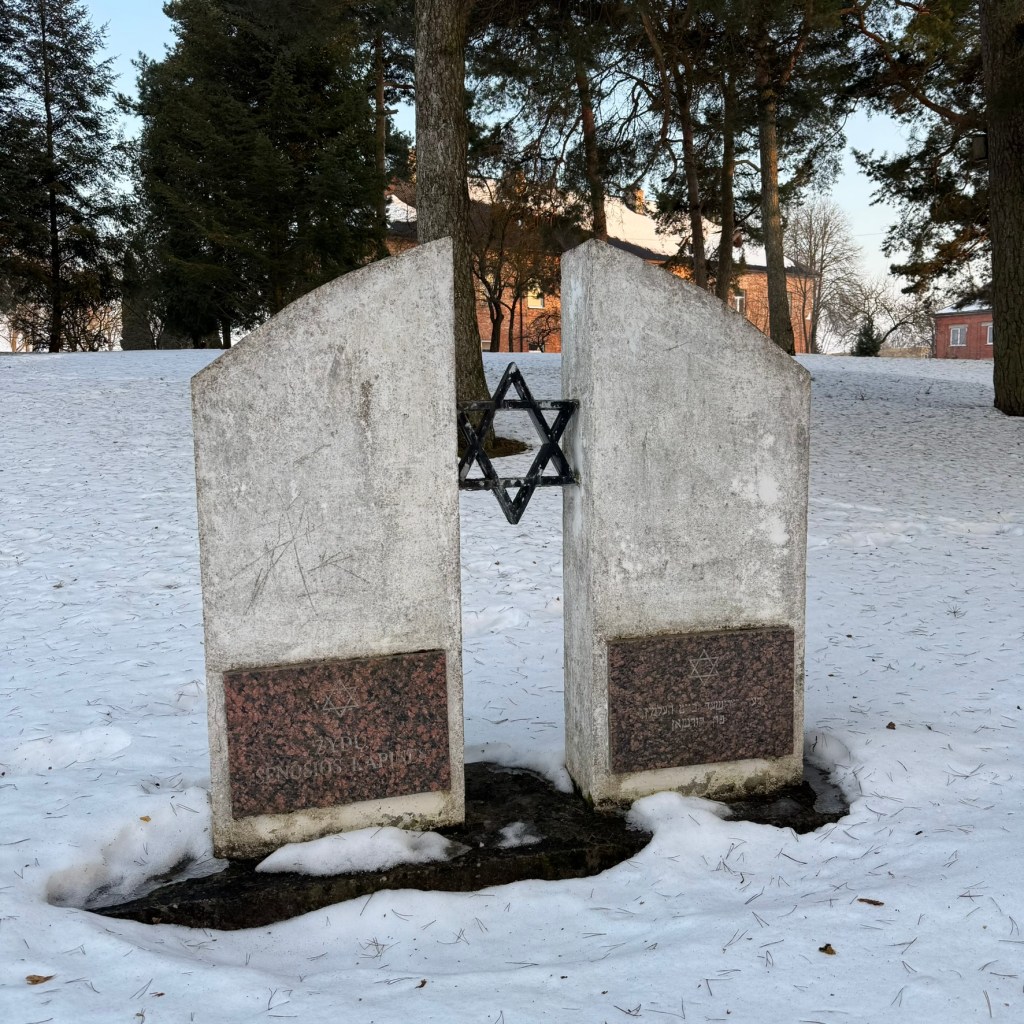
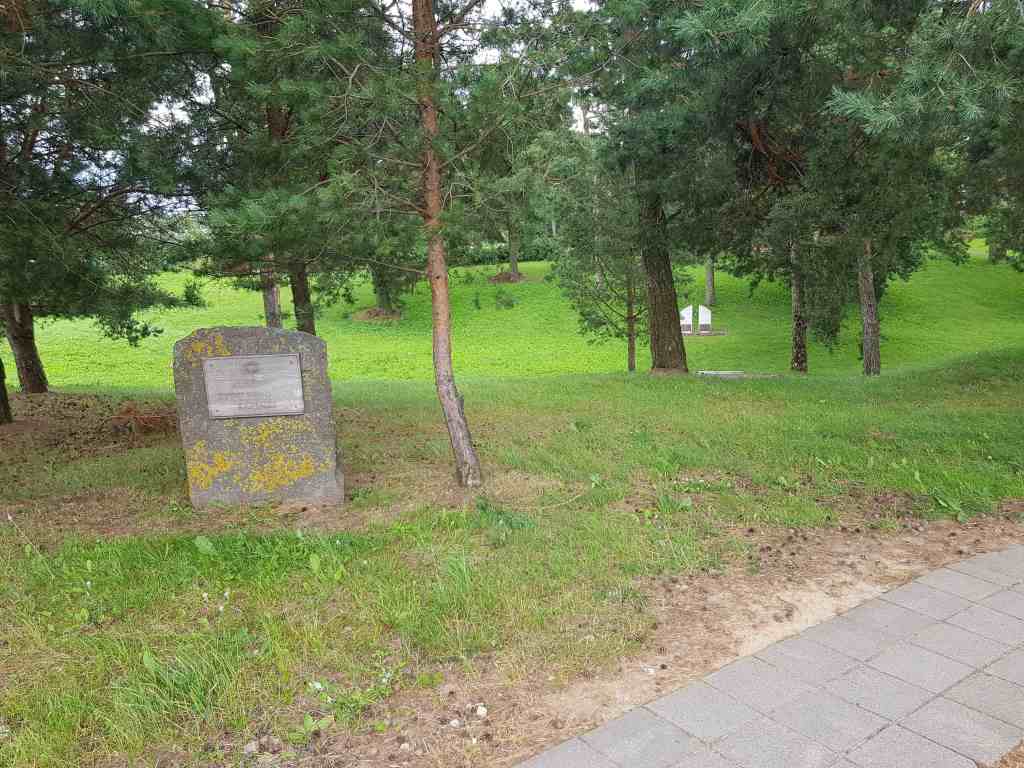
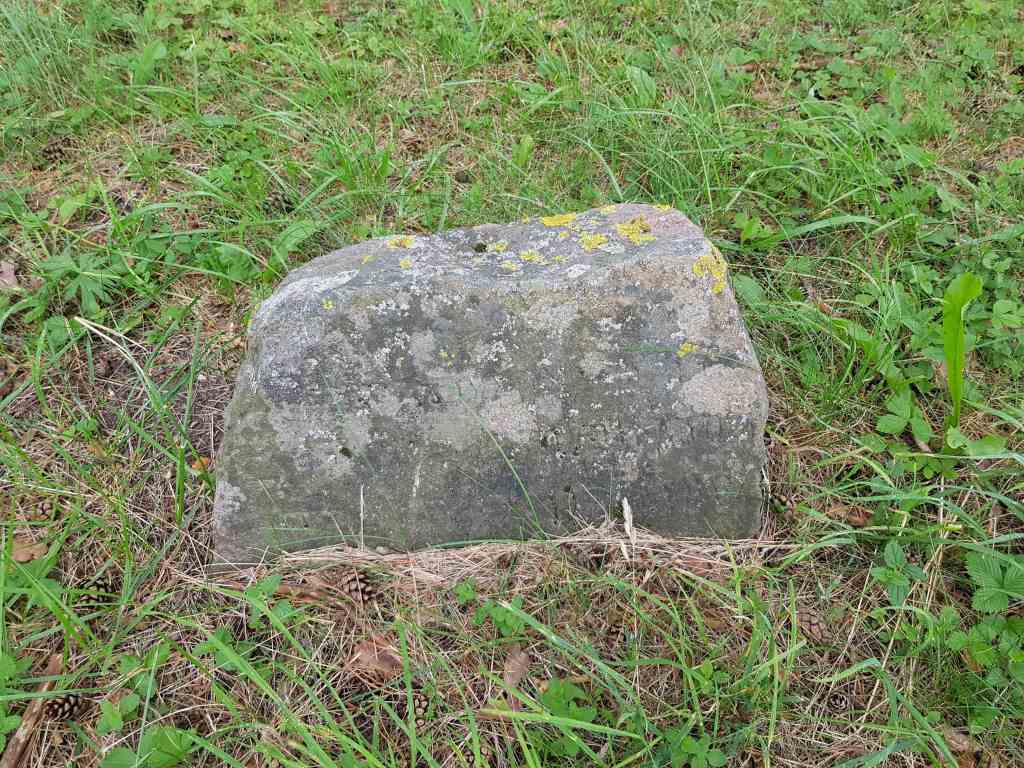
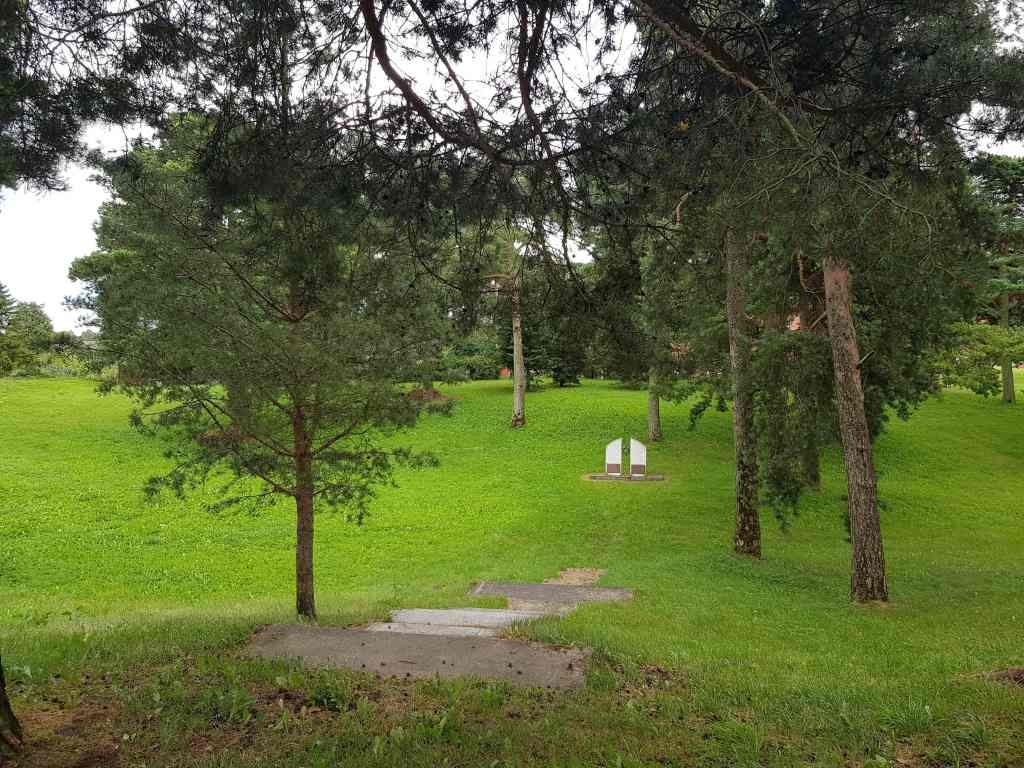
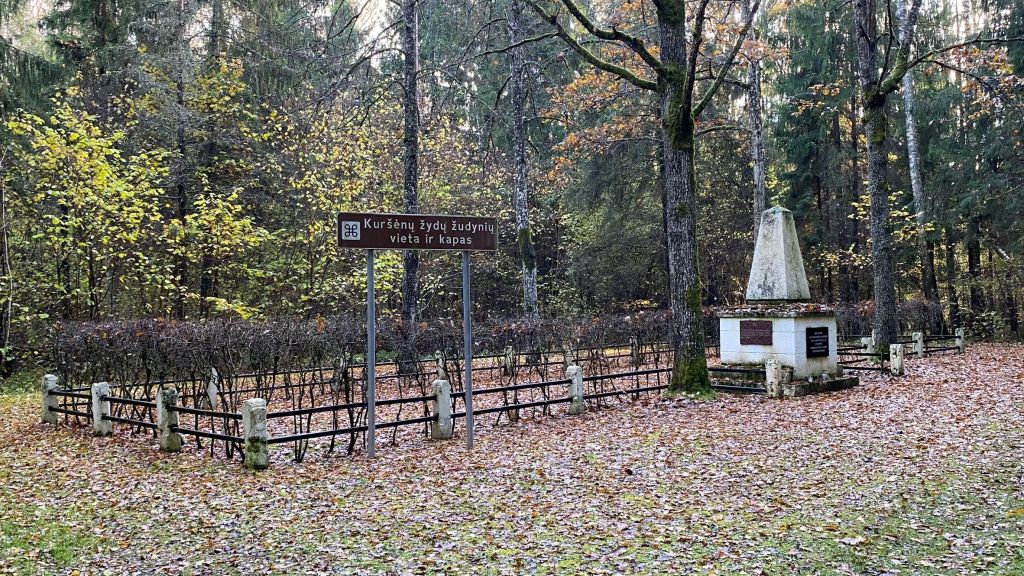
The Holocaust memorial marking the site of the Kuršėnai Jewish killings was buried deep under snow this time, so I didn’t visit. I had been there a few months ago. In the Padarbiai Forest, around 120 to 180 people, mostly Jewish men, were brutally murdered by local collaborators on July 21, 1941. We remember them.
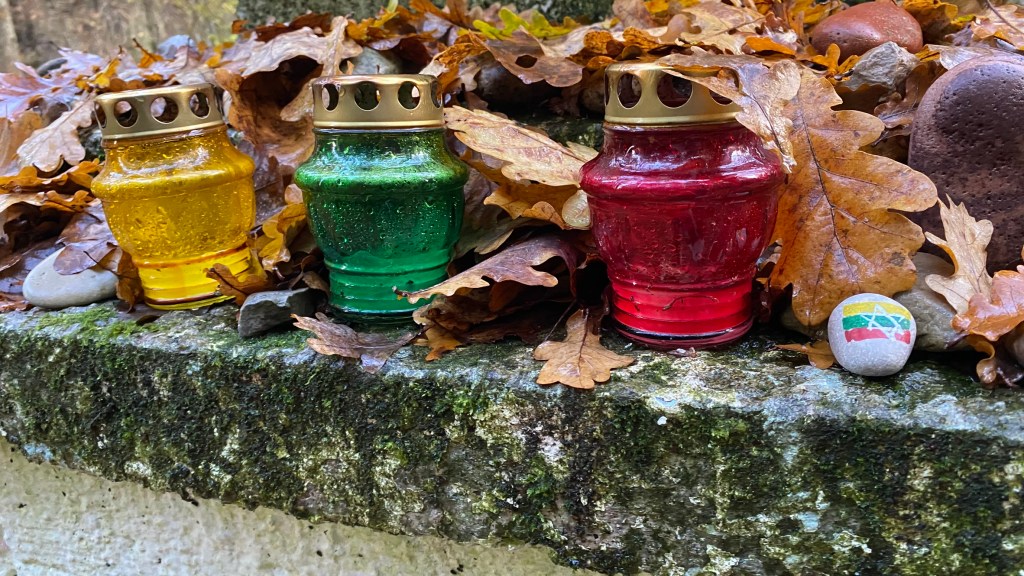
I also visited two cemeteries in Kuršėnai, where several Jewish rescuers are buried. Among those recognized as Righteous Among the Nations are two couples from the Kuršėnai area: Sergejus Minkevičius with his wife Ekaterina (1912–2013), and Bronė Grigalaitienė (1912–1999) with her husband Pranas Grigalaitis (1909–1969).
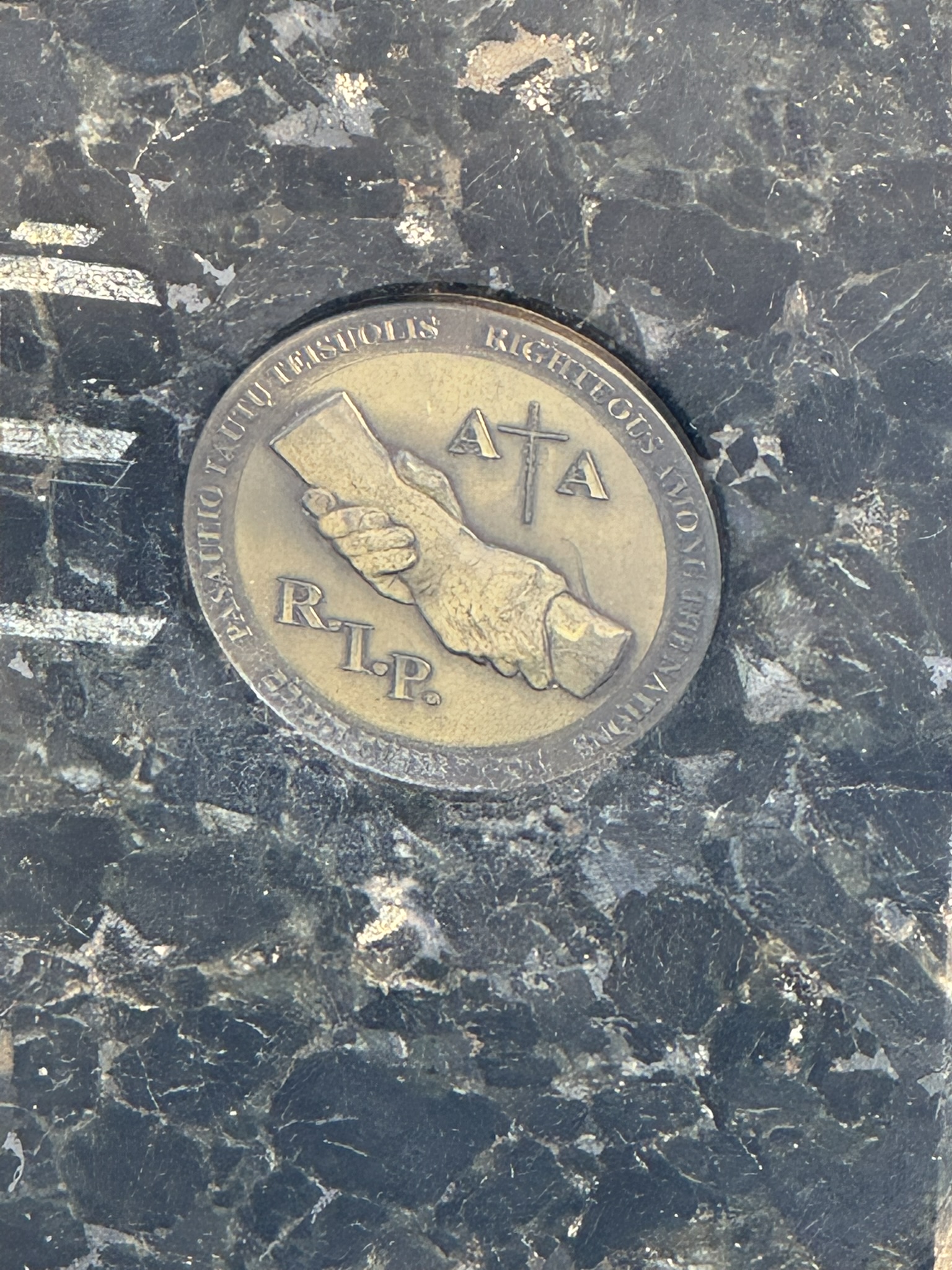
I was especially eager to see the graves of Bronė and Pranas Grigalaitis. As my respected acquaintance from Kaunas, Bella Shirin, has recounted, during the war the couple lived in Daugėliai near Kuršėnai and rescued Bella’s cousin, Liuba Funkaitė, raising her until her parents returned from the concentration camps. Their graves are marked with a Righteous Among the Nations memorial plaque, designed by the Lithuanian architect Tautvydas Budzys.
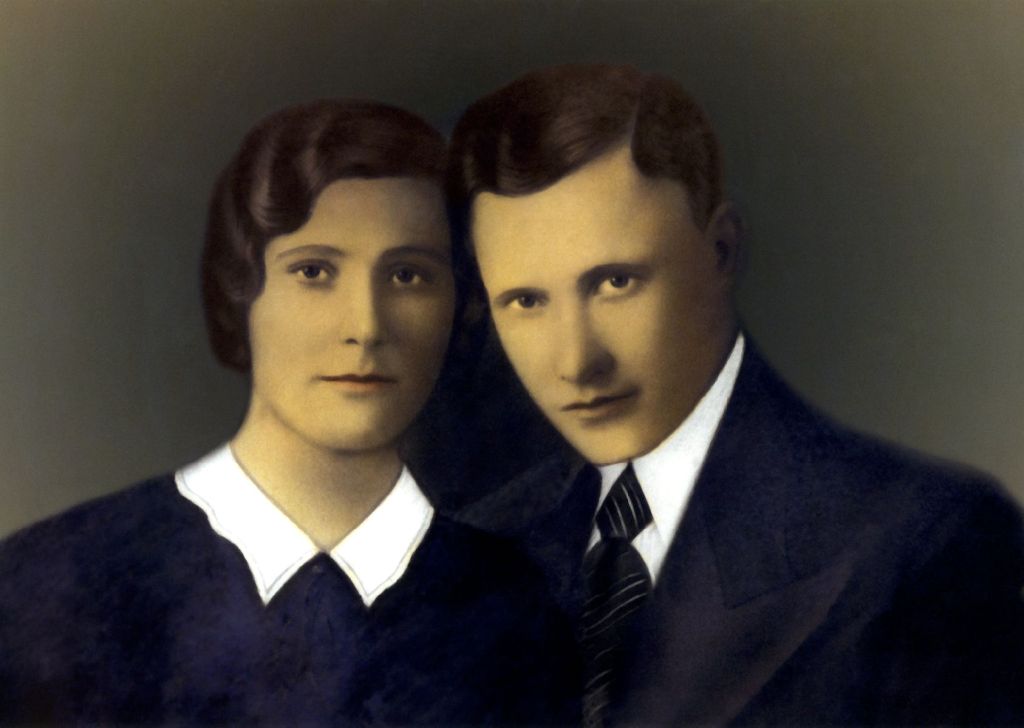
Credit: Vilnius Gaon Museum of Jewish History
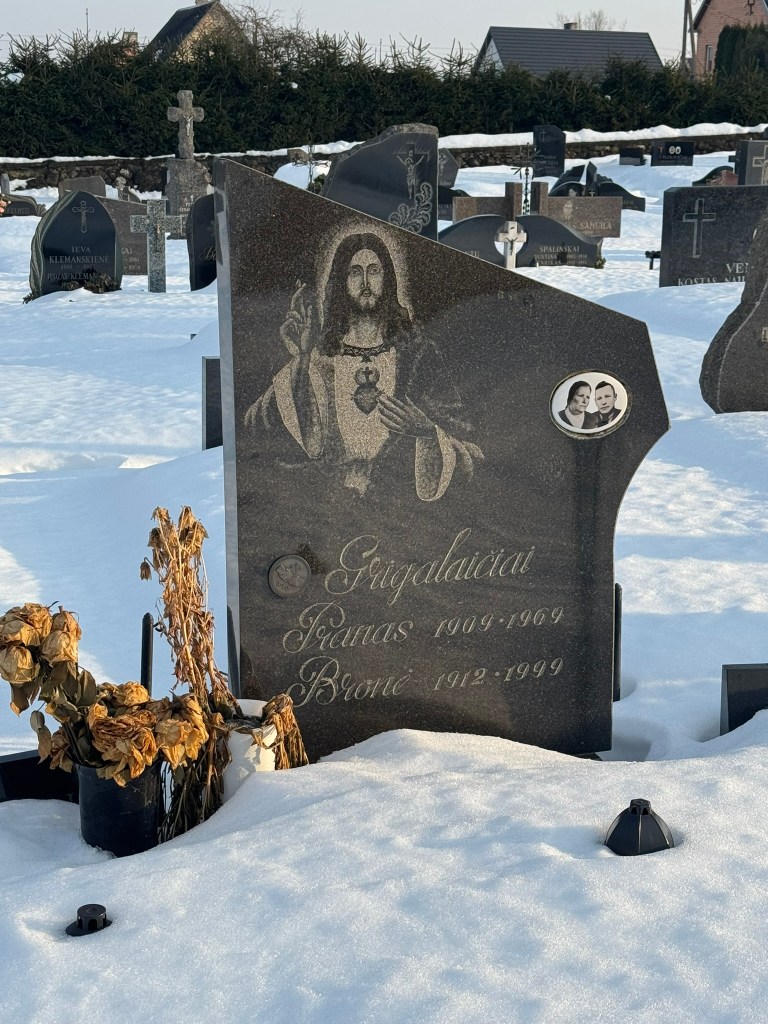
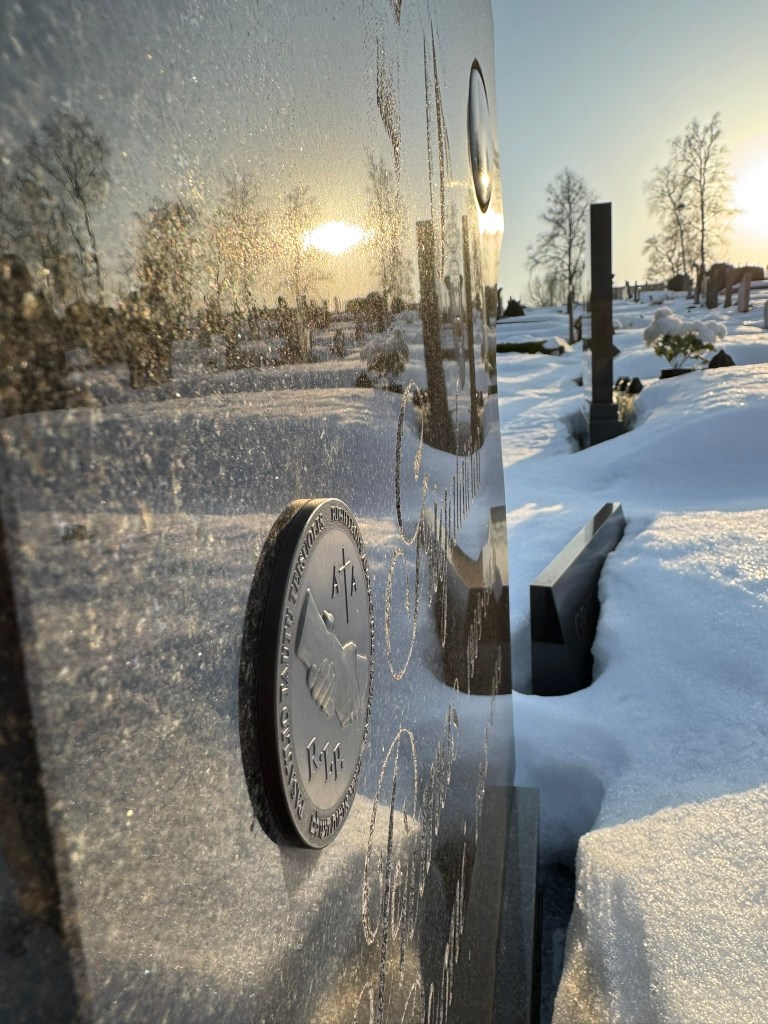
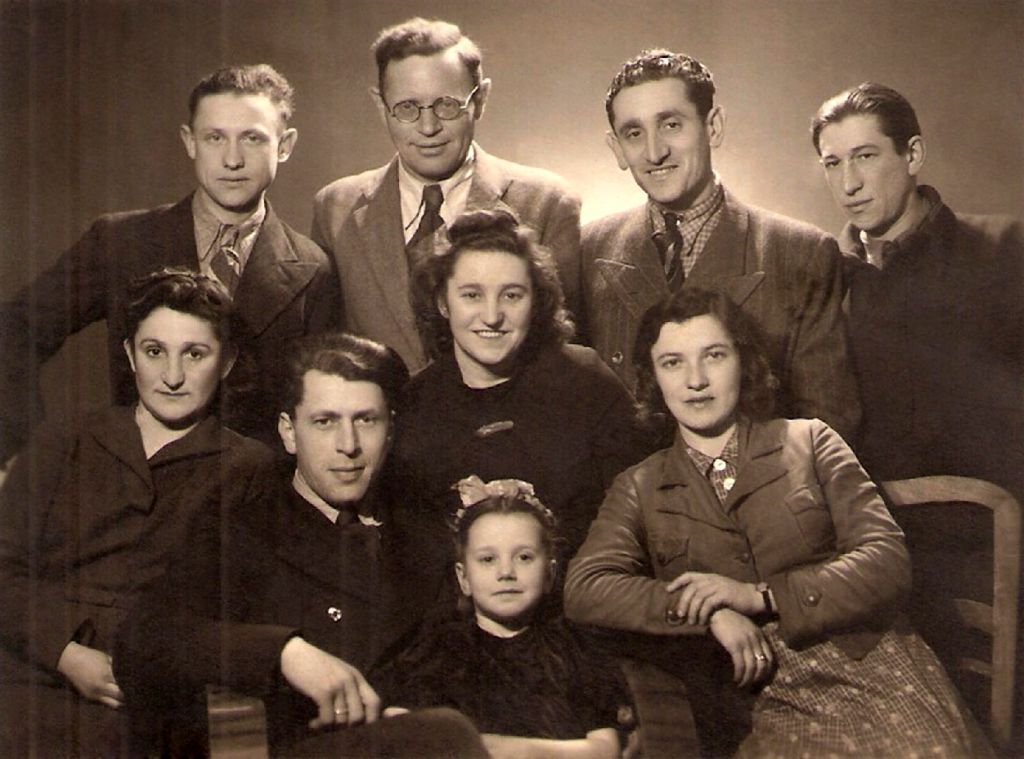
Credit: Vilnius Gaon Museum of Jewish History
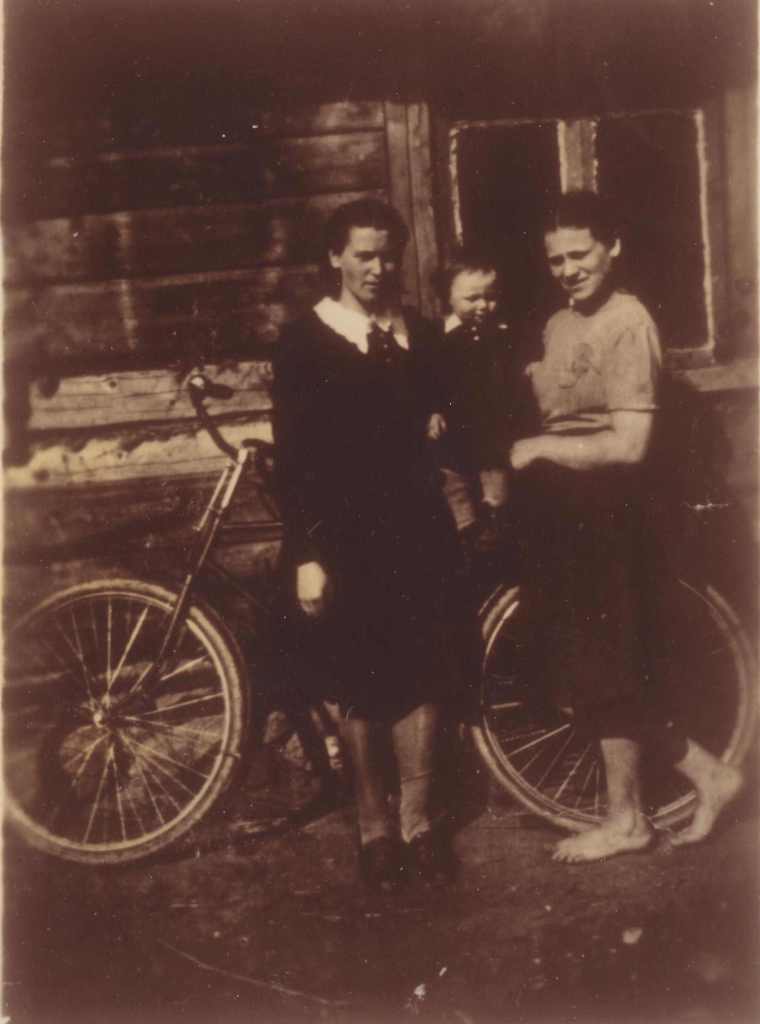
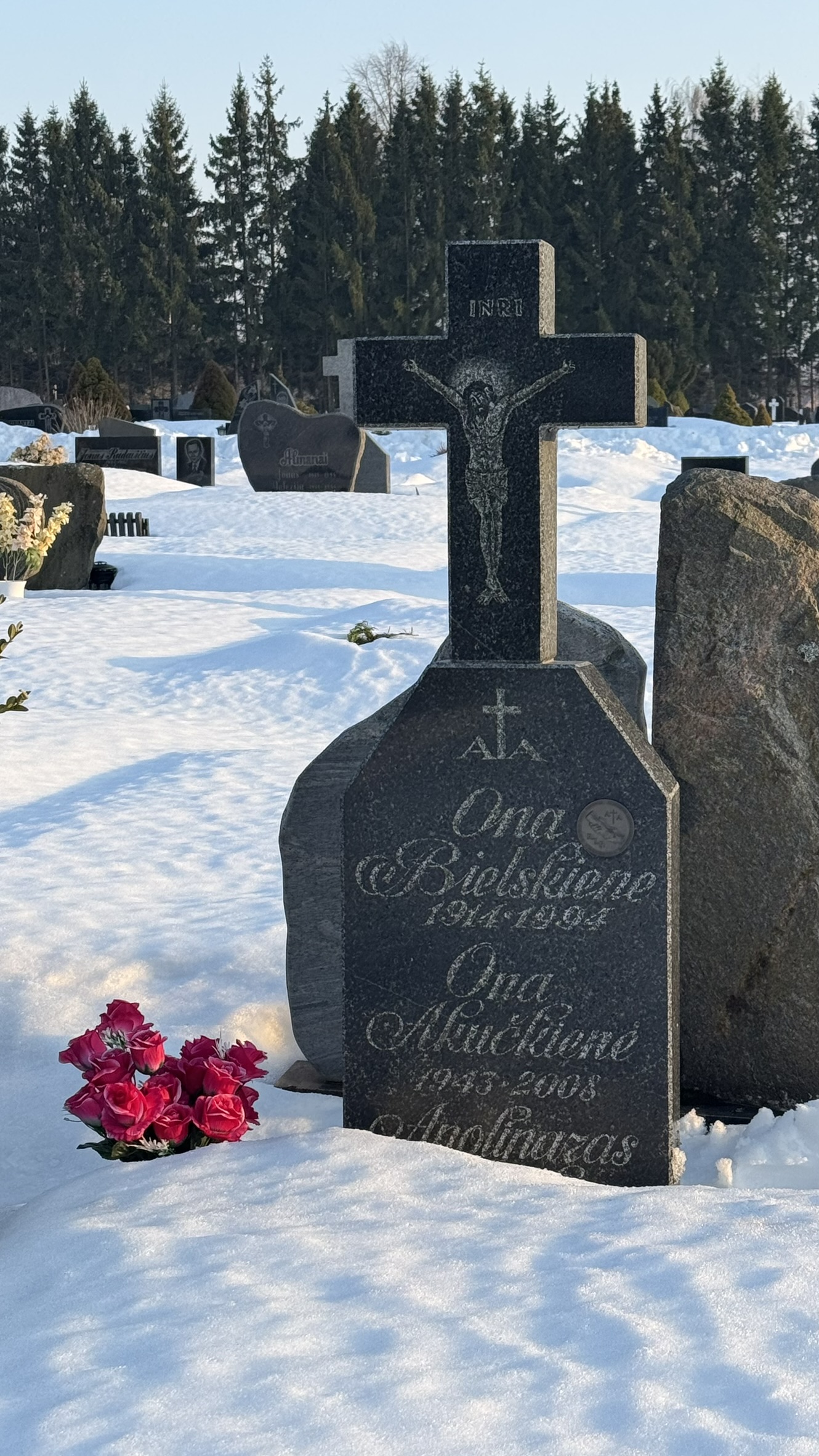
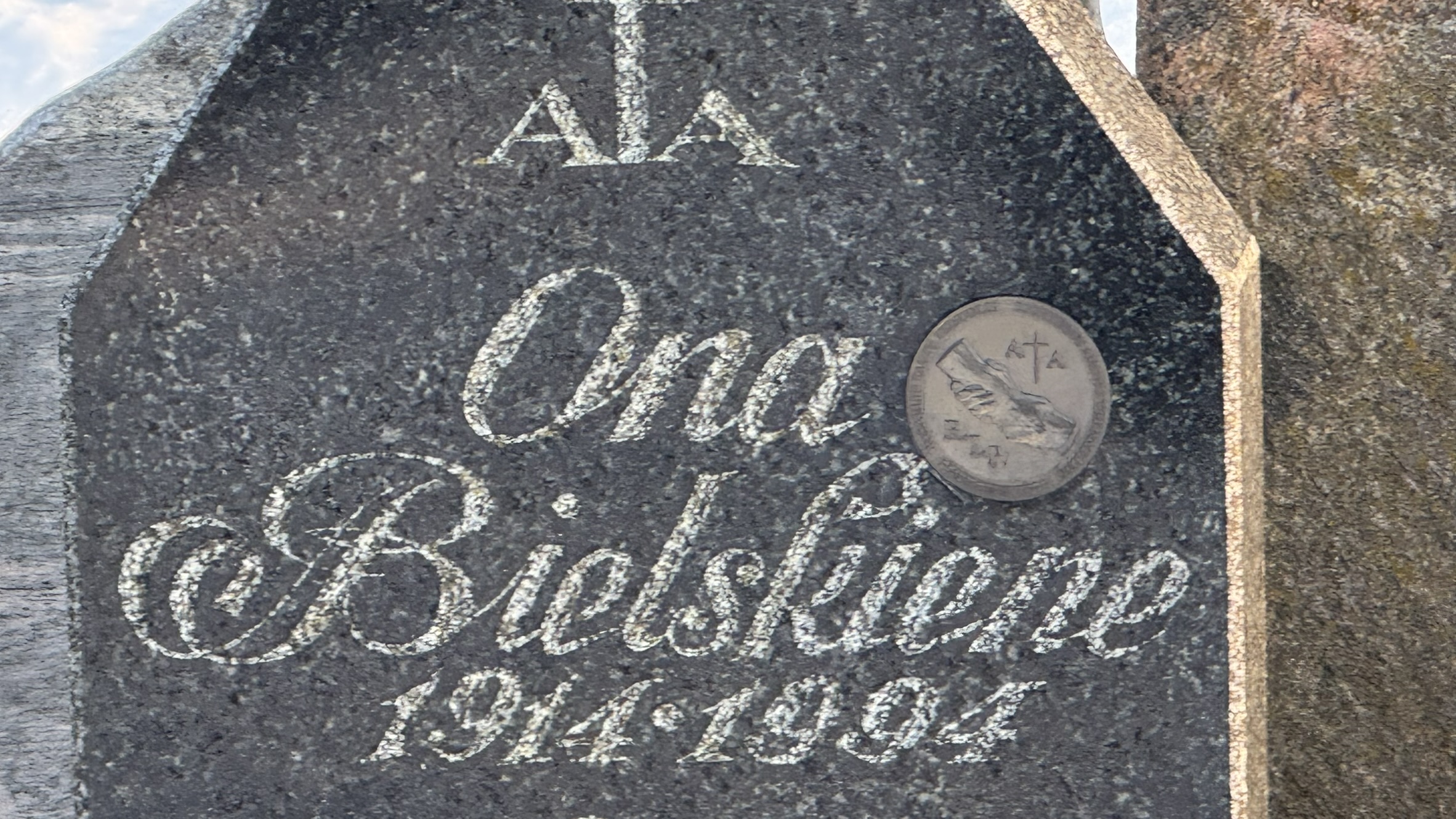
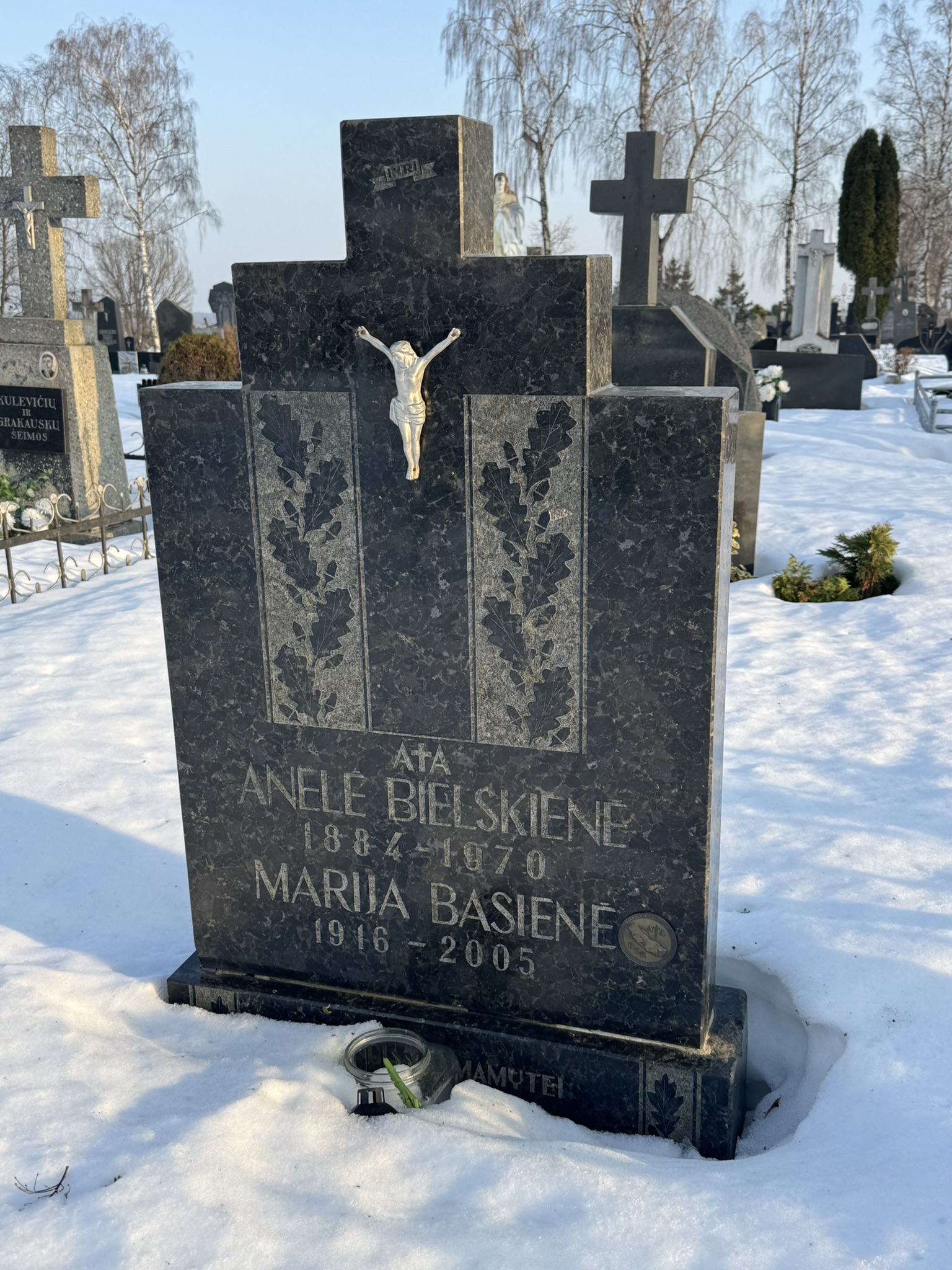
Two other brave women, Ona Bielskienė (1914-1994) and Marija Jocienė (Basienė) (1916-2005), recognized as Righteous Among the Nations for saving a Jewish girl during the Holocaust, buried in the cemeteries in Kuršėnai, had l ived outside of this area, but as their graves are also marked with the plaque by Tautvydas Budzys, I also decided to visit them.
In 1941, fifteen-year-old Liuba Chanonovich escaped the Telšiai ghetto and wandered the countryside, exhausted and afraid. Ona Bielskienė took her in first, feeding and hiding her for ten months, before arranging a safer place with Marija Jocienė, who sheltered Liuba in a remote homestead for nearly two years. Thanks to their courage and care, Liuba survived the war, later moved to Israel, and maintained a lifelong bond with the women who risked everything to protect her.
Kuršėnai may be a small town, often passed by on the way elsewhere, but its history, especially its Jewish history, deserves attention. If your ancestors came from here or the surrounding area, now is a perfect time (whether in February, May, or July) to explore your family roots and discover your hidden stories.
- Tamošaitis Rolandas, Kiriliauskas Jonas. Kuršėnų miesto žydų istorija. – Šiauliai, 2007.
- Įdomūs Kuršėnai on Facebook.
- Yizkor Book of Lithuanian Jewry. Kuršėnai
- About Rabbi Shlomo Nosson Kotler here and here.
- Yad Vashem digital archive
- Lietuva senose fotografijose on Facebook. Kuršėnai
- The story of Bronė Grigalaitienė and Pranas Grigalaitis
- The story of Marija Jocienė (Basienė) and Ona Bielskienė
- Stories of the Liuba Funkaitė and Liuba Chanonovič
 Litvak Shtetls