ATRASKITE ŽYDIŠKĄJĄ LITĄ || DISCOVER YOUR LITVAK ROOTS
DAUGAI | DOIG
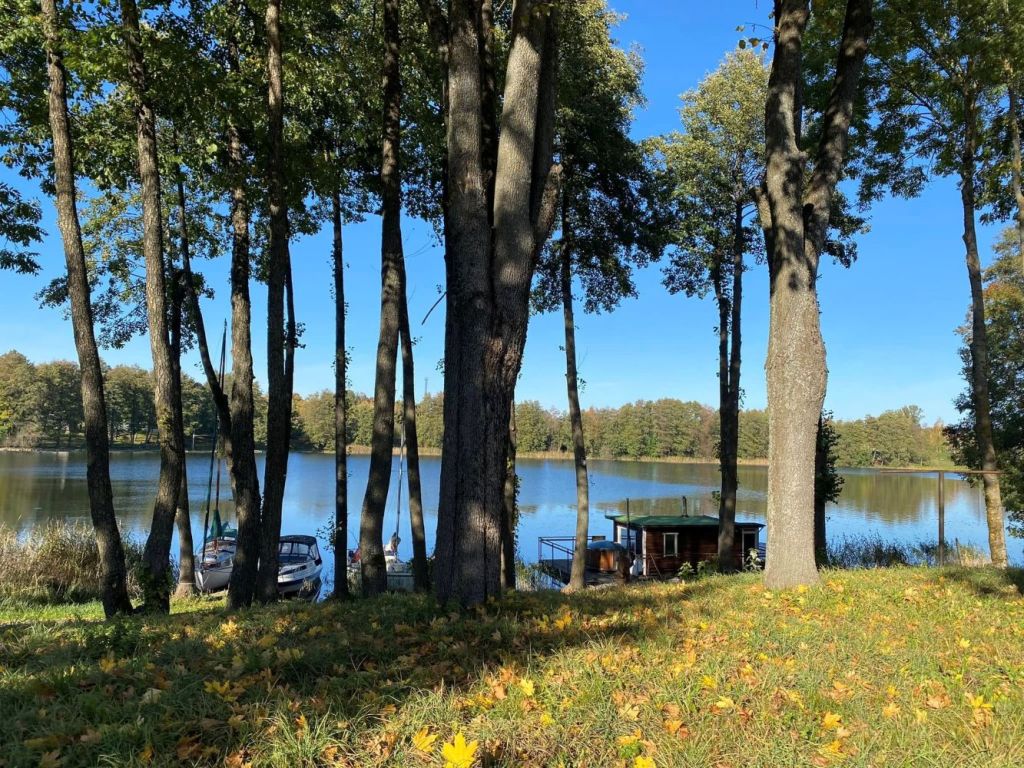
Daugai (Yiddish: Doig) is a small town in southern Lithuania near Alytus. It lies on a peninsula in Lake Daugai.
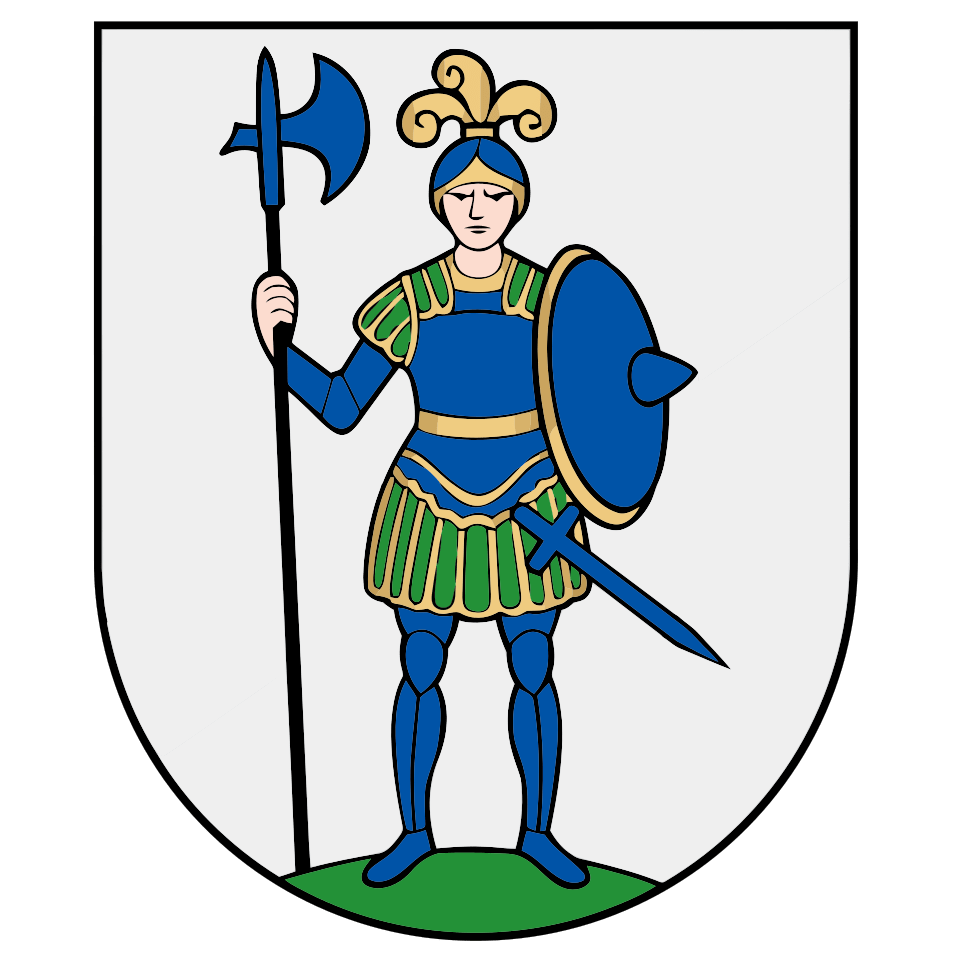
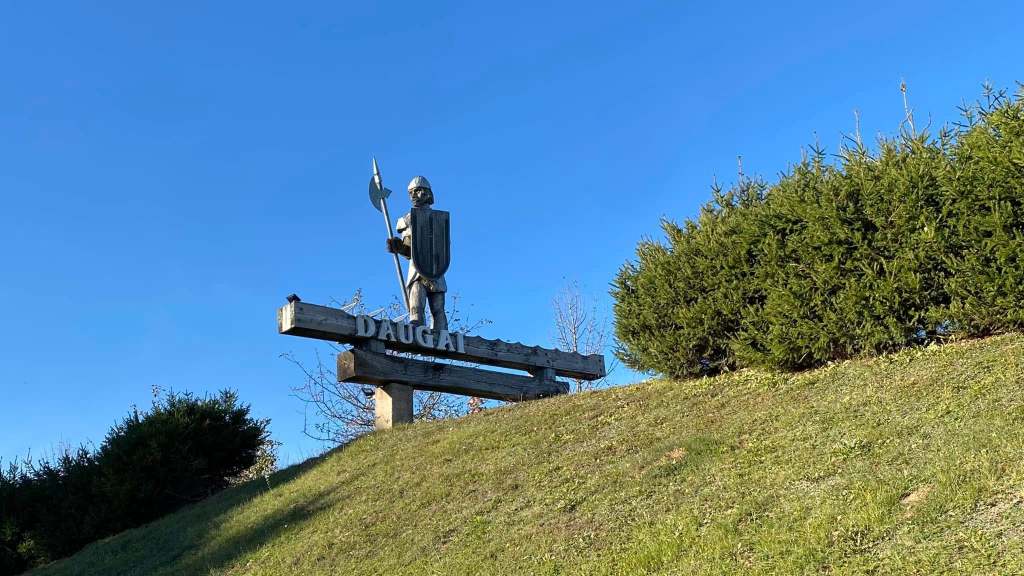
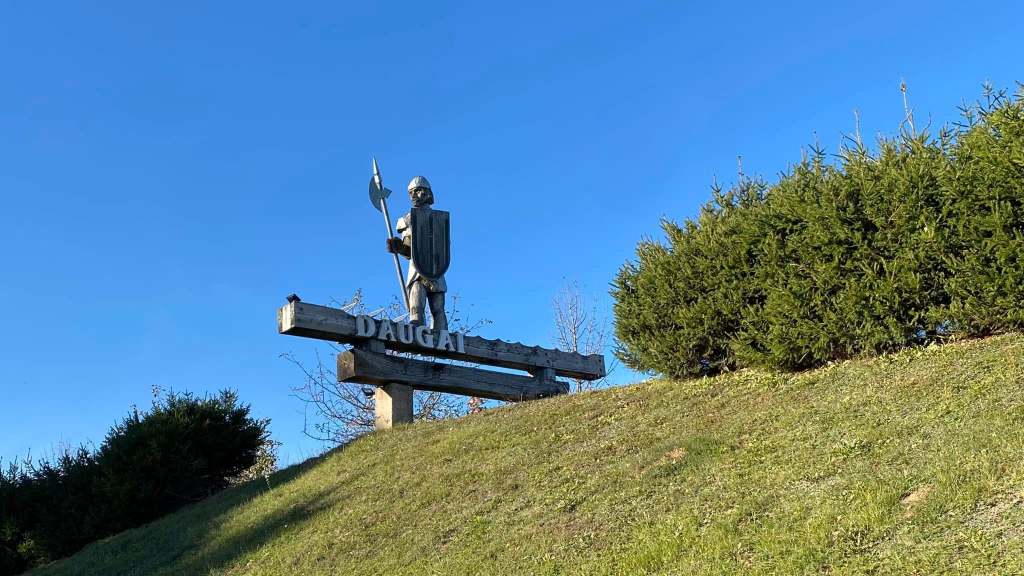
Coat of Arms of DaugaiDaugai welcomes you!
First mentioned in historical sources in the 14th century, the town developed slowly and suffered destruction during wars and famines, particularly in the early 18th century. By the late 18th and 19th centuries, however, Daugai had become a regional center with a significant Jewish community.
Jewish presence in Daugai can be traced back to the late 16th century, when individual peddlers and artisans settled there. An organized Jewish community emerged by the end of the 18th century.
Population Figures: 1897: 1,288 inhabitants in total; about 511 Jews (approximately 40%). 1923: 1,153 inhabitants; about 363 Jews (around 31%). 1936: about 1,200 inhabitants, including 396 Jews (roughly 33%).
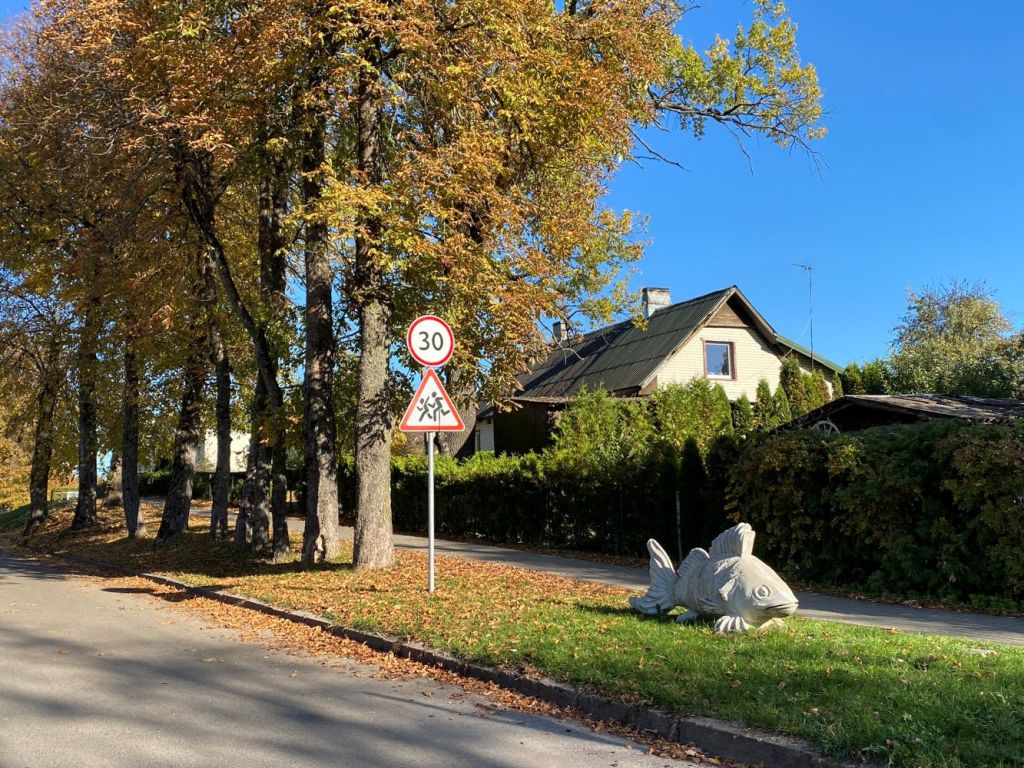
During the 19th century, Daugai experienced an economic growth. The town had flour mills, a sawmill, workshops, and benefited from fishing in the surrounding lakes. Many Jews earned their living as artisans, traders, farmers, and fishermen. Jewish wagon owners transported fish, especially small fish known in Yiddish as shtinkes, to Vilnius markets. This trade gave rise to the nickname “Doiger Shtinkes”, by which Daugai’s Jews were sometimes known.
During World War I, many refugees, especially from Vilna, found refuge in the town. They were well received not only by the local Jews, but also by Christians. The refugees who settled in Daugai contributed to the public life of the town, A library was opened, a soup kitchen was set up and a German school was established, where Hebrew was taught by the poet Yisrael Me’Yafit, the son of the local rabbi.
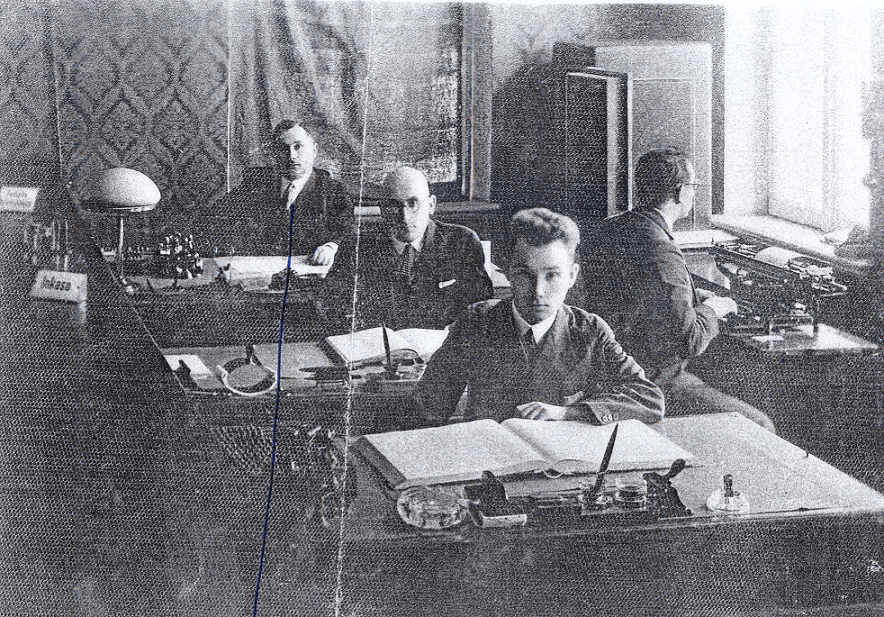
By 1931, Jewish residents of Daugai owned three cloth shops, a grain store, a shop selling iron goods and tools, and a pharmacy, as well as three inns, several tailoring workshops, and a shoe shop. Jewish-owned small industry included five shoe factories, two wool carding workshops, two bakeries, a paint shop, and a flour mill.
In 1937, local artisans included eight shoemakers, five tailors, four blacksmiths, four seamstresses, three butchers, two leather workers, and one each of a baker, carpenter, barber, and painter. In addition, there were two women seamstresses, an oven builder and chimney cleaner, and a hat maker.
One Jewish family, the Levinsons, owned a farm, while seven others leased fruit orchards. The community also included three fishermen, four itinerant peddlers serving nearby villages, and one truck owner.
Nesanel “Sankė” and Dina Levinson were a well-off family, with around 120 hectares of land and a lovely homestead that included a barn, a stable, and a big orchard. They kept quite a few horses and cows. Levinson’s father ran a bookstore and a shop in Daugai. The young couple were cultured, polite, and organized, always ready with a kind word and generous to their workers. They had two little kids: Samukas and Leibukas.
From: Mano senelių ir prosenelių kaimynai žydai. Daugų apylinkių žmonių pasakojimai (pp. 222–225).
Economic life was supported by the Jewish National Bank, which had 148 members in 1927, and by financial assistance from relatives abroad, particularly from the United States.
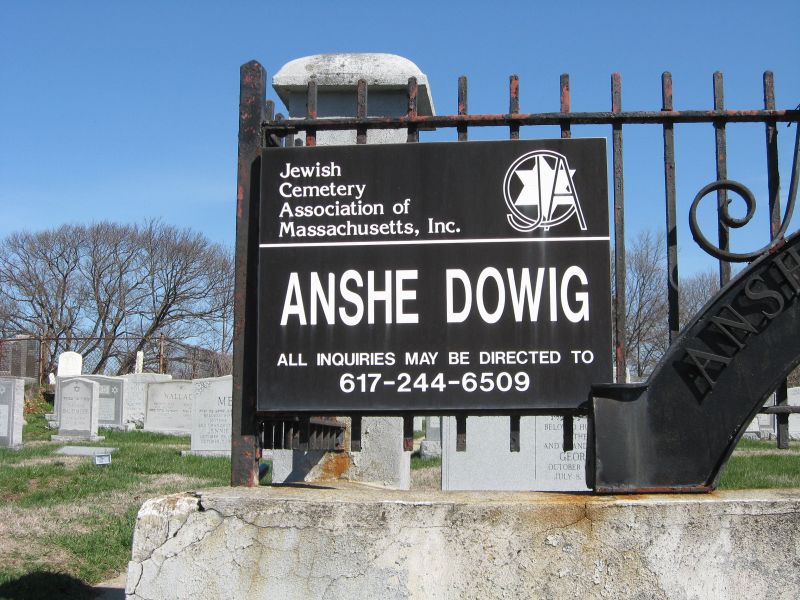
Many emigrants from Daugai settled in America, especially in Boston, where they established a landsmanshaft known as Anshe Dowig. Financial support from emigrants helped sustain the community, especially in the aftermath of destructive fires.
Religious and communal life centered on the Bet Midrash, with strong ties to Vilnius. One of the most prominent rabbis was Rabbi Avraham-Tzvi HaCohen Katz, who served the community for about forty years until his death in 1900. He was the son of Rabbi Shmuel-Isar HaCohen Katz, head of the Ramailes Yeshiva in Vilnius.
Rabbi Avraham-Tzvi’s son, Benzion Katz (1875–1958), became a noted Talmudic scholar, author, and journalist, and later emigrated to Eretz-Yisrael. He continued his intellectual work there. Katz wrote about Daugai this way:
Benzion Katz, a picture from his book “Al Itonim V’Anashim”. Wikipedia
There were 2 streets where 120 Jewish lived. One road was the Street of the Cows, where the rich people, i.e. those who owned cows, lived, and the other was the Street of the Goats where the poor people, who only had goats, lived. Many Jews of the town were fishermen. They would begin work at night and their monthly wages were 1 1/2 roubles. As more and more began to emigrate, many Jews in the town began to receive money from their relatives in America and live on a better standard.
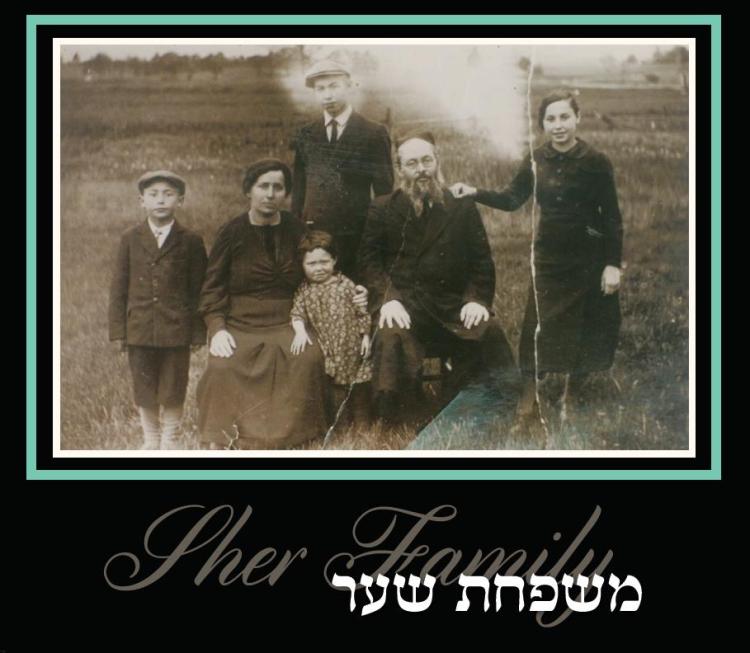
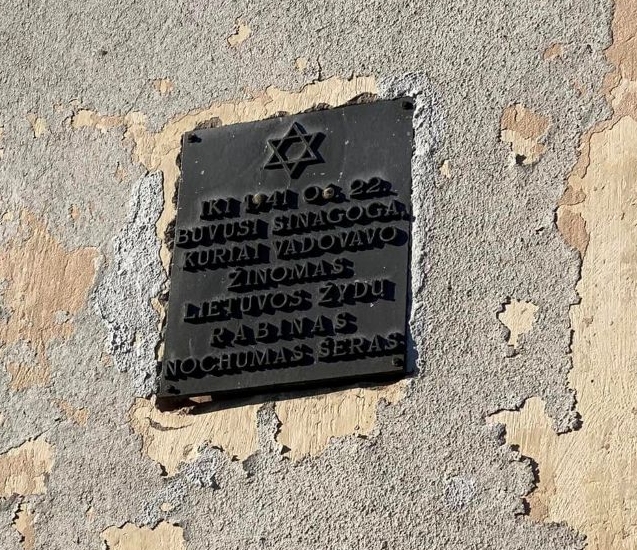
The last rabbi of Daugai was Rabbi Nahum Sher, whose name appears on a memorial plaque in the synagogue.
Rabbi Sher with his wife Neche and their four children. All perished except the daughter Chaya Bluma standing to his left (Photo credit: Hellman family, New York, I found it here)
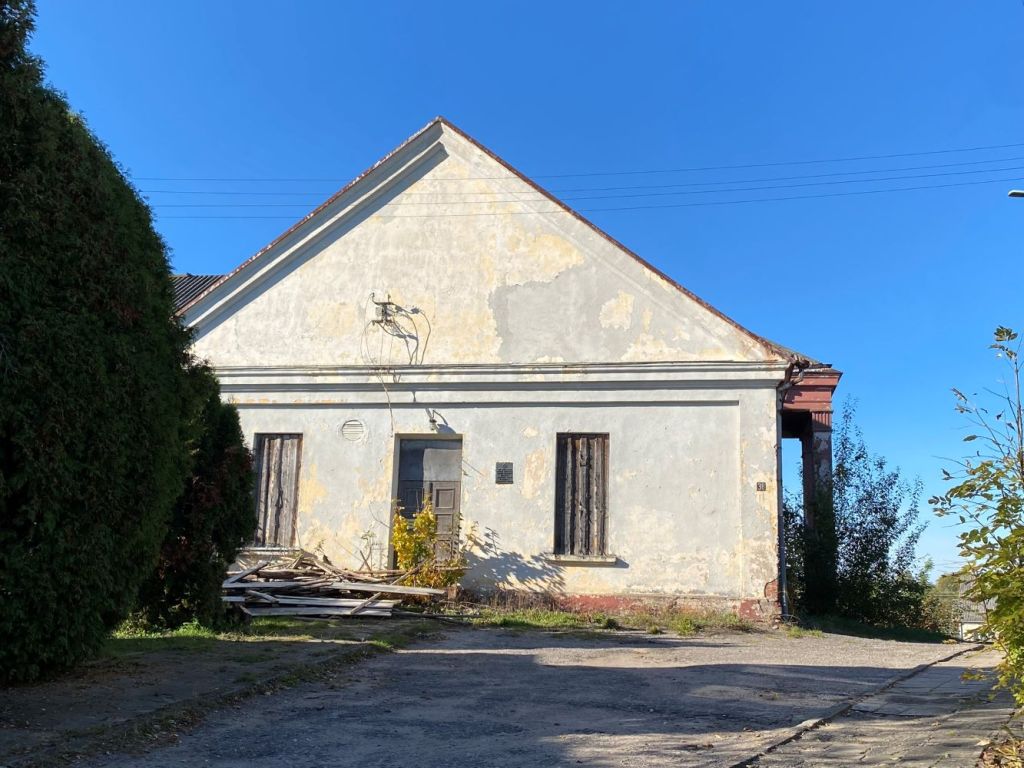
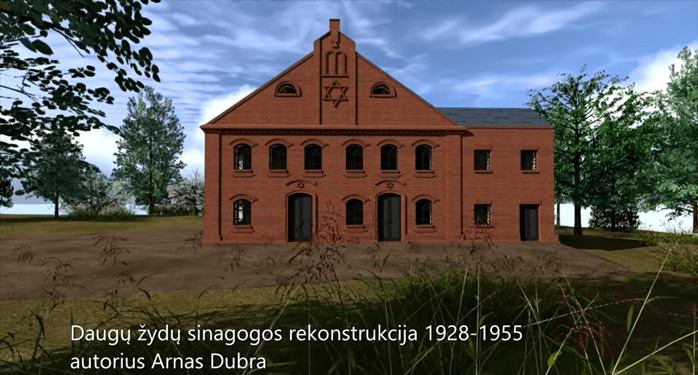
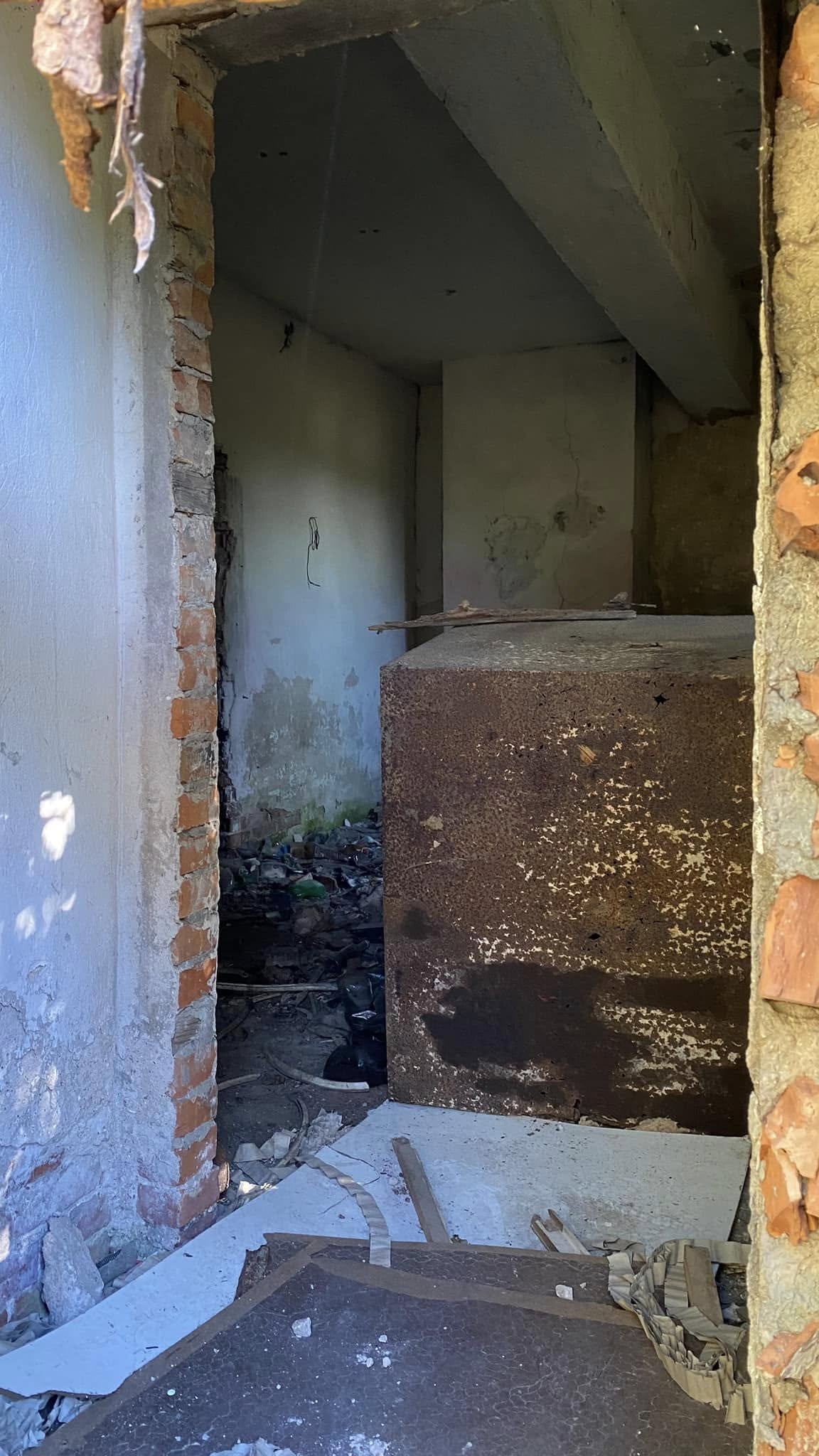
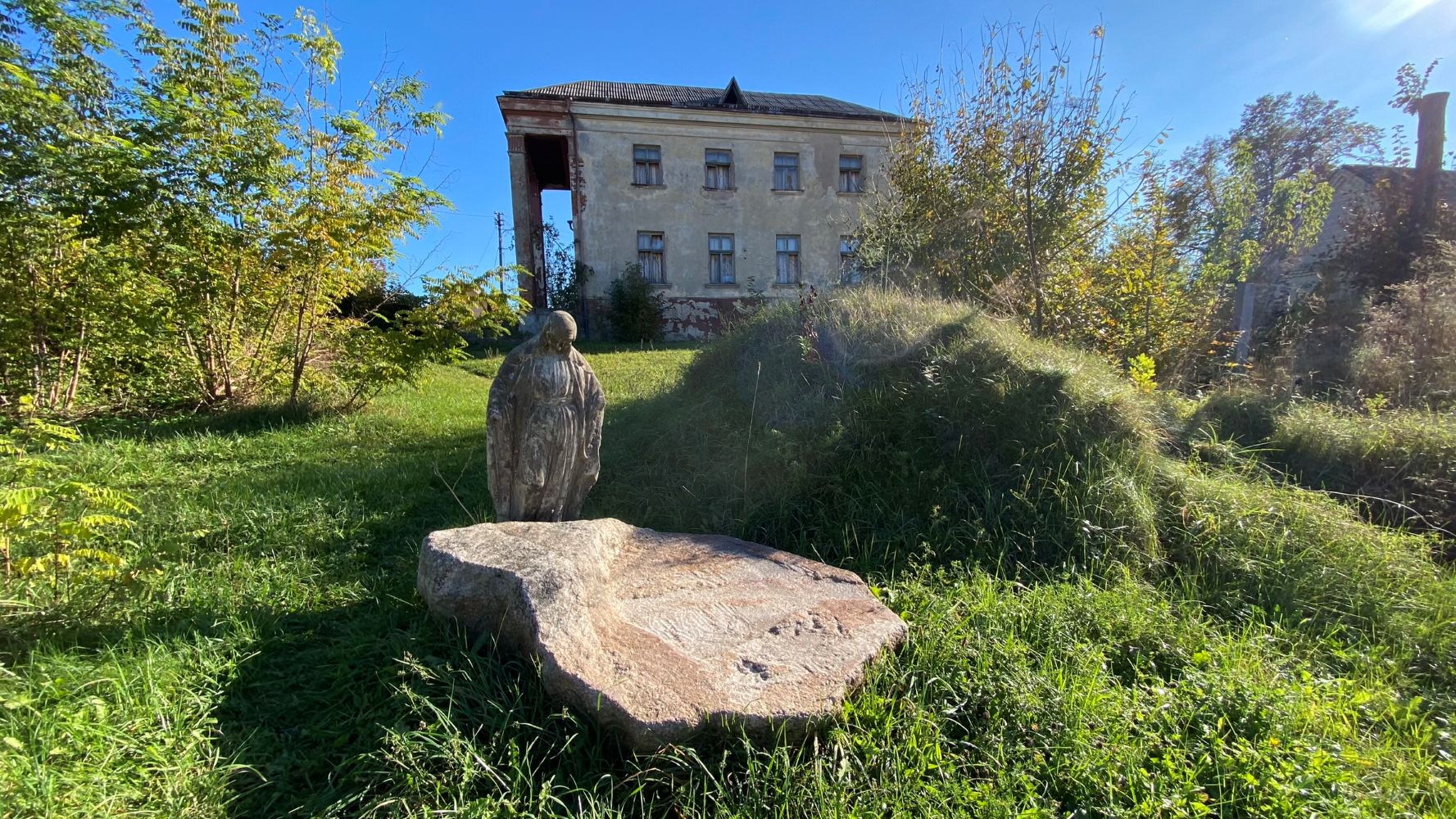
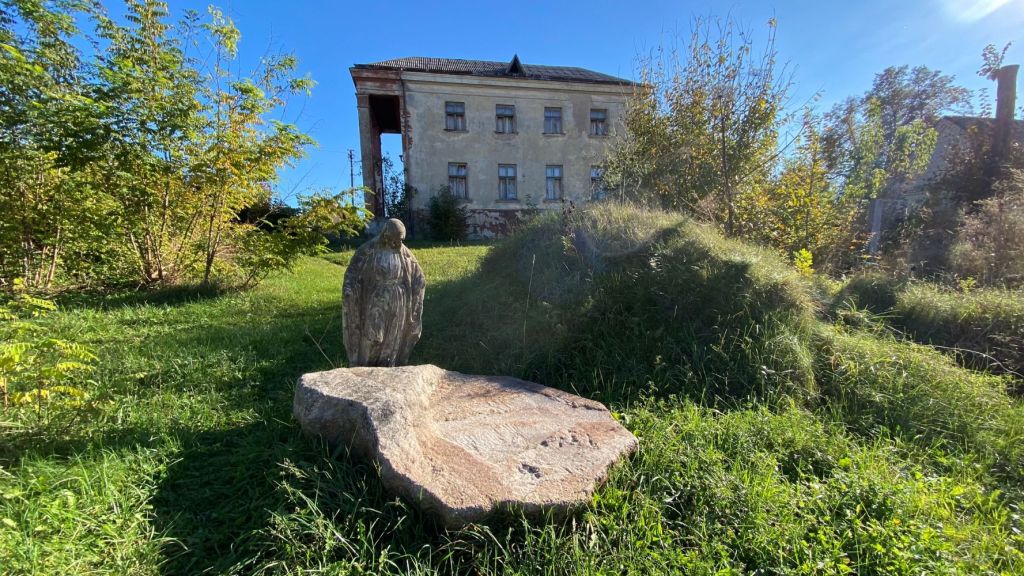
The old wooden synagogue and two study houses were destroyed in a major fire in 1905, along with eight Torah scrolls. After another devastating fire in 1925, about half of the town was destroyed. The Jewish community built a large brick synagogue with help from the Lithuanian state and Jewish organizations abroad. It was designed in 1927 and is located on what is now Vytautas Street. During the Soviet period it was remodeled and used as a cultural center; today it stands neglected and unused.
Daugai Synagogue building in 2024Daugai Synagogue reconstruction by Arnas Dubra (full video)
The town had a Tarbut Hebrew school with about 75 pupils, a library, a drama club that staged Jewish plays, and a soup kitchen. During World War I and afterward, Jewish relief organizations played a crucial role. They provided food, medical aid, education, and social assistance. One such organization was YekoPa (the Vilnius Jewish war relief council). A volunteer fire brigade, composed largely of Jews, operated in the town, and most players on Daugai’s soccer team were Jewish.
During the interwar period, there were a few active Zionist youth organizations such as HeKhalutz, Beitar, and Bnei Akiva. Fundraising campaigns for Keren Kayemet LeYisrael and Keren HaYesod were regularly held.
Among the best-known families from Daugai were the Ilgovski family. Their descendants later became prominent in Eretz-Yisrael. David Ben Reuven-Zelig was a founder of the Yiddish newspaper Yiddishe Shtime. He later became a major citrus grower and construction entrepreneur. Avraham Aharoni (1908–1991) was a pioneer in recognizing the therapeutic potential of the Dead Sea. He played a key role in developing the Hamei Zohar resort area.
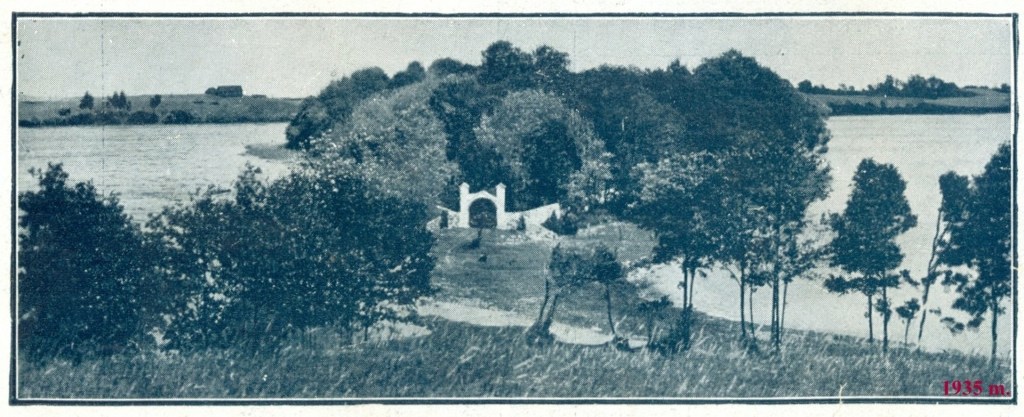
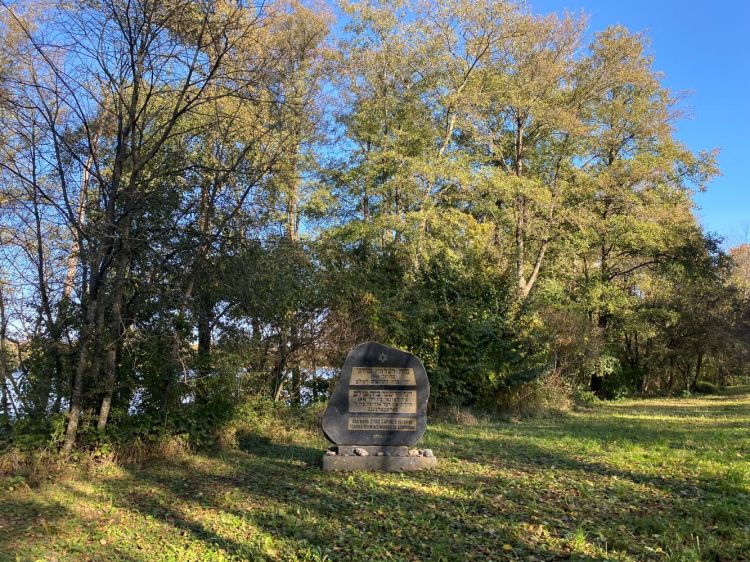
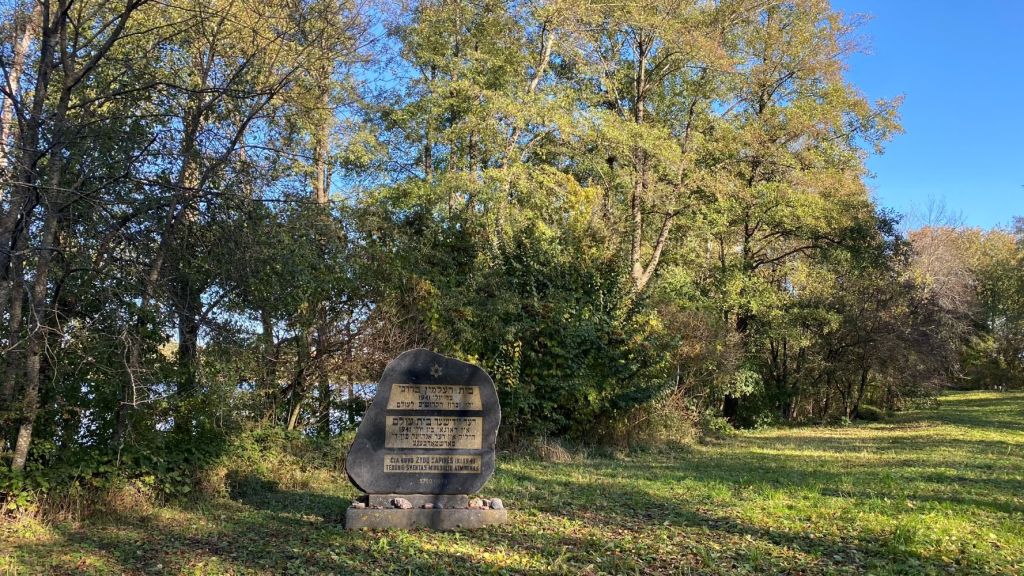
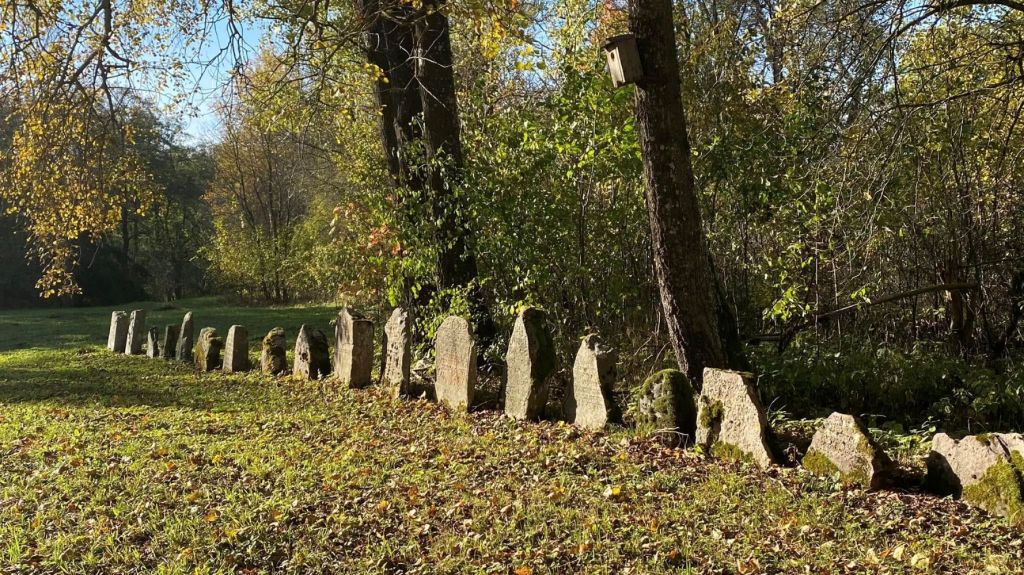
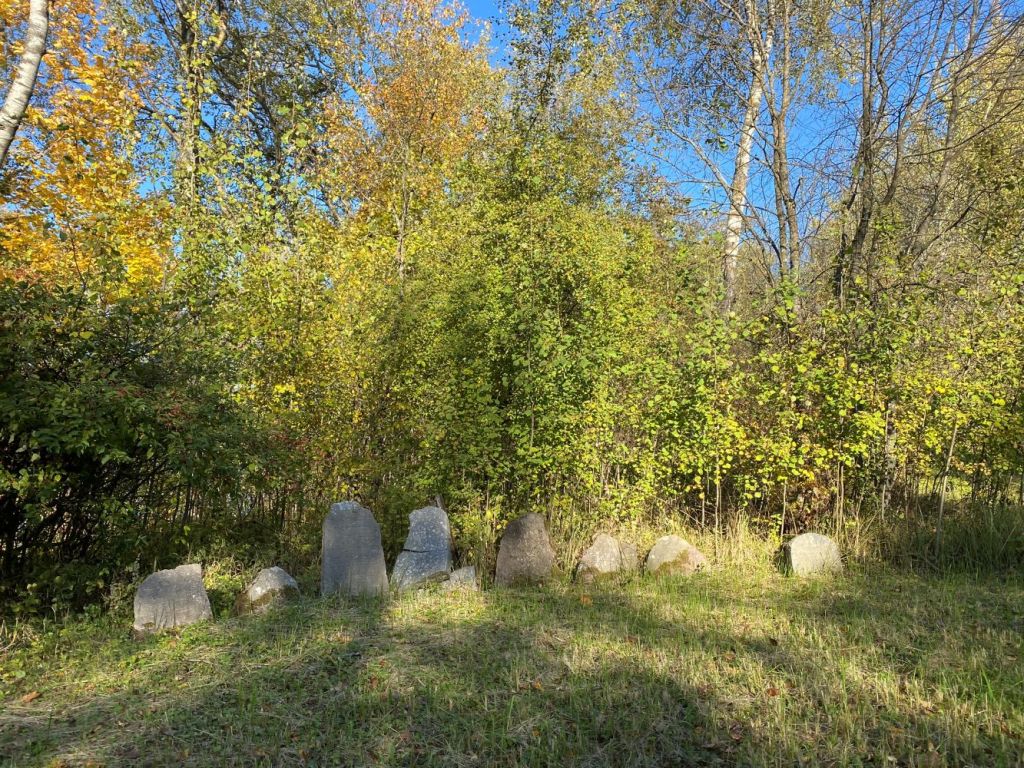
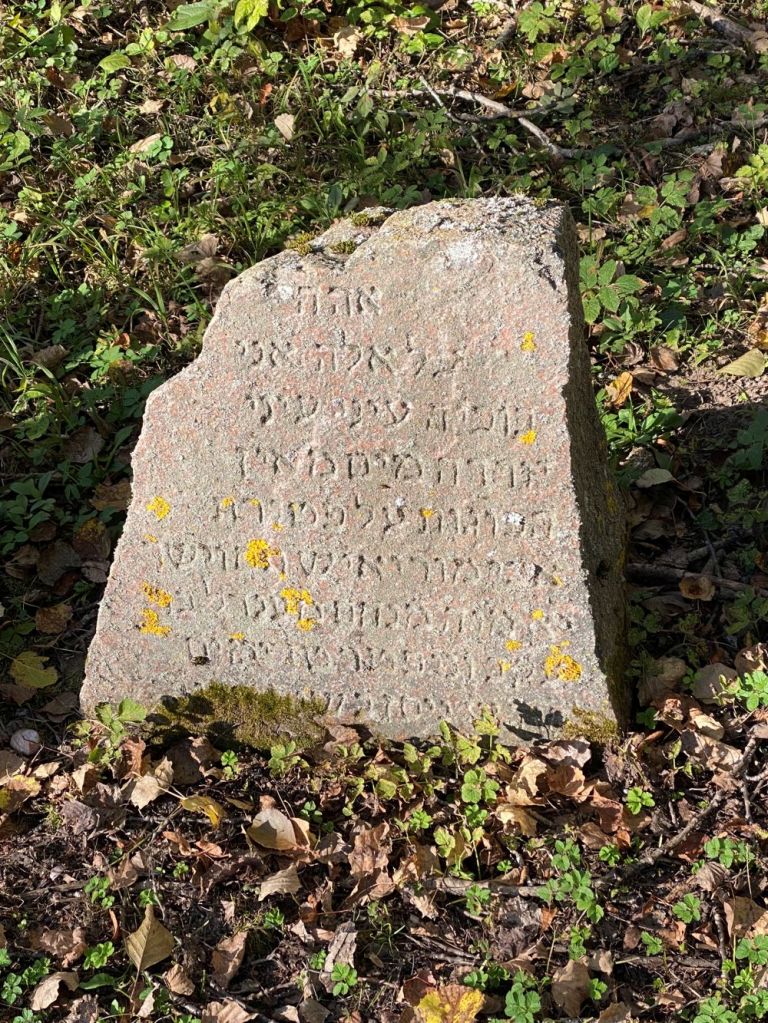
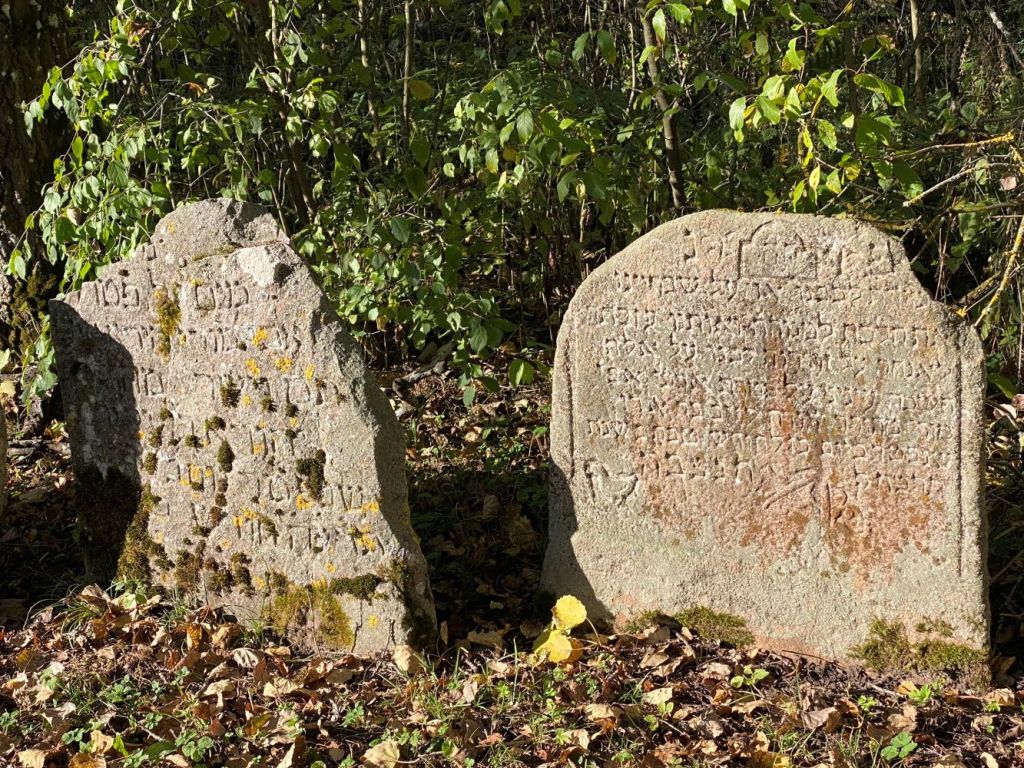
By the lake, on a small peninsula, the Jewish cemetery of Daugai existed from the 18th century until 1941. Until 1928, the water level of Lake Daugai was about two meters higher than it is today. The cemetery was almost surrounded by water, so coffins had to be carried across a narrow stone ford.
Interwar photographs show that the cemetery once had a proper gated entrance. Photo: Alytus Info
The destruction of Daugai’s Jewish community began immediately after the German invasion of the Soviet Union on June 22, 1941. German forces entered the town on the first day of the war. Soon, local Lithuanian helpers began looting Jewish property. They humiliated residents and carried out arrests. The synagogue and the school were closed, all Zionist activity was banned. The graveyard’s peninsula became a recreation area. Gravestones were removed from the cemetery. These stones were used to build steps on the slope.
On July 6, 1941, forty-two people were arrested on accusations of communist sympathies; thirty of them were Jews. All were executed, along with members of their families. About a week later, young Jewish men were arrested under the pretext of being taken to clean the market square. They were led toward Alytus and murdered along the way, while the noise of a tractor was used to drown out the sound of gunfire.
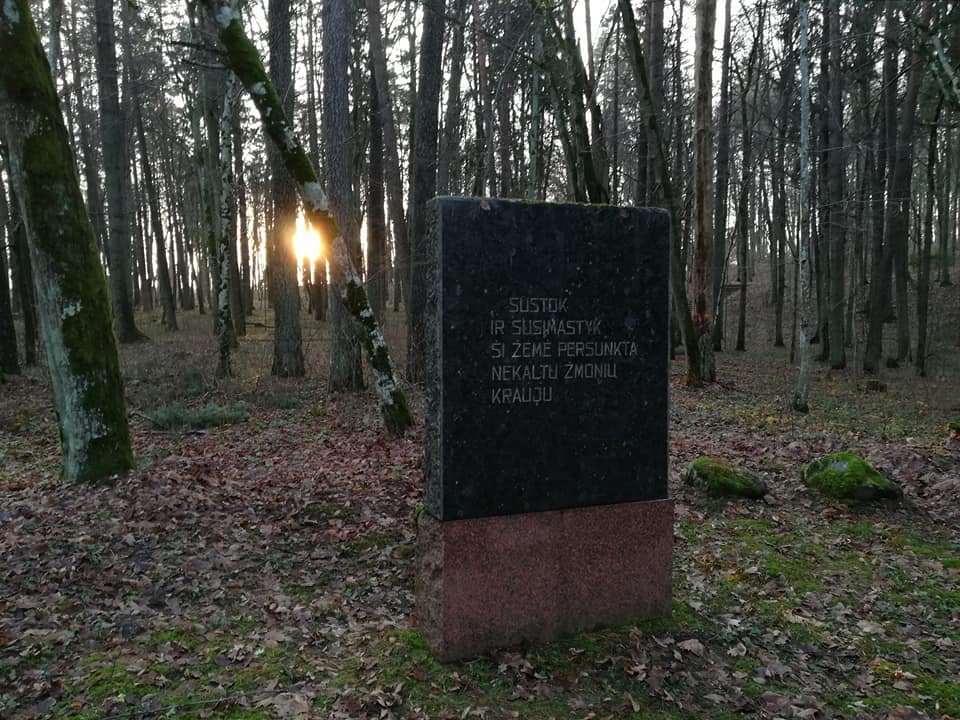
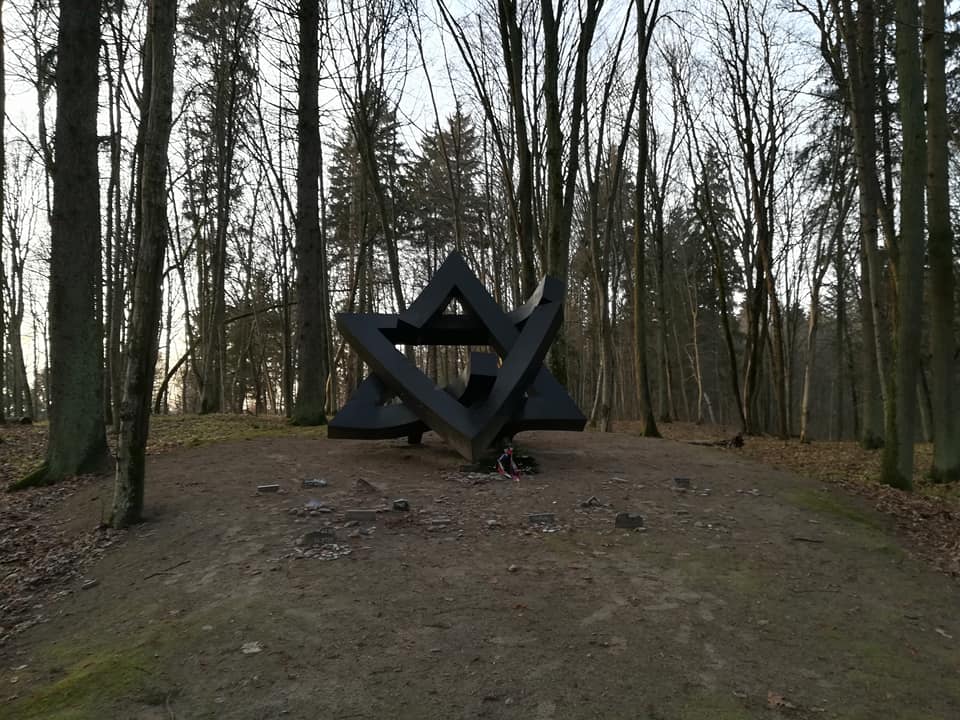
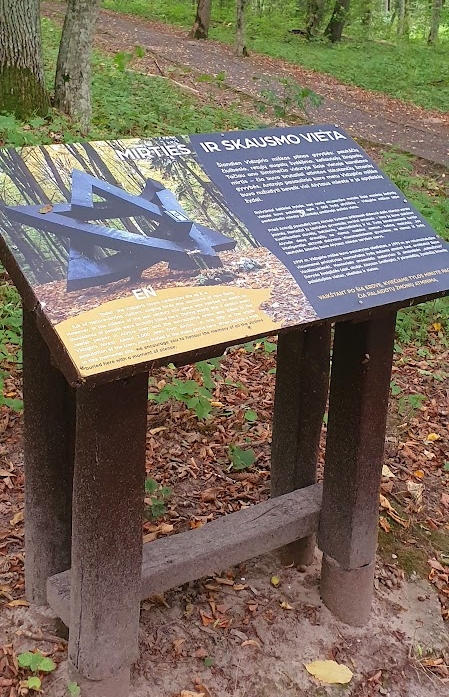
At the end of August 1941, the remaining Jews of Daugai (about 500 people) were expelled from the town. They were falsely told they were being transferred to Alytus for work. Instead, they were taken to the Vidzgiris Forest, forced to undress, pushed into pre-dug pits, and shot. Thousands of Jews from surrounding towns were murdered at the same site.
Inscription: “Stop and reflect; this land is soaked with the blood of innocent people”Memorial to the Jews of the Alytus region killed in Vidzgiris ForestMemorial to the Jews of the Alytus region killed in Vidzgiris ForestA place of death and sorrowMemorial to the Jews of the Alytus region killed in Vidzgiris Forest
Some Daugai Jews tried to resist: Efraim Gozhansky fought back and 18 years old Yokheved Shkliarski shouted to the murderers that Jewish blood would be avenged
A small number of Daugai’s Jews survived the war. Miriam Halpern-Bautner is said to have been helped by local Lithuanians. The Levinsons joined the partisans near Marcinkonys, but only Dina survived. Chaya Kaplan-Mirvis hid on an estate and later likely joined the anti-Soviet partisans. Records show she was detained in 1945 and deported to Magadan, Russia.
Irina Basickaitė was rescued by Feliksas Bakšys, who was later honored as Righteous Among the Nations by Yad Vashem in Jerusalem.
Feliksas Bakšys 1942 m.
During the war, Feliksas Bakšys lived in the village of Dieveniškės and helped Jews from his hometown of Daugai. He assisted Irina Basickaitė by bringing her food, helping her escape the Vilnius Ghetto, hiding her in the countryside, and later obtaining forged documents that allowed her to move more freely. Bakšys also helped other Jews, including Fishel Feldman and Dr. Abel Gabay, arranging hiding places through a network of trusted people, including a Catholic priest; for these activities he was arrested in 1943 and imprisoned until liberation.
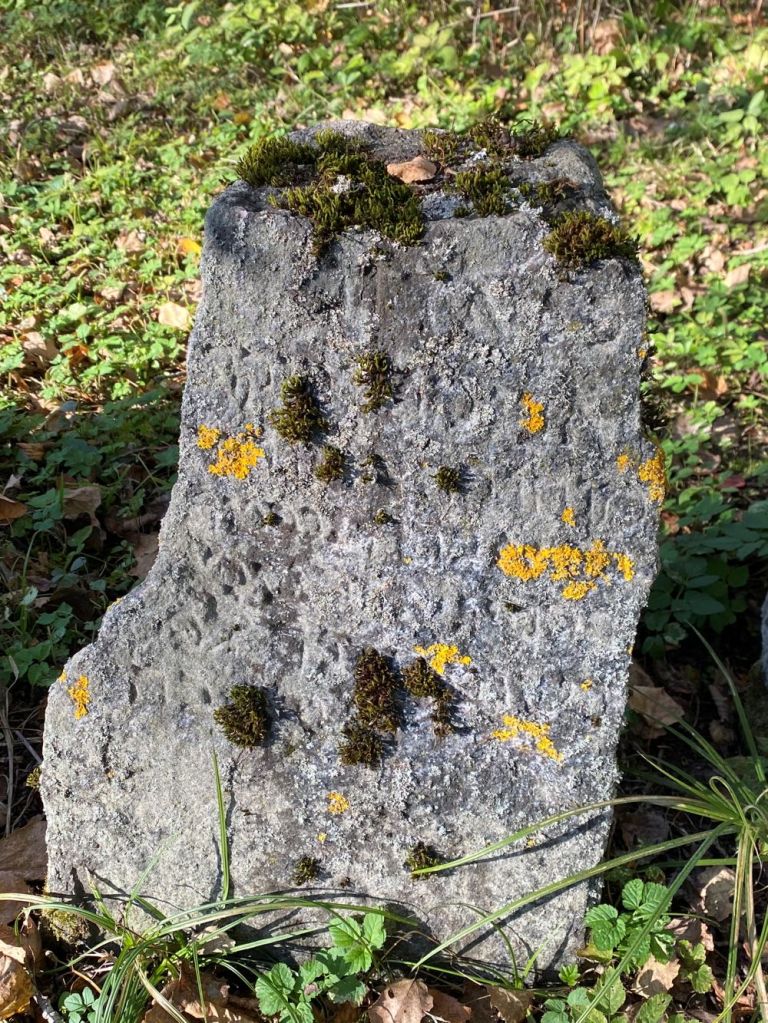
After the war, a memorial was erected at the mass grave in Vidzgiris Forest, and in 1993 a Magen David was added to honor the Jewish victims. In the early 1990s, a large stone was placed in the old Jewish cemetery in Daugai. The stone has inscriptions in Hebrew, Yiddish, and Lithuanian. It remembers the community that lived there until 1941.
By the 1970s, only two Jews remained in Daugai, and later censuses recorded none. Today, Daugai is a small lakeside resort with around 855 residents (2025) and a few traces of its Jewish heritage, still visible if you know where to look.
Here’s a gallery with photos from Daugai taken in October 2024.
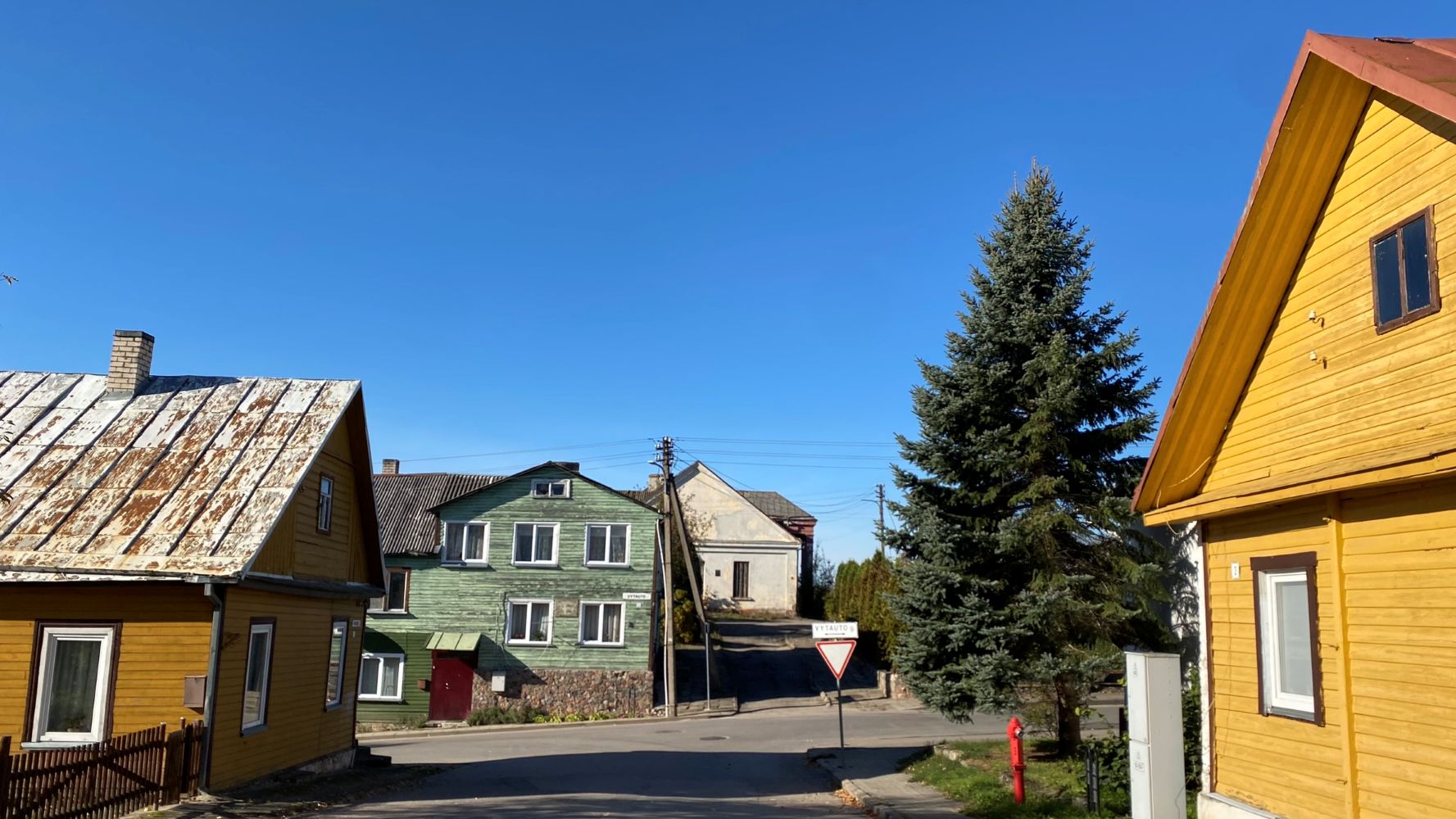
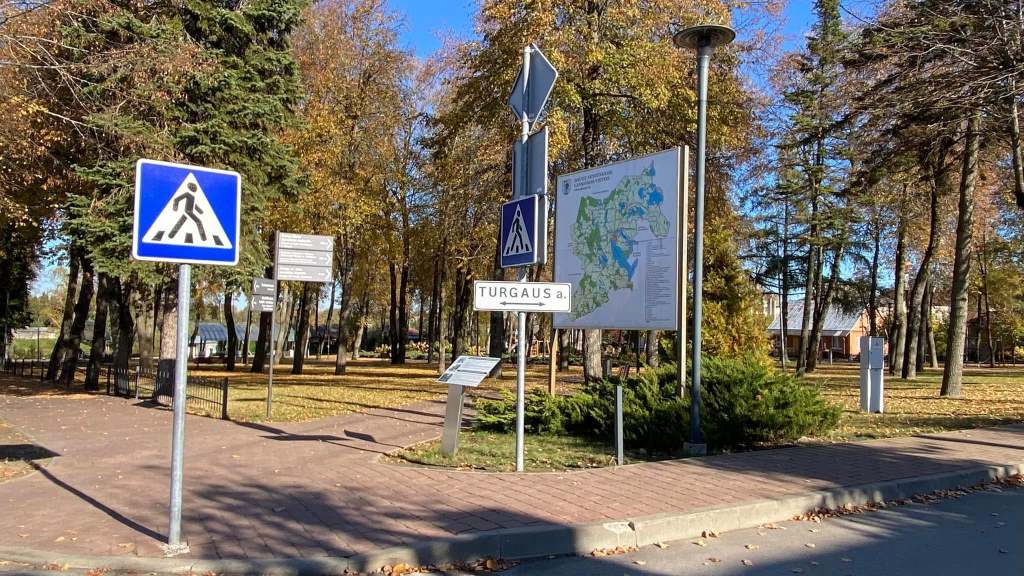
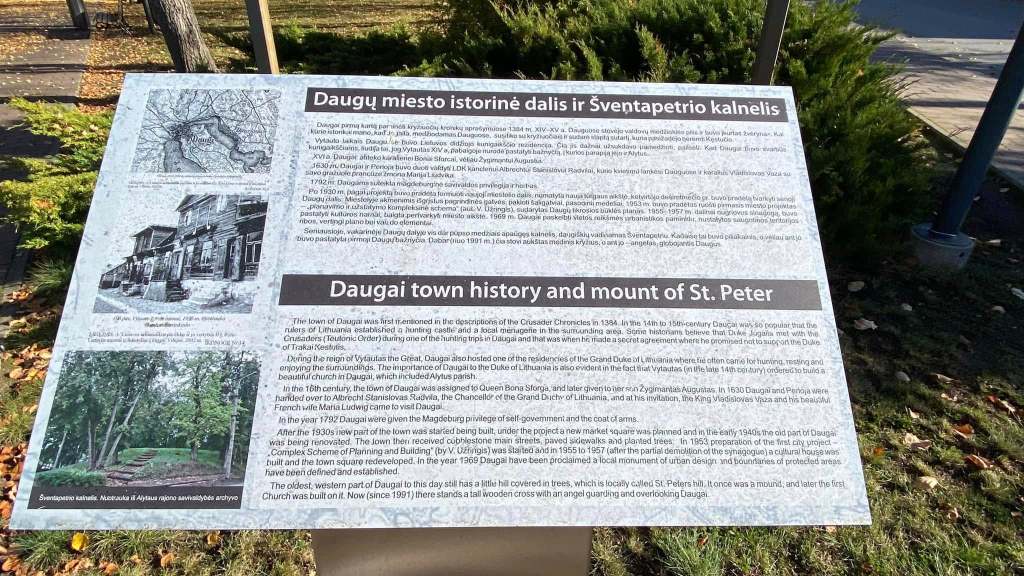
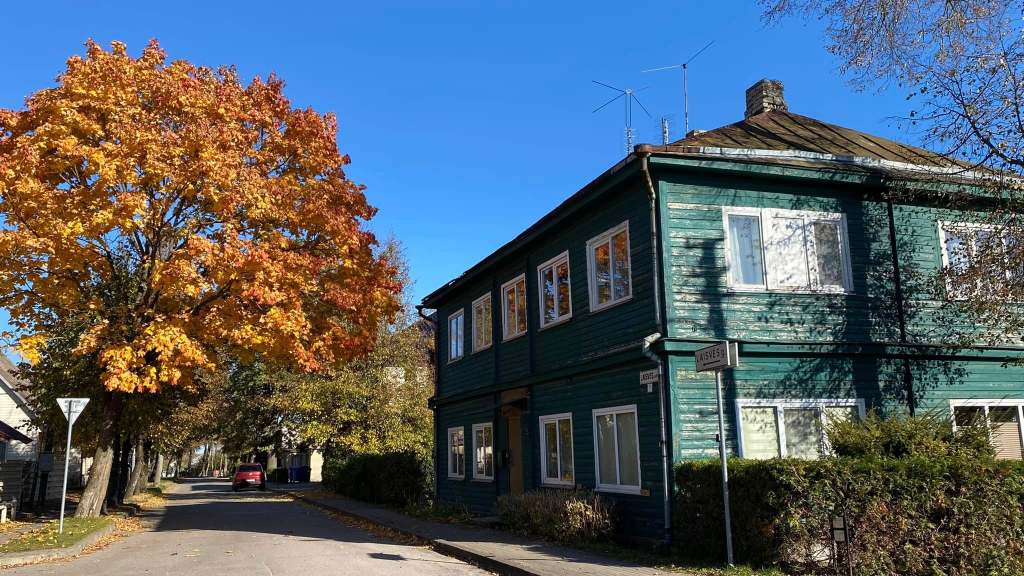
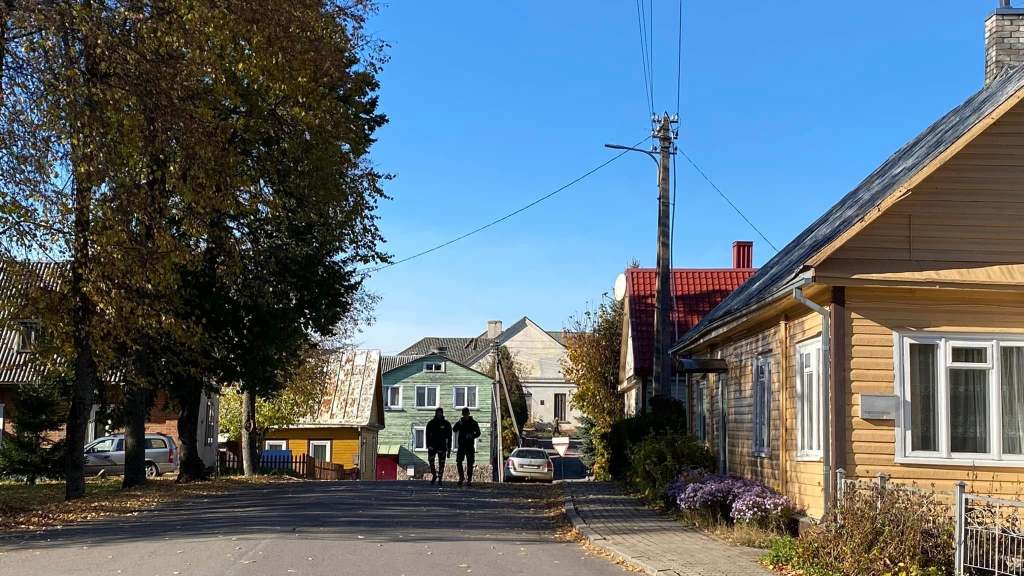
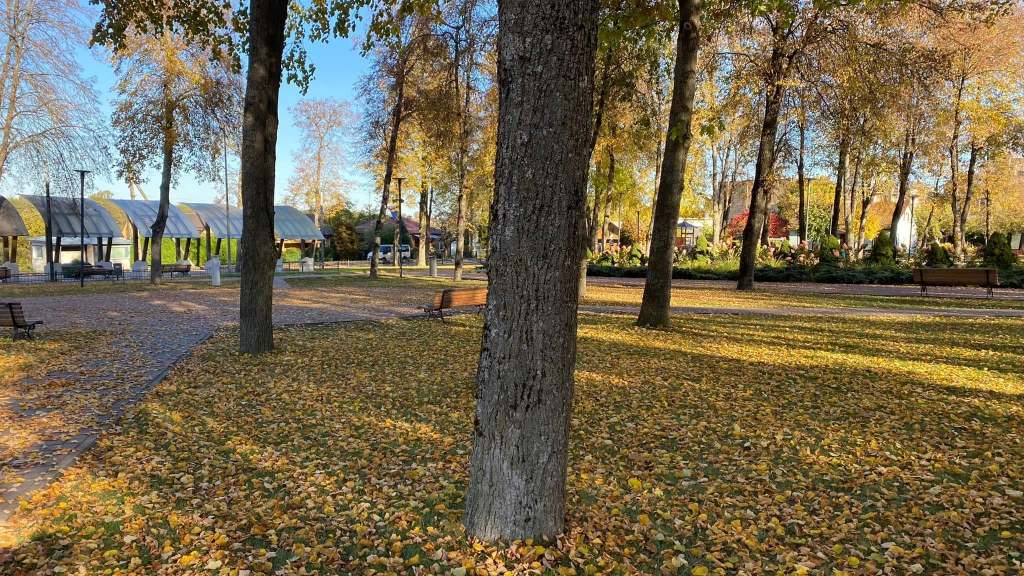
Daugai Daugai LakeThe Market squareA short introduction to Daugai historyIn the streets of DaugaiChurch of Divine Providence in DaugaiThe synagogue building in DaugaiThe last rabbi of Daugai, Nachum Sher, is also mentioned on the memorial plaque on the wall of the synagogueSt. Mary in front of the former synagogueJewish cemetery of DaugaiDaugai Jewish cemeteryDaugai Jewish cemeteryDaugai Jewish cemeteryDaugai Jewish cemeteryDaugai Jewish cemeteryAutumn in Daugai










 Litvak Shtetls
